

Email marketing remains a cornerstone of digital strategy, but its success now hinges on moving beyond generic broadcasts. The critical difference between an email that converts and one that is immediately archived lies in sophisticated strategy, deep personalization, and impeccable timing. For marketing leaders in B2B SaaS, professional services, and managed service providers, mastering this channel is about driving tangible pipeline growth, not just tracking open rates.
This article is designed to provide that strategic edge. We will unpack 10 powerful email marketing campaign examples, dissecting the precise "why" behind their high performance. Forget surface-level descriptions; we are diving into the specific tactics, segmentation logic, and automation flows that top-tier companies use to turn subscribers into customers. This is a tactical playbook filled with actionable takeaways you can implement immediately.
We will explore everything from complex Account-Based Marketing (ABM) email sequences and intelligent re-engagement campaigns to educational content series that establish thought leadership. Each example serves as a replicable blueprint for creating campaigns that resonate with discerning professional audiences and, most importantly, deliver measurable business results. Let's examine the strategies that transform a simple inbox entry into a significant business opportunity.
1. Segmented Nurture Campaigns for B2B Sales Funnels
Segmented nurture campaigns are automated email sequences designed to guide prospects through the B2B sales funnel. Unlike generic email blasts, these campaigns deliver highly relevant content based on a prospect's behavior, firmographic data, and position in the buyer’s journey. This methodical approach is essential for B2B sales, which often involve long conversion timelines and multiple stakeholders.
By dividing your audience into distinct segments, such as company size, industry, or job role, you can personalize messaging to address specific pain points. For example, a marketing director at a large enterprise has different needs than a startup founder. Segmented nurturing acknowledges this, building trust and positioning your brand as a relevant authority.
Strategic Breakdown
Companies like HubSpot and Salesforce are masters of this strategy. HubSpot, for instance, creates separate content tracks for marketing agencies versus in-house marketing teams. The agency track receives content about client management and service scaling, while the in-house track gets resources on budget optimization and team efficiency.
This targeted approach ensures every email provides value, keeping prospects engaged over the long term. The goal is to educate and inform, not just to sell. By mapping content to the awareness, consideration, and decision stages, you systematically move leads toward becoming sales-qualified.
Actionable Takeaways & Implementation
To build your own segmented nurture campaign, follow these steps:
- Define Core Segments: Start by identifying 3-5 of your most valuable buyer personas. Use CRM data from platforms like Salesforce or Dynamics 365 to define segments based on job title, industry, or company revenue.
- Map the Content Journey: Create an 8-12 week content plan with different assets for each funnel stage. Early-stage content might include blog posts and whitepapers, while later-stage content could feature case studies and demo invitations.
- Implement Lead Scoring: Assign points to user actions (e.g., opens, clicks, downloads). Once a lead reaches a certain score, automatically route them to your sales team for follow-up.
This disciplined process is a cornerstone of effective B2B marketing, transforming cold leads into warm opportunities. By delivering the right message at the right time, you significantly increase conversion rates. To dive deeper into building these workflows, you can learn more about lead nurturing automation strategies and their technical implementation.
2. Account-Based Marketing (ABM) Email Campaigns
Account-Based Marketing (ABM) email campaigns invert the traditional lead generation funnel by targeting specific high-value accounts with hyper-personalized messaging. Instead of casting a wide net, this B2B strategy treats each target company as a "market of one," coordinating outreach across multiple stakeholders within that organization. The goal is to engage the entire buying committee with content relevant to their specific roles and pain points.
This approach is highly effective for complex sales cycles where multiple decision-makers are involved. ABM campaigns are not isolated email efforts; they are orchestrated plays that align sales and marketing teams, using CRM data to track every interaction and guide the account toward a unified goal. This focus on quality over quantity makes ABM a powerful strategy for driving significant revenue from key accounts.
Strategic Breakdown
Platforms like Demandbase and 6sense excel at executing these sophisticated email marketing campaign examples. Demandbase, for instance, targets Fortune 500 companies with email sequences that lead to custom landing pages. These pages feature content and case studies specific to the target's industry, demonstrating a deep understanding of their unique challenges.
The strategy is to surround the account with consistent, value-driven messaging. An email to a CFO might focus on ROI and cost savings, while a parallel email to an IT Director highlights technical integration and security features. By speaking directly to each stakeholder's priorities, ABM campaigns build consensus and accelerate the deal cycle, turning marketing from a lead-generation function into a core part of the strategic sales process.
Actionable Takeaways & Implementation
To launch your own ABM email campaign, concentrate on a focused, coordinated effort:
- Select a Pilot Group: Start small by identifying 25-50 high-value target accounts. Use your CRM to find companies that match your ideal customer profile in terms of revenue, industry, and strategic importance.
- Map Account Stakeholders: For each target account, create detailed buyer personas for key roles like the CFO, VP of Sales, and IT Director. Tailor your email content and value propositions specifically for each persona.
- Coordinate Multi-Channel Outreach: Your email campaign should be one part of a larger, integrated strategy. Align your email messaging with outreach on LinkedIn, personalized ads, and direct sales follow-ups to create a cohesive experience.
- Measure Account-Level Metrics: Shift your focus from individual email metrics (like open rates) to account-level progress. Track pipeline growth, deal velocity, and overall account engagement in your CRM to measure true ROI.
This account-centric model requires tight alignment between sales and marketing but delivers substantial returns. By focusing your resources on the accounts that matter most, you build deeper relationships and close larger deals. To explore this further, discover more about account-based marketing best practices and how to apply them.
3. Re-engagement and Win-Back Campaigns
Re-engagement campaigns target subscribers who have become inactive over a set period, typically 6-12 months. Rather than letting these contacts decay, these automated email sequences attempt to revive their interest with compelling offers, new value propositions, or simple "we miss you" messages. This strategy is crucial for maintaining list health and maximizing the value of your existing audience.
For B2B SaaS and professional services, a related "win-back" campaign is particularly powerful. These target past customers or clients who have churned, aiming to bring them back into the fold. Since acquiring a new customer is significantly more expensive than retaining an existing one, these campaigns offer a high-leverage opportunity to recover lost revenue and strengthen market position.
Strategic Breakdown
Companies like Slack and Adobe excel at this strategy. Slack sends targeted emails to inactive workspace members, highlighting new features like "Clips" or improved integrations that directly address past productivity hurdles. Similarly, Adobe contacts former Creative Cloud subscribers with exclusive discounts or trial extensions, reminding them of the platform’s value and recent updates.
The core principle is to demonstrate that your product or service has evolved and can solve their problems better than before. These campaigns are not just about discounts; they are about re-establishing relevance and reigniting the conversation. The goal is to remind them why they chose you in the first place and show them what they’ve been missing.
Actionable Takeaways & Implementation
To launch your own re-engagement or win-back campaign, follow these steps:
- Segment Your Inactive Audience: Use your CRM or email platform to create a segment of users who haven't opened an email or logged in for over 90 days. Further segment them into past customers versus inactive subscribers.
- Develop a Multi-Touch Sequence: Create a 2-3 email series. The first email can be a gentle nudge, the second might highlight new features or offer a resource, and the final one could present a special offer before a final list cleanup.
- Craft Compelling Subject Lines: Be direct and personal. Use subject lines like, "Is This Goodbye?" or "Here's What's New at [Company Name] Since You Left." Honesty often drives the highest open rates.
This proactive approach is a key part of a healthy marketing funnel, turning dormant contacts into active leads or customers again. To explore how this fits into a broader client relationship framework, you can discover more about effective customer retention strategies and their impact on long-term growth.
4. Event-Triggered Transactional and Behavioral Email Campaigns
Event-triggered campaigns are automated emails sent in real-time based on a user's specific actions or predefined events. These actions can include anything from a purchase completion and form submission to a website visit or milestone date. Unlike scheduled newsletters, these campaigns are highly contextual and timely, making them one of the most effective email marketing campaign examples for driving engagement.
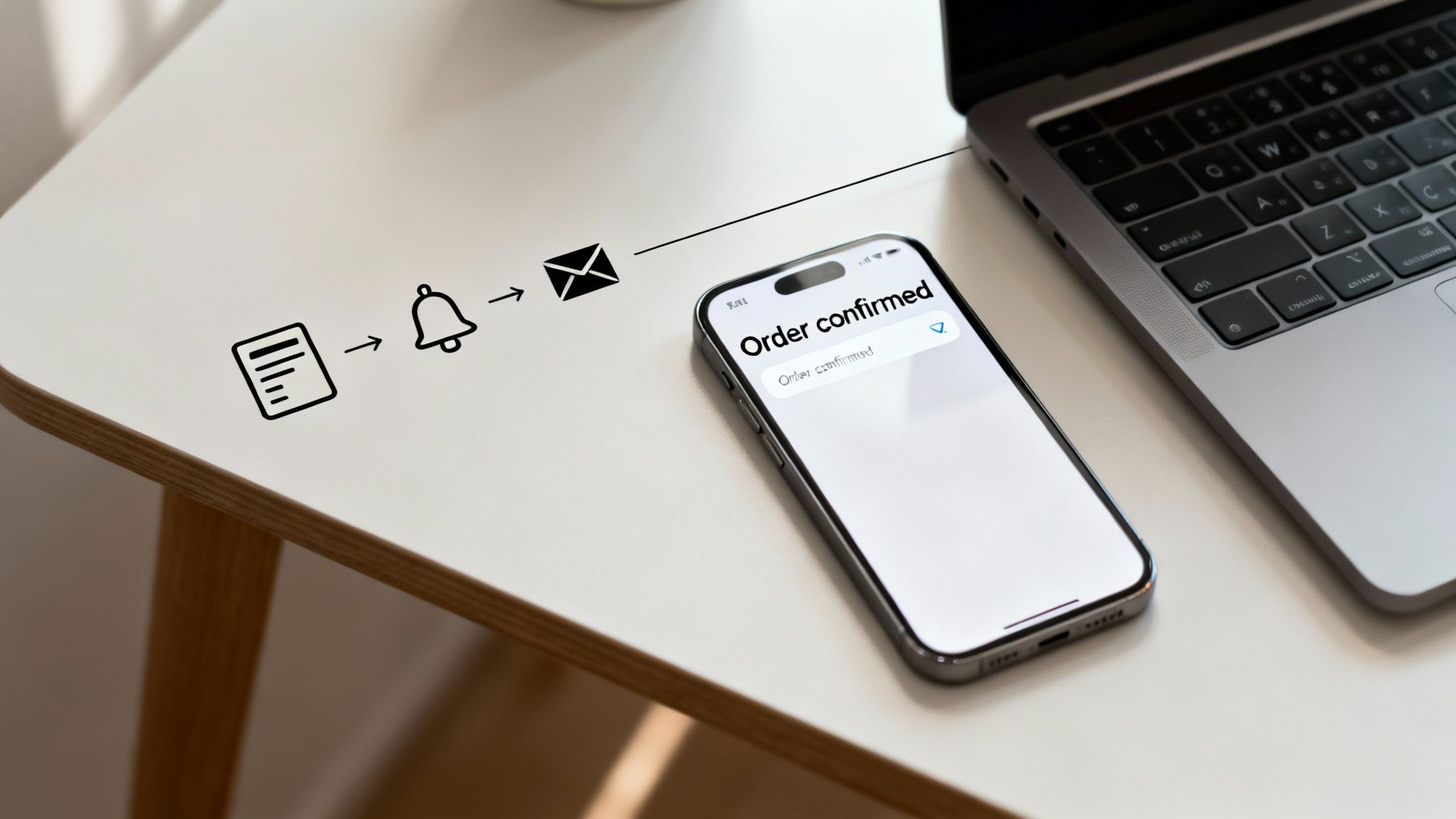
This real-time responsiveness is key to their success. By reacting instantly to user behavior, you deliver precisely what the user expects or needs in that moment. This immediacy builds trust and keeps your brand top-of-mind, turning a simple interaction into a meaningful touchpoint in the customer journey.
Strategic Breakdown
Companies like LinkedIn and Shopify excel at using event-triggered emails. LinkedIn sends instant notifications for connection requests or when your profile views increase, pulling you back to the platform. Shopify's cart abandonment sequence is a classic example: an email is triggered within an hour of abandonment, often featuring product images and a discount code to recover the sale.
These emails work because they are direct responses to a user's implicit or explicit interests. They are not just marketing messages; they are functional communications that add value. The goal is to be helpful and relevant, guiding the user to the next logical step, whether that's completing a purchase or engaging with their professional network.
Actionable Takeaways & Implementation
To implement your own event-triggered campaigns, follow this framework:
- Map Critical User Actions: Identify key events in your customer journey that warrant an immediate email response. Examples include demo requests, content downloads, or trial sign-ups.
- Build 2-4 Step Sequences: Instead of a single email, create a short sequence for each trigger. For a webinar registration, the sequence could include a confirmation, a reminder one day before, and a follow-up with the recording.
- Set Up Automation Triggers: Use your CRM or marketing automation platform (like HubSpot or Marketo) to build workflows that send these emails automatically when the defined event occurs.
This strategy transforms marketing from a monologue into a dialogue, responding to customer needs as they arise. To explore the technical side of setting this up, you can learn more about B2B marketing automation and how to configure these workflows.
5. Educational Content Series and Thought Leadership Campaigns
Educational email series are campaigns designed to establish your company as an industry expert. Instead of direct selling, these emails deliver valuable insights, research, and strategic guidance that address your prospects' most significant business challenges. This approach builds credibility and trust, which is critical for professional services and B2B SaaS companies where expertise is a primary driver of purchase decisions.
This strategy nurtures leads over time by providing substantive content. By delivering a multi-week series that introduces complex concepts progressively, you can maintain engagement and guide prospects through the awareness and consideration stages of the buyer's journey, positioning your brand as the go-to authority in your field.
Strategic Breakdown
Companies like McKinsey & Company and Forrester have perfected this model. McKinsey, for example, emails quarterly research on industry trends directly to executives, providing high-level insights they can't get elsewhere. Similarly, HubSpot's annual "State of Marketing" and "State of Sales" reports are cornerstone email marketing campaign examples that generate thousands of leads by offering proprietary data.
The core of this strategy is to give away valuable knowledge freely to earn trust. By consistently delivering high-quality, non-promotional content, these brands ensure their emails are anticipated and read, keeping them top-of-mind when a prospect is finally ready to make a purchasing decision.
Actionable Takeaways & Implementation
To launch your own educational content campaign, follow these steps:
- Develop a Core Topic: Create a 6-8 week email series focused on a specific, high-value topic relevant to your target audience's strategic challenges. The content should be evergreen yet timely.
- Leverage Proprietary Insights: Differentiate your content by including original research, case studies, or unique frameworks. This makes your emails a primary source of information, not just another aggregator.
- Feature Your Experts: Use the series to showcase your internal thought leaders. Featuring their insights and bylines helps build personal brand connections and adds a human element to your company. Gate the most valuable assets, like full whitepapers or webinar recordings, to capture qualified leads.
This approach transforms your email list into a community of engaged followers. By focusing on education over promotion, you build a foundation of trust that pays dividends in long-term customer relationships. To understand more about how this impacts your broader strategy, you can explore the core benefits of content marketing and its role in lead generation.
6. Case Study and Social Proof Email Campaigns
Case study and social proof campaigns leverage real customer success stories to overcome buyer skepticism and build trust. Instead of just describing what your product or service does, these emails show what it achieves, using tangible results and third-party validation. This approach is highly effective for B2B and professional services, where prospects need concrete evidence of ROI before making a commitment.
By presenting a compelling narrative of success, these campaigns allow prospects to see themselves in your existing customers. When a potential buyer sees that a similar company in their industry overcame a challenge they are currently facing, the message resonates deeply. This transforms abstract claims into credible, relatable proof points.
Strategic Breakdown
Companies like Salesforce and Zendesk excel at integrating social proof into their email marketing campaign examples. Zendesk often emails its prospects customer stories that highlight concrete operational gains, such as faster resolution times and higher customer satisfaction scores. These are not generic testimonials; they are data-backed narratives of success.
Similarly, consulting firms like Deloitte and Accenture send case studies to segmented lists of IT leaders or executives. An email might detail how they guided a Fortune 500 company through a digital transformation, complete with quotes from the client and specific metrics on efficiency gains. The goal is to prove value and demonstrate a clear, repeatable path to success for new clients.
Actionable Takeaways & Implementation
To launch your own case study and social proof campaign, follow these steps:
- Segment Your Audience: Send case studies that are highly relevant to the recipient. Group your email list by industry, company size, or specific use case to ensure the success story mirrors the prospect's own challenges.
- Focus on Quantifiable Results: Build your email around the most compelling metrics. Use subject lines that highlight a specific result (e.g., "How [Client Name] Increased Revenue by 25%") and feature the data prominently in the email body.
- Develop a Multi-Touch Sequence: Don't just send one email. Create a 2-3 part series around a single case study. The first email can introduce the story, a follow-up can share a customer video testimonial, and the final email can invite them to a webinar discussing the strategies used.
This strategy shifts the conversation from selling to solving. By providing objective proof of your capabilities, you build credibility and significantly shorten the sales cycle.
7. Seasonal and Holiday Campaign Promotions
Seasonal and holiday campaigns leverage predictable buying patterns and increased spending during specific times of the year. While often associated with B2C, these campaigns are highly effective in B2B for capitalizing on year-end budget utilization, New Year planning initiatives, or industry-specific seasonal peaks. These time-sensitive promotions create urgency and align offers with moments when buyers are most receptive.
By timing a campaign with a seasonal event, you tap into an existing sense of momentum. For a professional services firm, a "New Year, New Strategy" campaign in January can attract clients focused on annual planning. This approach gives a compelling, timely reason for prospects to engage and convert, making your offer feel more relevant than a standard promotion.
Strategic Breakdown
SaaS companies frequently use Black Friday and Cyber Monday to offer significant discounts on annual plans. Similarly, enterprise software providers often run "Use It or Lose It" campaigns in Q4 to capture remaining departmental budgets. These campaigns work because they align a strong financial incentive with a clear deadline, compelling decision-makers to act.
The key is to connect the seasonal theme to a genuine business need. For example, a training platform's "Back to School" promotion might offer discounts on team upskilling courses, framing professional development as a timely priority. This strategy makes the promotion a logical solution to a seasonal business challenge, which is a core component of great email marketing campaign examples.
Actionable Takeaways & Implementation
To launch an effective seasonal campaign, follow these steps:
- Plan 3-6 Months Ahead: Identify key seasonal triggers relevant to your audience, such as fiscal year-end or industry conferences. Coordinate with sales and marketing teams well in advance to align messaging and goals.
- Create Themed Assets: Design unique email templates, landing pages, and subject lines that reflect the holiday or season. A cohesive theme makes your campaign more memorable and professional.
- Build Urgency and Scarcity: Use countdown timers in emails to highlight deadlines or mention limited-time bonuses for early sign-ups. Frame the offer as a unique opportunity tied directly to the seasonal event.
By aligning your promotions with the B2B calendar, you create powerful, time-bound events that accelerate the sales cycle and drive revenue during predictable buying windows.
8. Personalized Recommendation and Cross-Sell Email Campaigns
Personalized recommendation and cross-sell campaigns leverage customer data, purchase history, and behavioral signals to suggest relevant products or services. Rather than sending generic offers, these emails provide genuine value by anticipating customer needs. This strategy is crucial for increasing customer lifetime value (CLV) by identifying organic upsell and cross-sell opportunities.
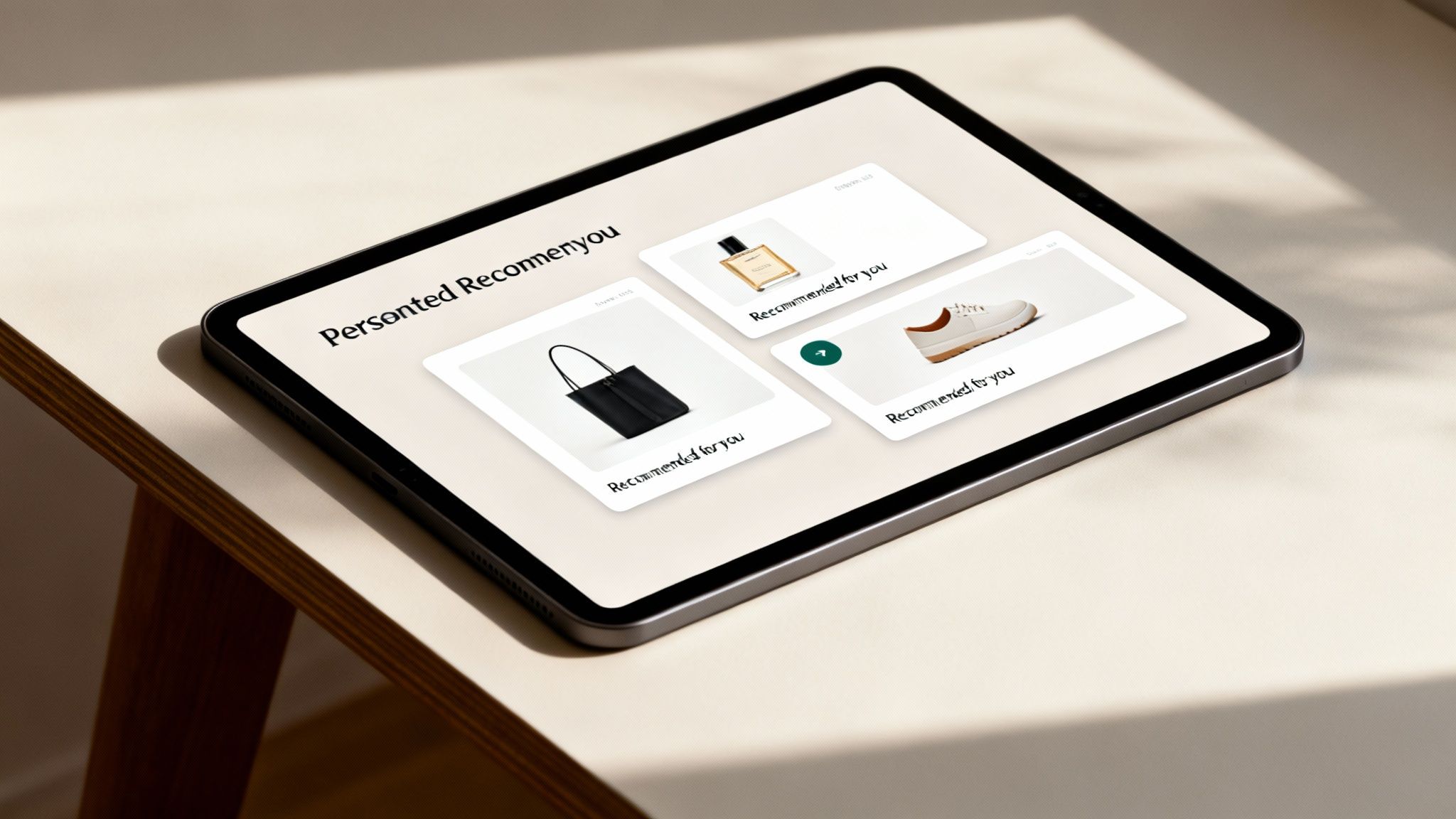
These campaigns move beyond simple personalization like using a first name. By using dynamic content based on browsing history or past purchases, you can create a one-to-one marketing experience at scale. This tailored approach makes customers feel understood, strengthening their loyalty and encouraging repeat business.
Strategic Breakdown
Companies like Amazon and Netflix have pioneered this approach, making it a staple of modern e-commerce and media. For B2B and service-based businesses, the same principles apply. A Managed Service Provider (MSP) could use browsing data to recommend a premium cybersecurity package to a client who frequently visits their blog posts on data breaches.
Similarly, a SaaS company can track feature usage and suggest an upgrade to a higher-tier plan that includes advanced tools the user has shown interest in. These predictive recommendations, often powered by AI, make the sales process feel less like a pitch and more like a helpful suggestion. The goal is to be a proactive partner, not just a vendor.
Actionable Takeaways & Implementation
To launch your own personalized recommendation campaign, follow these key steps:
- Start with Rule-Based Logic: Before investing in complex AI, create simple rules. For example, if a client purchases "Service A," automatically send an email three weeks later recommending the complementary "Service B."
- Segment for Dynamic Content: Use your CRM to segment customers based on their service history. Create dynamic content blocks in your email template that populate with different recommendations for each segment.
- Focus on Clarity and Value: Display 3-5 relevant recommendations with clear descriptions and direct calls-to-action. Each suggestion should solve a potential problem or enhance the customer's current setup.
This strategy transforms your email marketing from a broadcast channel into a personalized advisory service. By delivering highly relevant suggestions, you not only drive incremental revenue but also build deeper, more valuable client relationships.
9. Compliance, Privacy, and Permission-Based Email Marketing Campaigns
Compliance-focused email marketing is a foundational strategy that prioritizes adherence to global regulations like GDPR, CAN-SPAM, and CASL. It’s not just about avoiding fines; it’s about building a sustainable and trustworthy relationship with your audience through transparent, permission-based communication. This approach ensures every subscriber has explicitly opted in and has clear control over their data and communication preferences.
As data privacy becomes a central concern for consumers and businesses alike, demonstrating compliance is non-negotiable. These campaigns often involve consent confirmations, preference center updates, and privacy policy notifications. When executed correctly, these necessary communications can reinforce brand credibility and improve long-term engagement by ensuring your list is composed of genuinely interested recipients.
Strategic Breakdown
Platforms like HubSpot, Salesforce Marketing Cloud, and Mailchimp have built their systems around these principles. HubSpot, for example, provides a comprehensive preference center that allows subscribers to choose the exact types of content they want to receive, from product updates to newsletters. This granular control reduces unsubscribe rates and increases the relevance of every message sent.
Similarly, Salesforce offers robust compliance tracking and audit trails, enabling businesses to document consent meticulously. This isn't just a defensive measure; it’s a proactive strategy to maintain a high-quality, engaged email list. By proving you respect user privacy, you create a stronger foundation for all other email marketing campaign examples to succeed.
Actionable Takeaways & Implementation
To integrate a compliance-first approach into your email strategy, follow these essential steps:
- Implement Robust Consent Management: Use a system that clearly documents the date, time, and method of every opt-in. This is a core requirement for regulations like GDPR and serves as your proof of consent.
- Create a Granular Preference Center: Allow users to manage their subscription preferences beyond a simple subscribe/unsubscribe option. Let them choose topics and frequency to better align with their needs.
- Ensure Conspicuous Unsubscribe Links: Every email must include a clear and easy-to-find unsubscribe link. Process all unsubscribe requests promptly, ideally within 24 hours, to comply with regulations like CAN-SPAM.
- Conduct Regular List Hygiene: Quarterly, clean your email list to remove inactive subscribers, unverified addresses, and bounced emails. This improves deliverability and ensures you are only communicating with an engaged audience.
10. Product Launch and Feature Announcement Email Campaigns
Product launch and feature announcement campaigns are orchestrated email sequences designed to generate excitement and drive adoption for new offerings. Far more than a single "we're live" email, these multi-touch campaigns build anticipation, educate users on value, and guide them toward trying the new functionality. This strategy is essential for B2B SaaS and service firms to maintain momentum, demonstrate innovation, and create a competitive edge.
By teasing a launch, methodically explaining its benefits, and showcasing early success, you transform a simple update into a market event. This approach ensures your new feature or product doesn't get lost in the noise. It methodically communicates the "why" behind the "what," linking the new offering directly to customer pain points and desired outcomes.
Strategic Breakdown
Companies like Slack and Stripe excel at these email marketing campaign examples. When Slack launches a new feature like "Clips," they don't just announce it. They send a series of emails that first tease the problem it solves (e.g., "too many meetings"), then reveal the feature with a clear use case, and follow up with tips and best practices for teams. This multi-stage reveal ensures users understand the feature's context and value proposition.
This coordinated effort creates a narrative around the launch, making it feel significant and valuable. The goal is to drive awareness and initial adoption by showing customers exactly how the new feature will improve their workflow. By focusing on benefits over features, these campaigns make adoption feel like a natural and necessary next step for users.
Actionable Takeaways & Implementation
To execute an effective product launch or feature announcement campaign, follow this structured plan:
- Plan a Multi-Stage Rollout: Design a 4-8 week campaign timeline. Start with teaser emails 2-3 weeks before launch to build anticipation. Follow the launch email with 2-3 detailed feature explanation emails, each focusing on a specific use case or benefit.
- Segment Your Audience: Not every feature is for every user. Segment your email list based on user behavior, subscription plan, or past feature usage. Target your most active users or those who have requested a similar feature for early access offers.
- Show, Don't Just Tell: Embed short GIFs, videos, or links to interactive demos directly in your emails. Use customer testimonials or mini case studies from beta testers to provide social proof and demonstrate real-world impact shortly after launch.
This strategic approach ensures your hard work in product development translates into meaningful user adoption and market impact.
Comparison of 10 Email Marketing Campaign Types
Turning Email Examples Into Revenue-Generating Engines
We've explored a comprehensive array of high-performing email marketing campaign examples, from intricate segmented nurture flows to powerful account-based marketing sequences and timely re-engagement efforts. These aren't just isolated templates; they are strategic blueprints built on a foundation of deep audience understanding, precise data segmentation, and intelligent automation.
The most successful campaigns, whether for a SaaS product launch or a professional services firm’s thought leadership series, share a common DNA. They move beyond the generic "batch and blast" mentality of the past and embrace a customer-centric approach where every message feels relevant, timely, and valuable.
From Inspiration to Implementation: Core Takeaways
As you reflect on these examples, several core principles emerge as non-negotiable for modern B2B email marketing success. The true power lies not in copying a single email but in internalizing the strategic thinking behind it.
- Data is Your Foundation: Every impactful campaign we analyzed began with data. Whether it was behavioral triggers from a website visit, firmographic data from a CRM like Salesforce, or engagement history, data is the raw material for personalization and segmentation.
- Segmentation Drives Relevance: The difference between an email that gets deleted and one that drives a demo is relevance. Segmenting your audience based on industry, job title, purchase history, or stage in the sales funnel ensures your message resonates.
- Automation Creates Scalable Personalization: It's impossible to manually craft a personalized journey for every lead. Automation, triggered by specific user actions or time-based sequences, allows you to deliver the right message at the right moment, consistently and at scale.
- CRM Integration is the Linchpin: An email marketing platform operating in a silo is a recipe for missed opportunities. Integrating it with your CRM (e.g., Dynamics 365, HubSpot) creates a unified view of the customer, enabling your sales and marketing teams to work from a single source of truth and align their efforts for maximum impact.
Your Actionable Path Forward
Viewing these email marketing campaign examples should be the starting point, not the destination. The next step is to translate these insights into a tangible strategy for your own organization. Don't feel pressured to implement everything at once. Instead, build momentum by focusing on high-impact areas first.
- Conduct a Tech Stack Audit: Does your current email platform seamlessly integrate with your CRM? Are you able to easily segment audiences based on the data that matters most to your business?
- Identify One High-Value Segment: Start small. Choose one specific audience segment, perhaps "new leads from webinar sign-ups" or "clients who haven't engaged in 90 days," and build a dedicated campaign for them.
- Map a Single Customer Journey: Outline the key touchpoints for your chosen segment. What information do they need at each stage? What action do you want them to take? Use this map to build a simple, automated nurture sequence.
- Define and Measure Your KPIs: For your pilot campaign, establish clear metrics for success. Go beyond open and click-through rates. Track conversion rates, pipeline velocity, and, ultimately, the revenue influenced by your email efforts.
By embracing this iterative, data-driven approach, you transform your email marketing from a simple communication channel into a powerful, predictable revenue-generating engine. The strategies outlined in this article are the proven frameworks that B2B leaders use to build relationships, accelerate sales cycles, and foster unwavering customer loyalty.
Ready to move beyond theory and build sophisticated email campaigns that drive measurable growth? The experts at Twelverays specialize in data-driven marketing automation and deep CRM integration for platforms like Dynamics 365 and Salesforce, helping you implement the advanced strategies detailed here. Let's connect and turn your email marketing into your most powerful client acquisition tool.


