
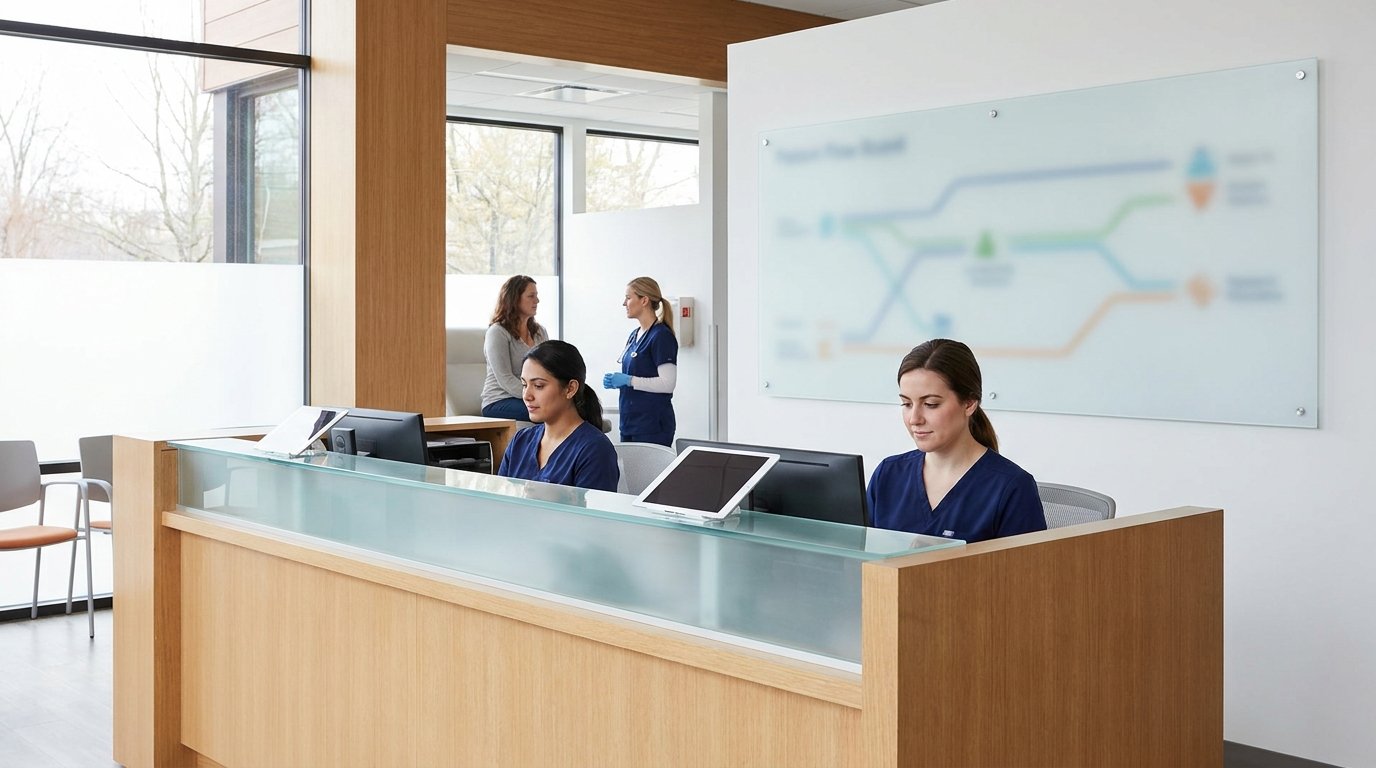
A multi-site urgent care group of about 250 clinicians and staff across a dozen clinics, delivering walk-in care where wait times and throughput make or break the day.
Understanding the challenge
Urgent care lives and dies by flow, and the group was always guessing. Patient surges hit without warning, so clinics were overstaffed one hour and slammed the next, waits stretched until patients walked out, and claims got denied weeks later over documentation gaps no one caught at the visit. "By the time we saw a problem in a report, the patients had already left and the denials were already stacking up," the group's operations director said. The signals that could have warned the team early were split across the scheduling, clinical, and billing systems, and earlier AI pilots never connected to the floor.
Our approach
The group did not need another dashboard to check after the fact. It needed AI that watches the flow and acts, within limits its teams set. We combined three of our services:
• AI Operations Design at the core: an operating layer that monitors patient-flow, wait-time, staffing, and billing signals, predicts surges, flags claims at risk of denial, and drafts the next step for a manager to approve.
• Workflow automation for registration and insurance verification, so patients moved through intake faster and the operating layer worked from clean data.
• A Dynamics 365 integration so every clinic worked from one live operational picture instead of three disconnected systems.
• A governed model with clear boundaries and human sign-off, so clinical and staffing decisions always stayed with a person.
Technical innovation
The AI layer operates rather than just reports: it watches each clinic's flow, wait, staffing, and billing signals in real time, detects a building surge or a denial-prone claim before it becomes a problem, and acts within defined boundaries, recommending a staffing shift, flagging a documentation gap for the visit, or rebalancing walk-ins across nearby sites. Self-calibrating models learn from every day's actuals, so the forecasts sharpen each month, and because it connects to Dynamics 365, the whole group works from one picture with a human owning every clinical and staffing call.
Outcome
By getting ahead of the surges and the denials instead of reacting to them, the group saw about 22% more patients per day without adding clinicians, and waits fell enough that fewer patients walked out. Denial-prone claims got fixed at the visit instead of weeks later, staffing matched demand, and every clinic worked from one current picture in Dynamics 365. "We finally staff for the day we are actually going to have," the operations director said.