

What Are LinkedIn Ads For?
LinkedIn is the largest professional network, with more than 1.3 billion registered members. That audience is why B2B teams build a real ad strategy around it. People show up on LinkedIn in work mode, which makes it the strongest paid channel for reaching decision-makers and buying committees.
The platform sells reach to a professional audience you can filter with precision. You target people by job title, seniority, function, company, industry, company size, and skills. No other ad network matches that depth of professional data. That precision is the whole pitch, and it is why costs run higher than Meta or Google.
You buy LinkedIn ads through Campaign Manager. You set an objective, define an audience, pick a format, set a budget, and choose how you pay. Bidding options include cost per click, cost per thousand impressions, and cost per send for message formats. You bid against other advertisers in an auction, so your cost reflects how many of them want the same audience.
How Do LinkedIn Ads Work?
Every campaign starts in Campaign Manager. You build a campaign group, then individual campaigns under it. Each campaign maps to one objective: brand awareness, website visits, engagement, video views, lead generation, website conversions, or job applicants. The objective shapes which formats and bidding options LinkedIn shows you.
Next you build the audience. Start from attributes like job title, seniority, industry, and company size. Layer those filters to sharpen the match. Use exclusions to strip out titles and industries that never buy. You can also upload your own contact and account lists as Matched Audiences and retarget people who visited your site. Keep an audience large enough to deliver. LinkedIn recommends at least 50,000 members for most campaigns so the auction has room to optimize.
Then you set the budget. The platform minimum is a $10 daily budget per campaign. That floor is too low to learn anything real. Most B2B teams plan a few thousand dollars per month per campaign so the system gathers enough conversion data to optimize. Spread too thin, and the campaign never exits its learning phase.
Finally you build the creative. Sharp copy, a clear offer, and one obvious call to action carry the ad. Lead Gen Forms pull a member's profile data into a pre-filled form, which lifts conversion rates because the prospect barely types. Test more than one version of every ad and let the auction favor the winner.
LinkedIn Ad Formats
LinkedIn groups its formats into four families: Sponsored Content, Sponsored Messaging, Dynamic Ads, and Text Ads. Lead Gen Forms attach to several of them. For current specs and limits, check the LinkedIn Ads Guide.
Sponsored Content
Sponsored Content runs natively in the LinkedIn feed, marked as promoted. It carries the most ad volume because it reaches people where they already scroll. The family includes several formats.
Single Image Ads
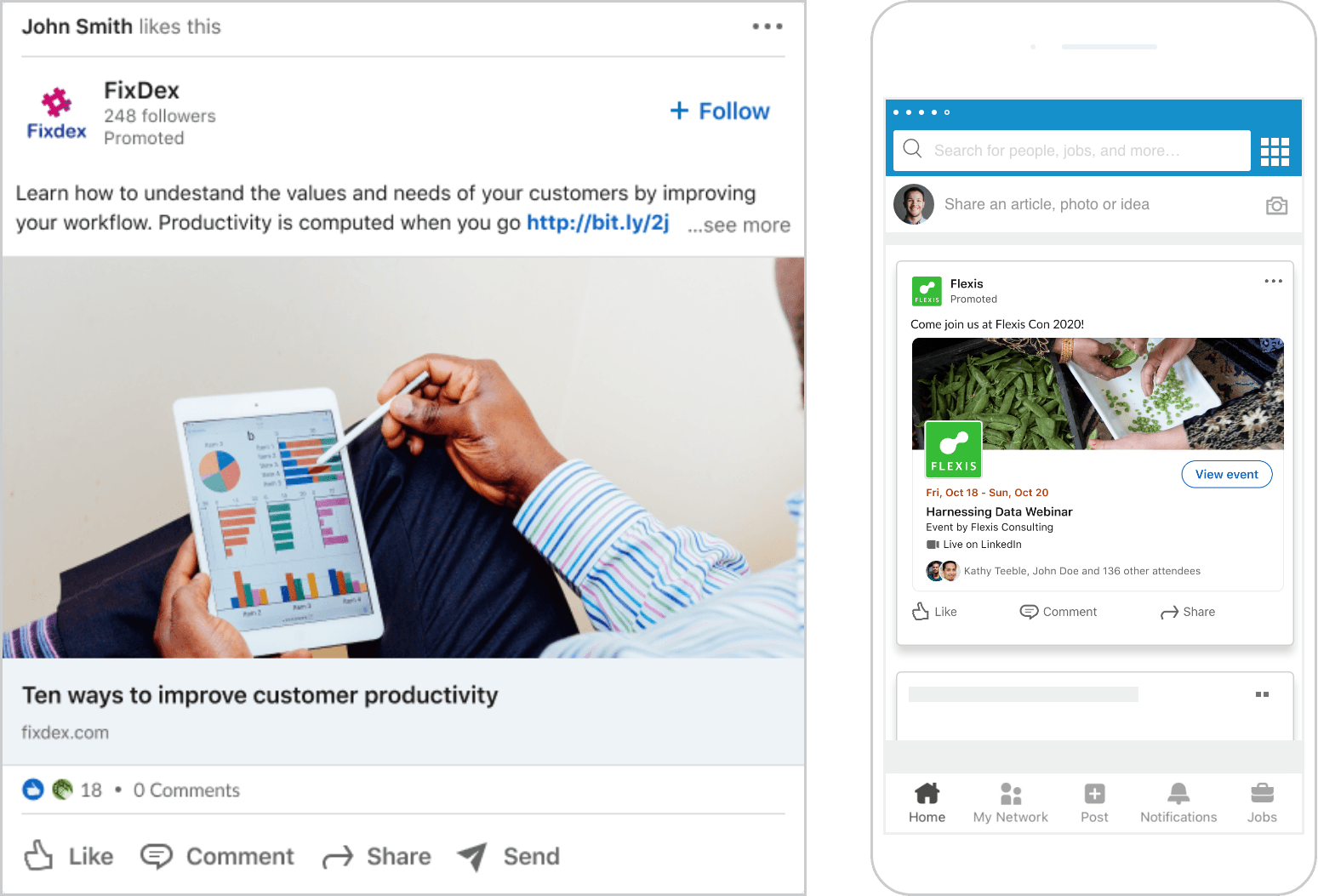
A single image ad pairs one visual with headline and copy, plus a link to your landing page. It anchors most campaigns and still delivers strong click-through rates, especially in square format. Keep the message tight and the call to action obvious.
Video Ads

Video ads run a short clip in the feed with copy and a call to action. Open with the hook in the first few seconds, because most viewers decide fast. Captions matter, since many members watch with sound off.
Carousel Ads
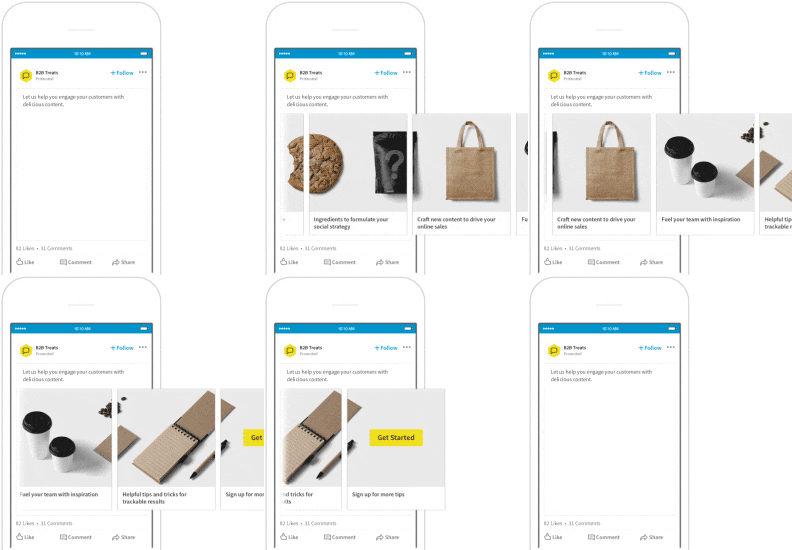
A carousel ad strings several swipeable cards into one unit. It works well for walking through a multi-step product, a set of proof points, or a sequence of customer outcomes. Give each card its own idea and its own link.
Document Ads
Document ads promote a multi-page file, like a guide or report, directly in the feed. Members read or download it without leaving LinkedIn. Pair the format with a Lead Gen Form to capture the read in exchange for the full document.
Thought Leader Ads
Thought leader ads promote an organic post from an individual employee rather than the company page. They carry a person's name and face, which reads as more credible than a brand post. LinkedIn reports they earn higher click-through and engagement than standard single image campaigns, which is why B2B teams lean on them for trust at the top of the funnel.
Event Ads
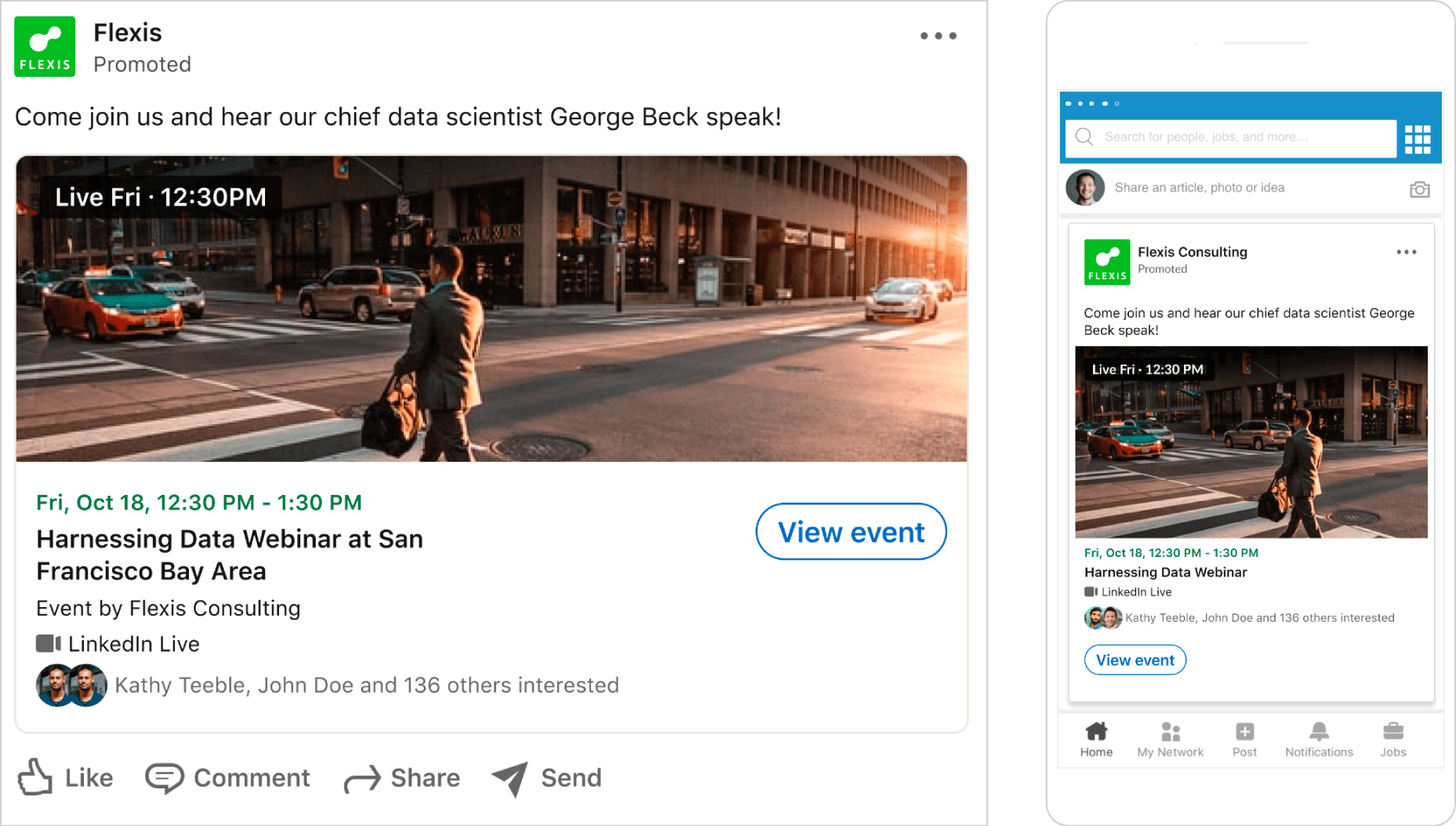
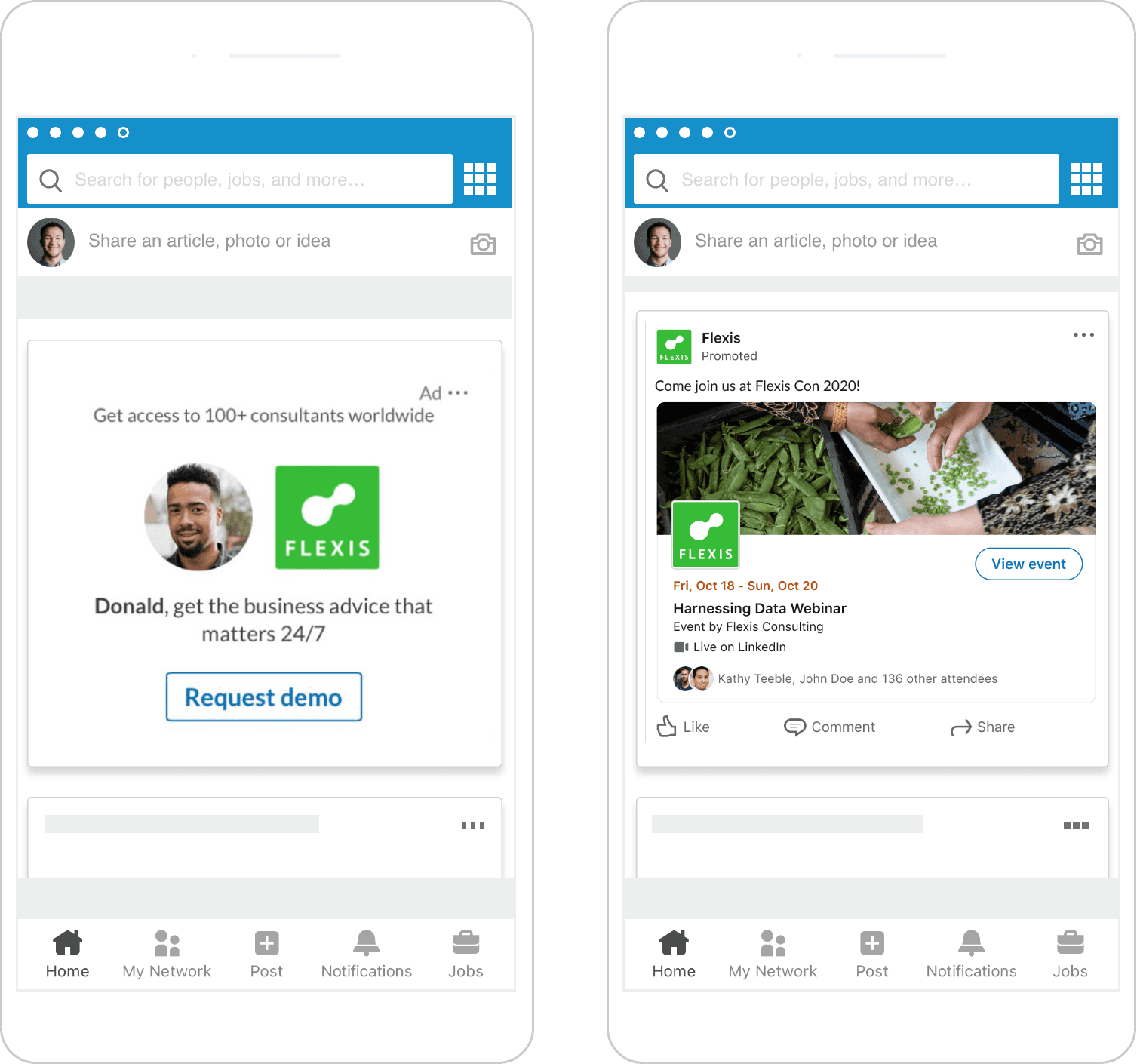
An event ad promotes a LinkedIn event and lets members register in a few clicks. It pulls double duty: it fills the room and grows your audience for follow-up. Use it ahead of a webinar, conference session, or product launch.
Sponsored Messaging
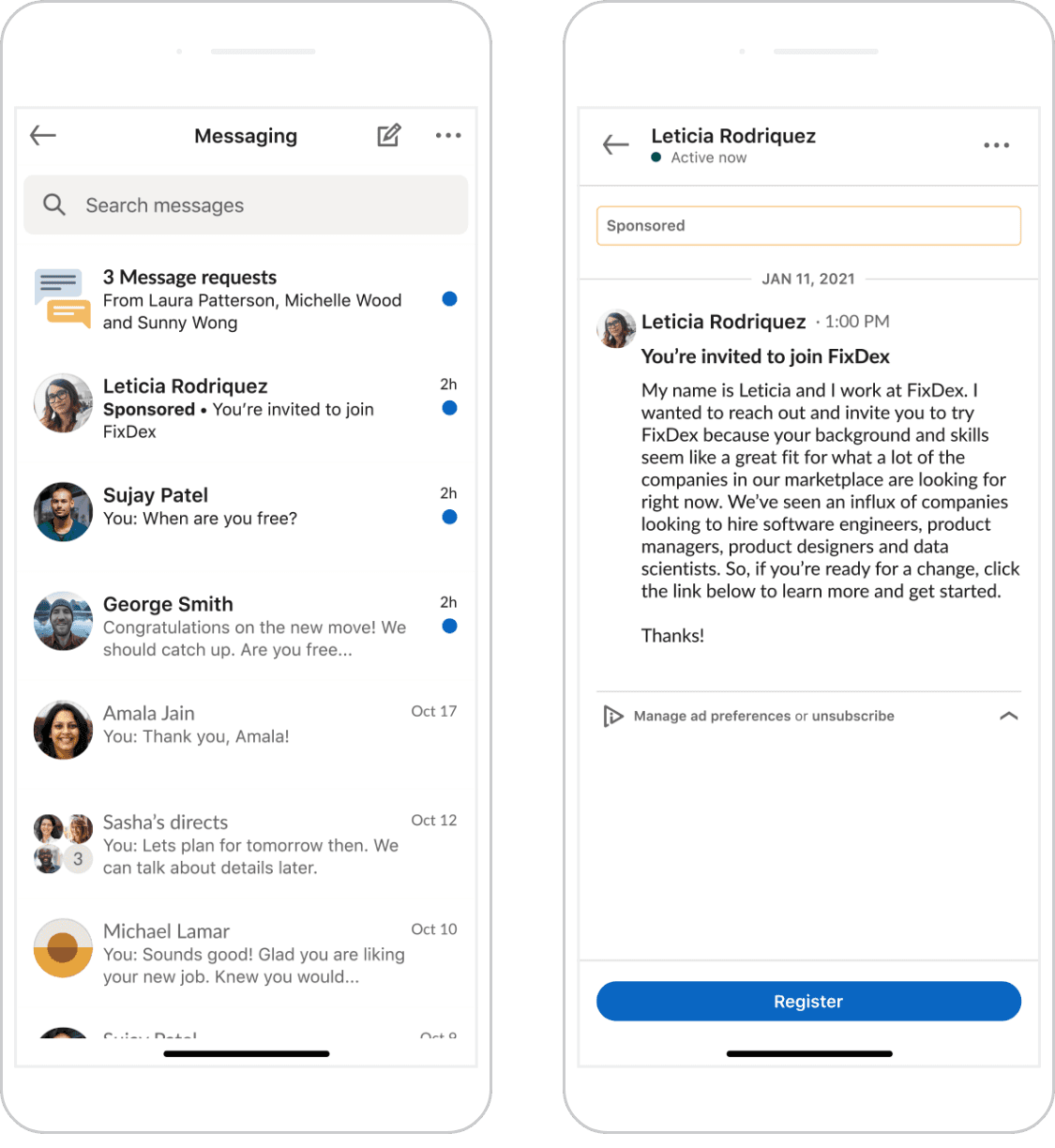
Sponsored Messaging delivers your ad straight to a member's LinkedIn inbox. You pay per send, and delivery is throttled so a member sees these ads sparingly. The personal placement earns attention, so the offer has to be worth the open.
Conversation Ads
A conversation ad opens with a message and a set of reply buttons. Each button branches to a different path, so the member chooses what they want next. That choose-your-own-route format drives actions like booking a call, registering, or downloading an asset.
Message Ads
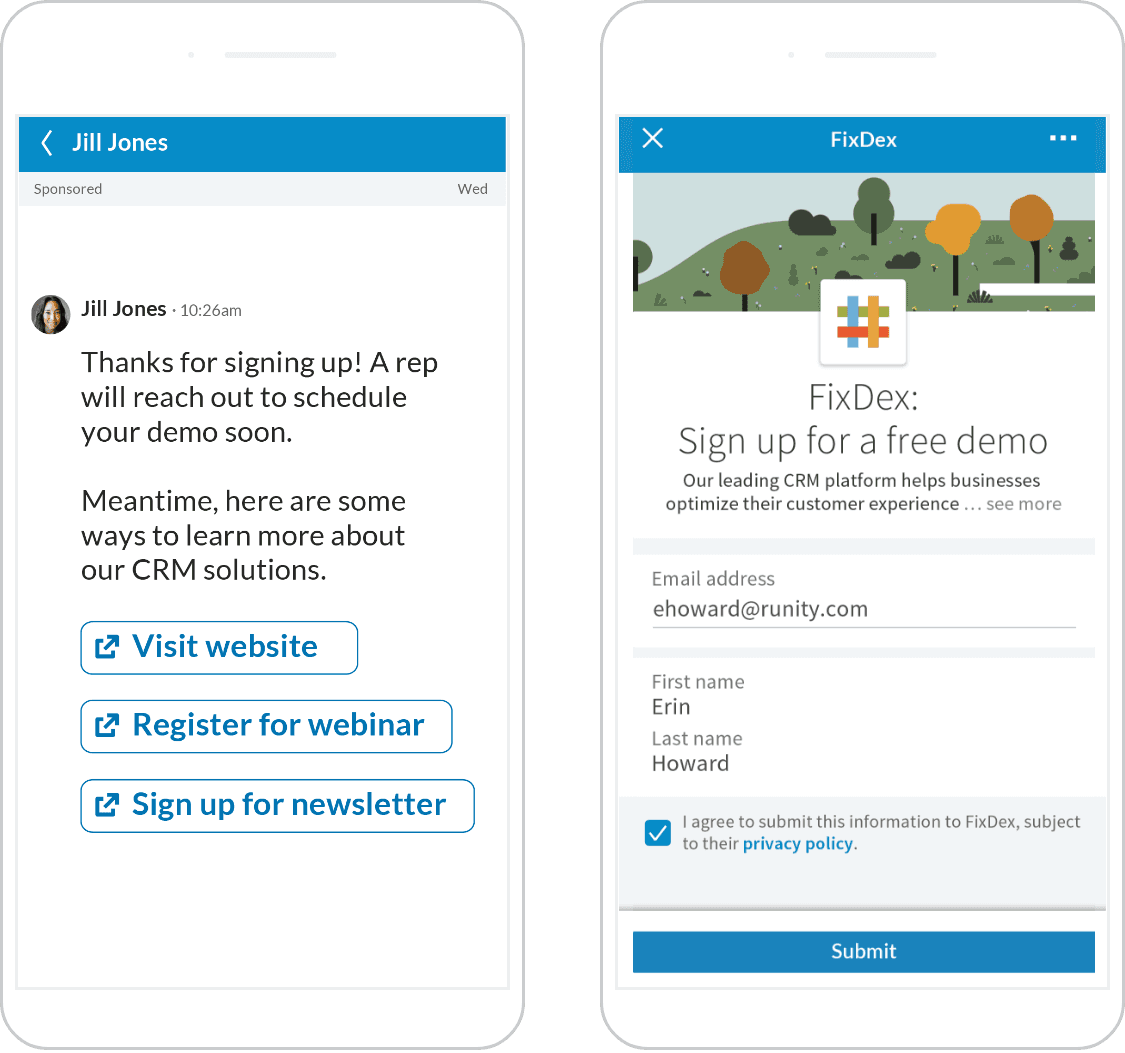
A message ad delivers a single message with one call to action to the inbox. It suits a focused offer: one webinar invite, one demo request, one download. Target it tightly by job title, function, seniority, and industry so the message lands with the right buyer.
Lead Gen Forms
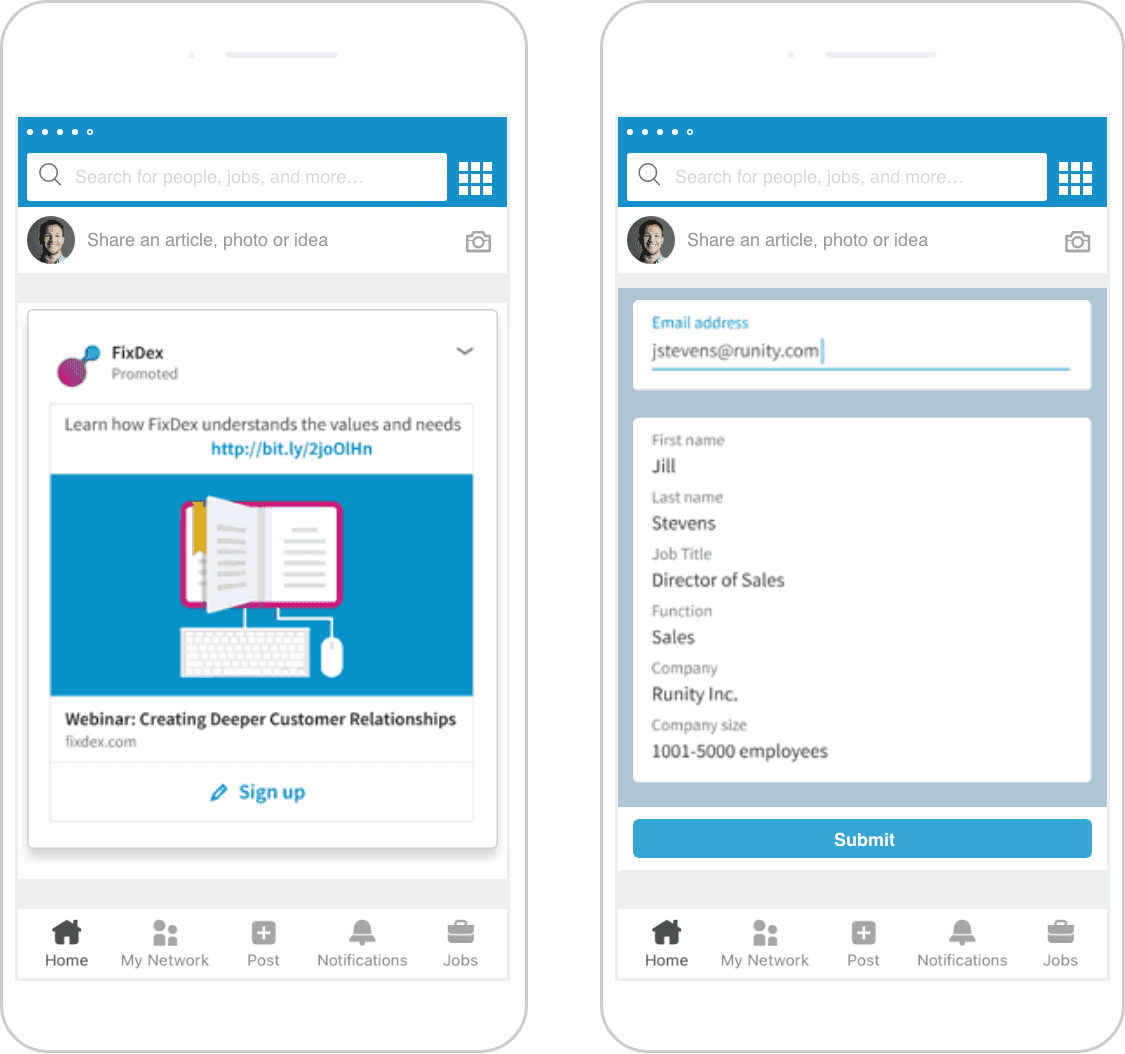
Lead Gen Forms attach to Sponsored Content and Message Ads. When a member taps the call to action, LinkedIn opens a form pre-filled from their profile. They submit with a tap or two, so conversion rates beat sending people to an external landing page. The captured leads flow into your CRM or marketing tools for follow-up.
Dynamic Ads
Dynamic ads run in the right rail on desktop and personalize to each viewer using their LinkedIn profile data. The ad can pull in a member's photo, name, company, or job title, which makes it stand out from static placements. The family covers Spotlight Ads and Follower Ads.
Spotlight Ads
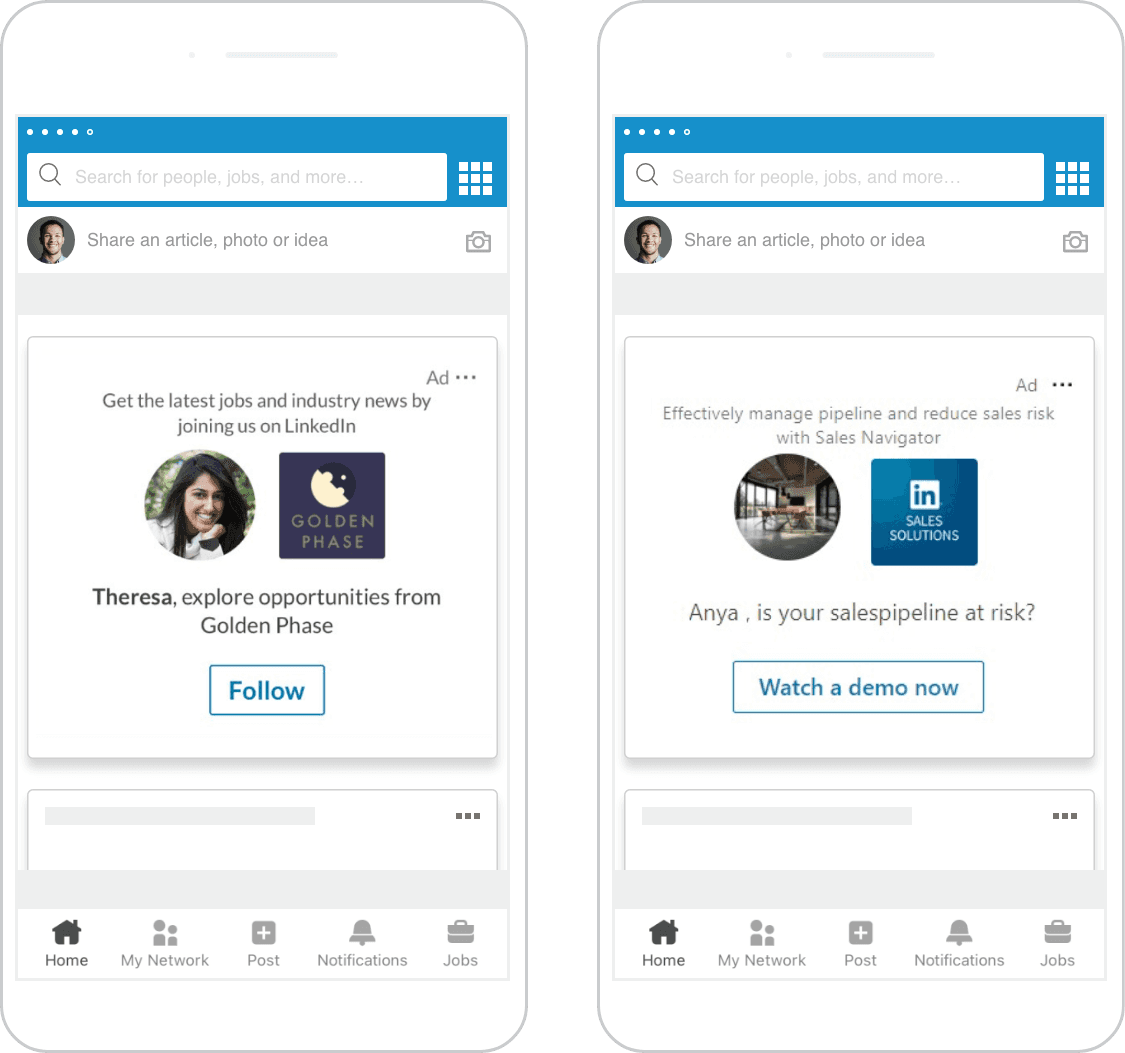
A spotlight ad personalizes to the viewer and links to your site or landing page. It carries the member's profile photo next to your message, so it catches the eye in the right rail. It is a low-cost way to keep a brand or offer in front of a defined audience.
Follower Ads
A follower ad asks members to follow your LinkedIn Page or Showcase Page. It pairs their profile photo with your logo and a short prompt, which lifts response over a generic invite. Use it to grow the audience you can later reach with organic posts and Sponsored Content.
Text Ads
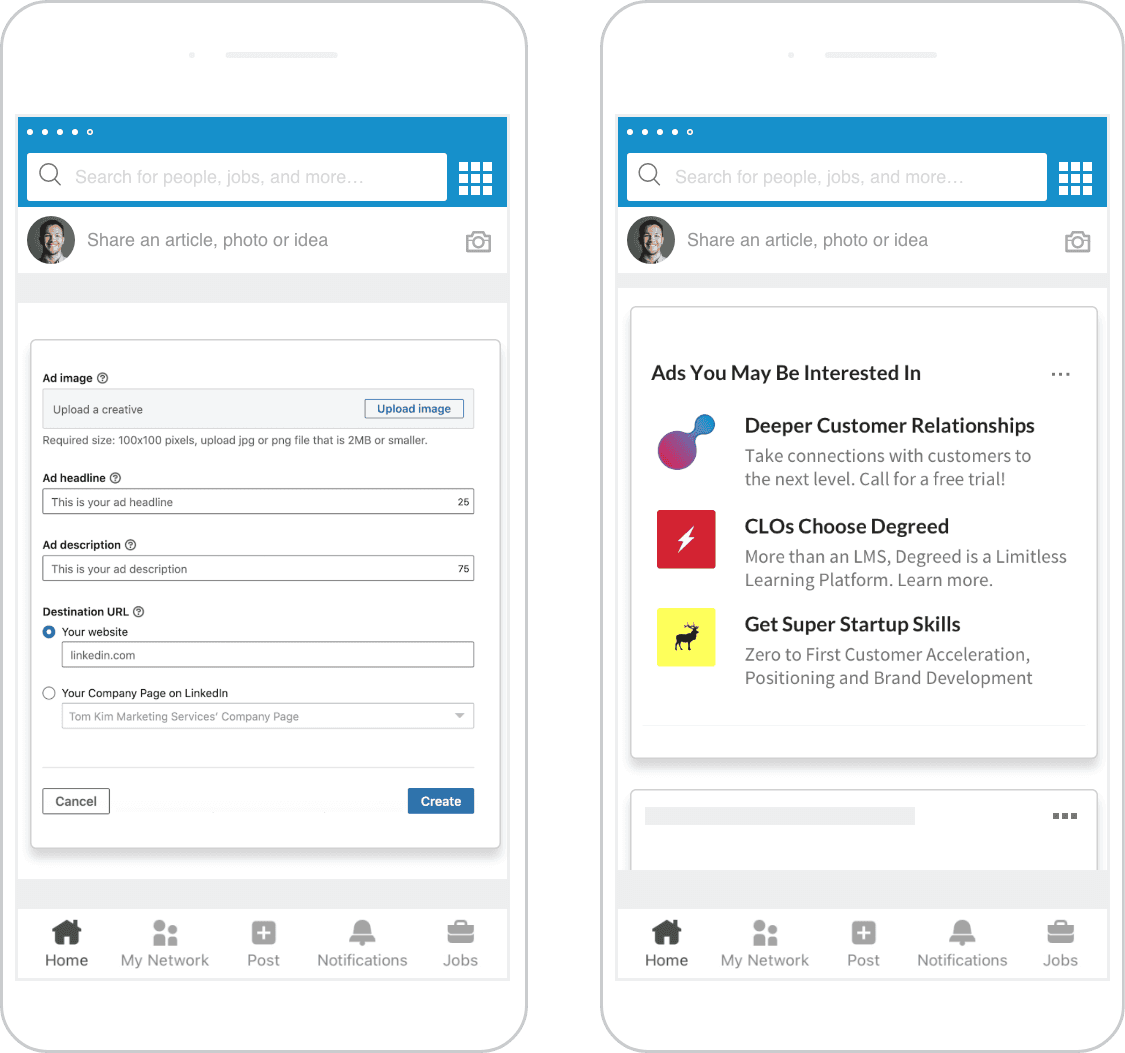
Text ads are small pay-per-click units in the desktop right rail. They pair a short headline, a line of copy, and a small image. They are cheap to run and quick to launch, which makes them a low-risk way to test messaging or build awareness alongside your feed campaigns.
What LinkedIn Ads Cost
LinkedIn costs more than other paid social channels. Cost per click runs from roughly $4.50 to $12 on average, and senior or competitive audiences push it higher. Reaching the C-suite in tech or finance can run well past that range. You pay for precision, and broad or sloppy targeting burns the budget fast.
Plan a real budget. The platform sets a $10 daily minimum per campaign, but a serious test needs a few thousand dollars a month so the system can optimize against actual conversions. Treat anything smaller as a guess, not a test.
So, Are LinkedIn Ads Worth It?
For most B2B companies, yes. LinkedIn is worth it when three things are true: you sell to a defined professional audience, you have a budget large enough to learn, and your offer matches a real buyer need. Under those conditions, the targeting reaches the exact decision-makers other channels cannot isolate, and the leads tend to convert at a higher rate than other social platforms.
LinkedIn is the wrong choice when your audience is broad consumer, when your budget cannot clear the learning phase, or when you expect cheap clicks. The high cost per click only pays back when each lead is worth a lot, which describes most B2B sales cycles and few B2C ones.
The practical play: start with one tight audience, one strong format, and one clear offer. Run Sponsored Content or a Lead Gen Form campaign, give it enough budget to exit the learning phase, and measure cost per qualified lead rather than cost per click. Scale what converts and cut what does not. Used that way, LinkedIn earns its place in a B2B marketing mix.
Related Twelverays resources: paid social services and social advertising guide.


