

To market a digital currency, build trust before you build reach: pair direct channels like SMS, Telegram, and email with crypto communities, social media, and compliant paid ads. This guide breaks down seven digital currency marketing strategies that work in 2026, compares the channels, and covers the advertising rules crypto projects must follow.
The market has never been bigger. U.S. digital ad revenue reached $294.6 billion in 2025, a 13.9% increase year over year, according to the IAB and PwC Internet Advertising Revenue Report. Global crypto ownership hit 741 million people in 2025, per Crypto.com research, and Blockchain.com alone reports more than 95 million wallets created. The attention exists. The projects that win it treat currency marketing as a discipline: clear positioning, community first, and paid media that clears compliance review.
Key Takeaways
- Community channels (Telegram, Reddit, crypto forums) build the trust that converts skeptics. Start there before spending on ads.
- Direct channels (SMS and email) get the highest response rates, but only with opted-in lists.
- Paid channels work once compliance is handled: Google Ads restricts crypto exchanges and wallets to approved, licensed advertisers in approved countries.
- With 741 million crypto owners worldwide, digital currency marketing is now mainstream audience marketing, not niche outreach.
- Answer the compliance question before the creative one: ad approval timelines shape a crypto launch calendar more than design does.
What Is Digital Currency Marketing?
Digital currency marketing is the practice of promoting a cryptocurrency, token, or blockchain product through digital channels: community platforms, social media, search, email, SMS, display ads, and PR. It covers three jobs: building awareness for a new coin, converting that awareness into wallet holders, and keeping the holder community active after launch.
It differs from standard digital marketing in two ways. First, trust does the heavy lifting. Buyers research the team, the tokenomics, and the audits before they commit, so credibility assets like documentation, active communities, and transparent teams outrank ad copy. Second, regulation shapes the channel mix. Major ad platforms restrict crypto promotion, so digital marketing for cryptocurrencies leans harder on owned and earned channels than almost any other industry. The strategies below reflect that split: five organic plays that compound over time, and two paid plays that scale once the organic base exists.
Measure it like any funnel: community growth and engagement at the top, wallet creations and exchange signups in the middle, active holders and transaction volume at the bottom. Every strategy below maps to one of those stages, and the channel comparison later in this guide shows where each one fits.
1. SMS and Direct Messaging
Nothing beats reaching a prospect directly. Email open rates are unpredictable and flyers rarely land with the right audience. SMS is different: a text reaches the phone in a person's hand and gets read within minutes. For a coin launch, an exchange listing, or an airdrop announcement, a short direct message drives faster action than almost any other channel.
You need an opted-in list of numbers from people who have shown real interest in crypto. Run campaigns through an SMS platform, and if the audience is large, hire an SMS marketing firm to handle segmentation, compliance, and delivery. Keep each message to one action: join the Telegram, read the litepaper, claim the airdrop.

2. Telegram Marketing
Telegram is the default home of crypto audiences. Messages are encrypted, the app is cloud based so users read on any device, and its API is free with no promotional ads or subscription fees in the experience.
The channel and group features matter most for marketing. Create a public channel for announcements and a group for open discussion, then share the invite link everywhere your project appears. A well-run Telegram community does two jobs at once: it builds awareness for the coin and turns passive followers into a loyal base that defends and promotes the project. Post consistently, answer questions fast, and moderate scams aggressively. Dead or spammy channels kill credibility.

3. Online Communities: Reddit and Quora
People with shared interests gather in the same places, and for crypto those places are Reddit and Quora. Reddit remains one of the most visited sites in the United States, and its crypto subreddits host daily discussions where projects earn or lose reputation in public.
Participate before you promote. Answer questions, share genuinely useful analysis, and disclose your affiliation. On Quora, target the questions your buyers actually ask, like how wallets work or how to evaluate a new coin, and write answers that stand alone as useful content. Communities reward expertise and punish drive-by promotion, so assign someone who knows the project deeply rather than an outsourced posting service.
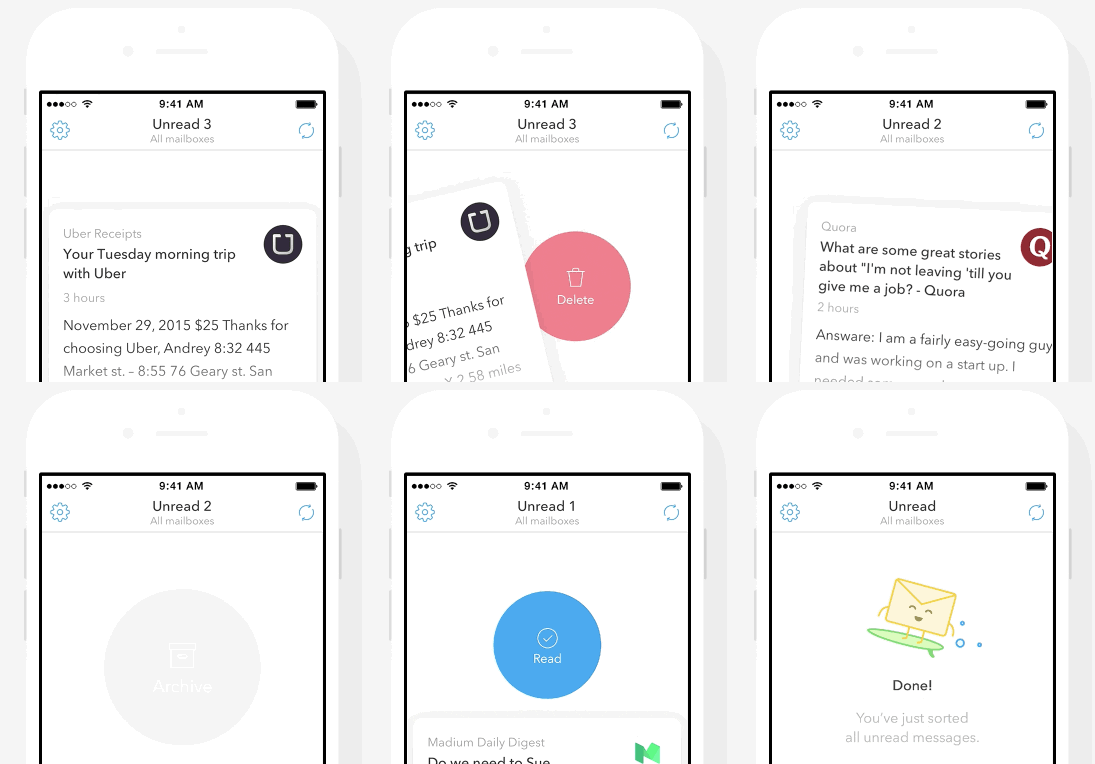
4. Social Media Marketing for Cryptocurrency
Social media runs the top of the funnel for crypto projects. Build a consistent presence on X, LinkedIn, Instagram, and Facebook, each with a distinct job: X for real-time market conversation, LinkedIn for institutional credibility, Instagram and TikTok for retail reach, Facebook for community groups.
Create dedicated accounts for the currency rather than mixing it into a corporate feed. Post about development milestones, listings, partnerships, and market education, not just price. A documented social media strategy builds a cryptocurrency audience faster than ad hoc posting, and an agency can extend it to YouTube, Pinterest, and Reddit once the core channels are working.

5. Display Advertising
Display advertising places image, video, and rich media ads across websites and apps your audience already uses. For a new coin, display works as the awareness layer: a teaser campaign that introduces the currency, plus retargeting that brings visitors back to the site.
Display beats search for new-coin discovery for a simple reason: nobody searches for a coin they have never heard of. Crypto-native ad networks and mainstream programmatic platforms both carry crypto inventory, with different compliance requirements. Startups get the most from display by pairing broad awareness placements with tight retargeting on wallet signups and litepaper downloads.

6. Bitcoin and Crypto Communities
Beyond Reddit and Quora sit the crypto-native forums. Communities like Bitcointalk gather the exact audience a new coin needs: holders, traders, developers, and early adopters who evaluate new projects for sport.
Join established communities, participate in ongoing threads, and build a post history before announcing anything. Most forums run dedicated boards for new coin announcements; use them, and be ready for hard questions about tokenomics, the team, and security. The older and stricter the community, the more its members' endorsement is worth. Approval there filters through to the wider market.
7. Email Marketing Campaigns
Email is the other direct channel, and it carries more than SMS: design, charts, links, and long-form updates. A well-built email program keeps holders informed and warms prospects who are not ready to buy.
Build the list from genuine interest: site signups, community members, event registrations. Segment by intent, holders versus prospects, and keep each email to the point: one update, one insight, one call to action. Quality decides everything here. The moment a crypto newsletter reads like filler, unsubscribes spike and the channel dies.

Cryptocurrency Digital Marketing Channels Compared
No project runs all seven strategies at once. Sequence them by funnel stage: community and social feed the top, direct messaging converts the middle, and paid media scales whatever already works. Weigh each channel by what it does best and how much compliance overhead it carries.
| Channel | Best for | Cost profile | Compliance overhead |
|---|---|---|---|
| Telegram and crypto communities | Trust, retention, early adopters | Low spend, high time investment | Low |
| SMS and email | Activation and holder retention | Low to moderate | Moderate: opt-in and messaging rules |
| Organic social media | Awareness and credibility | Low spend, steady effort | Low |
| Display advertising | New-coin awareness at scale | Moderate to high | Moderate: network policies vary |
| Google Ads | High-intent demand capture | High | High: approval and licensing required |
| PR and press releases | Exchange listings and milestone news | Moderate | Low |
Start with community and direct channels, then add paid media once the funnel converts. Cost follows the same logic: total spend depends on channel mix, community management scope, and how much compliance review your target markets require, not on a flat rate card.
Crypto Advertising Rules on Google Ads
Paid crypto promotion is allowed but gated. Google Ads permits cryptocurrency exchanges and software wallets only in approved countries, and advertisers must be licensed providers with an approved application before ads run; hardware wallets are the one exception to the licensing requirement. Other crypto products face country-by-country restrictions, and Google updates the policy on an ongoing basis. Every major ad network runs its own restricted-product rules for crypto, so check each platform's policy before committing budget to it.
Plan for this in three ways. First, budget review time: applications and certifications add weeks to a launch calendar. Second, build landing pages that pass scrutiny, with clear risk disclosures and no earnings promises. Third, keep organic channels running in every market where paid is unavailable. Ad policy is the biggest difference between marketing a crypto project and marketing any other product, and teams that treat compliance as a launch input rather than an afterthought ship campaigns weeks faster.
Summary
These seven strategies cover the core of how to market digital currency: direct messaging, Telegram, online communities, social media, display ads, crypto forums, and email. Many projects layer on bug bounty programs, affiliate marketing, reputation management, press releases, and paid placements once the core engine runs.
Build marketing in parallel with the coin itself, not after launch. And if the plan stalls, bring in a marketing firm that has run crypto campaigns before. The compliance and community mechanics reward experience.
Related Twelverays resources: demand generation services and demand generation guide.


