

Key Takeaways
- SEO marketing for dentists is the discipline of ranking a dental website above competitors so patients ready to book find the practice first.
- Local SEO for dentists is the Google Business Profile, citation, and NAP work that wins the three-listing map pack for "dentist near me" searches.
- Dental SEO marketing is a system, not a single tactic. It pairs content, local signals, technical health, and reporting into one program.
- Dental practice SEO services are the audit, content, link-building, and technical work a specialist agency runs so the in-house team stays focused on patients.
- Best dental SEO programs track booked appointments and cost per acquisition, not rankings alone, because a page-one spot that produces no calls is a vanity metric.
- Dental SEO expert guidance pays for itself once a market gets competitive, a site needs technical fixes, or content and links need to be built at scale.
- SEO for dentists works because "near me" searches carry buying intent, and the practice that ranks in the top three of the map pack gets the call.
SEO marketing for dentists is the work of ranking your practice at the top of Google for the searches patients make when they are ready to book: the map pack, the organic listings, and the queries behind both. Strong search engine optimization puts you ahead of competitors in one of the most competitive local markets online and turns that visibility into booked appointments.
Whether you run a pediatric clinic, a cosmetic practice, or a multi-location group, the playbook is the same. This guide covers dental website SEO, local search, on-page and off-page SEO, online reviews, technical SEO, and the metrics that prove it all worked.
The four core strategies below build the foundation. The sections that follow go deeper into dental search engine marketing, local SEO, reputation, technical health, and measurement, where dental practices win or lose the rankings race in 2026.
How to Market a Dental Clinic

Marketing a dental clinic starts with online visibility. People search for a dentist the way they search for any local service: on Google, on a phone, with intent to book soon. Your job is to show up in the map pack, in the organic results, and on a website that turns clicks into appointments.
Done well, SEO makes your practice the obvious choice for patients searching for dental care in your area. Here are the four core strategies of SEO marketing for dentists.
1. Content Marketing for Dentists

Content marketing is the cornerstone of dental SEO. Clear, useful content about your services, procedures, and oral health builds authority with both patients and search engines. It answers the questions people ask before picking a dentist, and gives Google reason to rank your pages.
Engaging blog posts with relevant internal links, service pages, and patient education articles attract prospective patients through organic search. They position your practice as a trusted source before the first appointment.
Build content around the questions real patients type into Google: "does a root canal hurt", "how much are dental implants", "emergency dentist open Saturday". Each maps to a service you offer and a patient ready to act. Answer them directly and link each article to the service page it supports.
Location-based Keyword Research and On-Page SEO
Location-based keyword research matches your content to how local patients actually search. Use a keyword research tool such as Ahrefs to find the terms with real volume in your city.
Location-based keywords matter most for a practice that serves in-office patients. Set your research tool and search engine to your country, then build pages around your city and neighborhood names. A dedicated page for each city or suburb you serve outperforms one generic "areas we serve" page.
Target specific services too. Pages for root canals, dental implants, Invisalign, and preventive care reach patients with a clear need. Combine the service and the place: "dental implants in [city]", "pediatric dentist [neighborhood]". These long-tail, high-intent phrases convert far better than broad terms.
Then optimize the on-page elements: title tags, meta descriptions, headings, image alt text, and body copy. Write for the patient first and the search engine second. One primary keyword per page, used naturally, beats keyword stuffing every time.
RELATED: SEO in Los Angeles: 12 Digital Marketing Predictions for 2024
SEO Marketing for Dentists: Examples of Effective Keyword Research
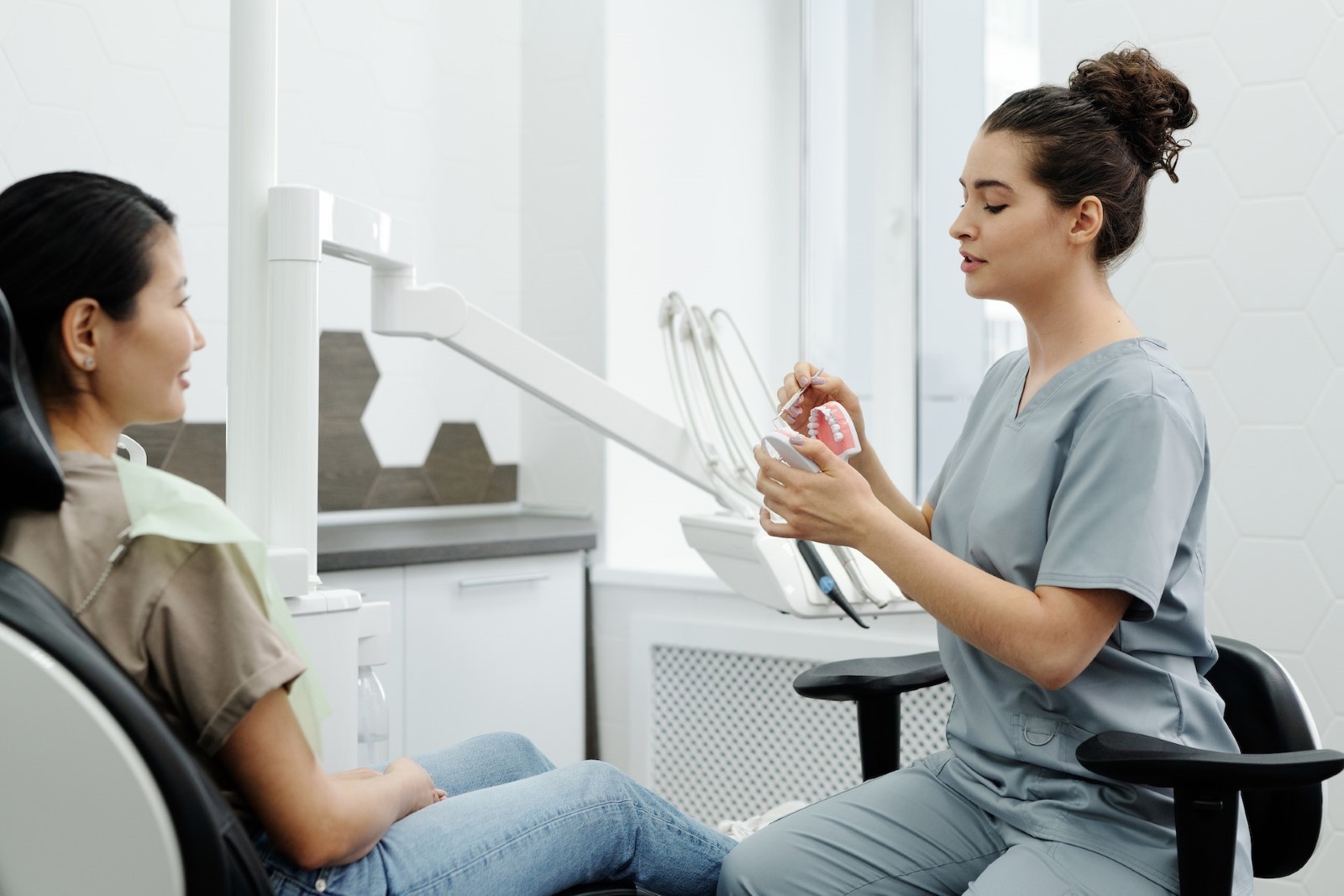
Here are three examples of keyword research done right for dental SEO.
Example 1: Location-Based Keyword Research
A Houston practice wants more local patients. Using Ahrefs, they target location-specific keywords such as "Houston dental clinic" and "oral care in Houston", build pages around those terms, and lift their visibility across the metro.
Example 2: Targeting Services with Keywords
A Chicago office offers root canals and dental implants. They create dedicated pages for "root canal services in Chicago" and "dental implants in Chicago". Each page targets one service and one city, and each ranks for buyers ready to book.
Example 3: Utilizing Long-Tail Keywords
A Miami practice wants targeted, low-competition traffic. They focus on long-tail keywords such as "affordable braces in Miami" and "emergency tooth extraction Miami". Built into titles, headings, and content, these phrases pull in high-intent patients at lower acquisition cost.
2. Dental Practice Off-Page SEO & Link Building

Off-page SEO and link building raise your practice's authority. Quality backlinks from relevant, trusted sites tell Google your practice is credible. The best dental links come from dental directories, local business associations, health publications, sponsorships, and partnerships with nearby businesses.
Consider "DentalCare Plus," a dental practice in Seattle, facing low online visibility despite top-tier services. To boost their digital presence, they collaborated with "DigiSmile," an SEO marketing agency specializing in dental practices.
"DigiSmile" implemented an off-page SEO strategy for "DentalCare Plus," focusing on high-quality backlinks from relevant dental directories and health blogs. They also engaged in creating shareable content to attract further backlinks.
Within a few months, "DentalCare Plus" saw a substantial rise in their search engine rankings and a notable increase in online patient inquiries, demonstrating the power of off-page SEO and effective collaboration with an SEO marketing agency.
A strong backlink profile improves rankings and builds trust. Quality beats quantity: one link from a respected health site or a local news outlet outweighs dozens of low-value directory listings.
Earning Dental Backlinks That Count
Build links the way that holds up over time. Claim listings on reputable dental and healthcare directories. Sponsor a local sports team, school event, or charity to earn a link. Pitch guest articles to local health and parenting publications. Partner with non-competing local businesses for cross-referrals. Create content worth citing, such as original oral-health guides, so other sites link to you on their own.
Working with an experienced SEO agency speeds this up. The right partner secures high-quality backlinks, raises your domain authority, and improves rankings, while keeping you clear of spammy link schemes that trigger penalties. Avoid any service selling bulk links or paid link networks. Those tactics carry real risk and rarely last.
RELATED: Digital Marketing Services: Cost-Benefit Breakdown
3. Google Business Profile Optimization

Your Google Business Profile is the single most important asset in dental local SEO. It controls whether you appear in the map pack, the local results that sit above the organic listings on most "dentist near me" searches. For many practices, the map pack drives more calls than the website. A Deloitte health care consumer survey found that convenient location mattered to 43% of patients choosing a doctor, trailing only network coverage. Reputation shaped the decision for another 39%, proof that proximity and trust signals close deals long before a phone ever rings.
Optimize it fully. Choose the right primary category, "Dentist", plus accurate secondary categories such as "Cosmetic dentist" or "Pediatric dentist". Confirm your name, address, and phone number. Set correct hours, including holidays. Add real photos of your office and team. List every service. Post updates regularly. Answer the questions patients leave in the Q&A.
Reviews on your profile carry heavy weight in local rankings and in the patient's decision to call. The next section covers them in depth.
Enhancing Local Visibility with Google Maps
Your Google Maps listing draws from your Business Profile. Patients searching for a dentist nearby decide in seconds, and a complete, well-reviewed listing wins the click.
4. Utilizing Google Tools for Dental SEO Marketing

Google's free tools tell you what is working and where to invest next. They turn SEO from guesswork into a measurable system.
Google Search Console for Search Visibility
Google Search Console shows the exact queries that bring patients to your site, your average position for each, your click-through rate, and any indexing or technical errors Google finds. Start here. It is the clearest, free view of how Google sees your dental site.
Google Analytics for Data-Driven Insights
Google Analytics reveals how visitors behave once they land. Track organic traffic, the pages patients view, and how many complete a goal such as booking a call. These insights show which content earns patients and which needs work.
Google Ads for Targeted Advertising
Google Ads reaches patients actively searching for dental services right now. Well-built campaigns put your practice at the top of results for high-intent keywords while your organic rankings grow. SEO and paid search work best together: paid delivers patients today, SEO compounds value over time.
RELATED: 12 Best AI Tools for Digital Marketing
What Is Dental Search Engine Marketing?
Dental search engine marketing (SEM) is the umbrella over two channels: dental SEO and paid search ads. Both compete for the same page of Google results, but they earn placement differently. SEO wins the map pack and organic listings through content, local signals, links, and technical health. Paid search buys the ad slots above them for high-intent queries such as "emergency dentist [city]".
The two channels never trade positions. Google's Honest Results policy states that Search gives no ranking boost based on advertising, so an ads budget cannot buy an organic spot. What paid search does buy is speed and data: same-day placement, plus a list of the exact keywords that convert into booked appointments, which then sharpens your SEO targeting.
Treat dental marketing and SEO as one budget with two dials. Run ads on emergency and implant keywords where a single booked patient covers the click cost, and let dental SEO marketing compound on everything else. Practices that coordinate both channels pay less per new patient than practices that pick one. That is dental search marketing done right.
Local SEO for Dentists: Citations, NAP, and Local Links
Local SEO is where dental practices win, and it goes well beyond the Google Business Profile. Three signals decide how you rank in local search: consistent citations, an accurate NAP, and local backlinks.
Keep Your NAP Consistent Everywhere
NAP stands for Name, Address, and Phone number. Google cross-checks your NAP across the web to confirm your practice is real and trustworthy. Inconsistencies confuse search engines and cost you rankings. List your practice exactly the same way everywhere: same suite number, same phone format, same business name. If you moved or rebranded, fix every old listing.
Build Local Citations on the Right Directories
A citation is any mention of your practice's NAP online, with or without a link. Volume and accuracy both matter. Prioritize the directories patients and search engines trust: Google Business Profile, Bing Places, Apple Business (formerly Apple Business Connect), Yelp, Healthgrades, Zocdoc, and the ADA and state dental association directories. Claim each listing, complete every field, and keep them current.
Earn Local Backlinks and Build Review Velocity
Local links carry extra weight. Links from your chamber of commerce, local news, schools you sponsor, and community organizations signal that your practice is rooted in the area. Pair this with steady review velocity. A consistent flow of new reviews, not a single old burst, tells Google your practice is active and trusted. Local citations, a clean NAP, local links, and ongoing reviews compound into durable local rankings.
Online Reviews and Reputation Management for Dental Practices
Reviews are a ranking factor and a conversion lever at once. They influence where you sit in the map pack, and they decide whether a patient who finds you actually calls. Harvard Business Review research found that as many as 98% of consumers rely on online reviews to inform a purchase decision, with some ranking reviews as the single most important factor, ahead of the service description itself. A practice with many recent four-and-five-star reviews wins against one with a handful of old ones.
Ask for Reviews, Consistently
The best review strategy is a simple, repeatable ask. Train your front desk to request a review after a positive appointment. Send a follow-up text or email with a direct link to your Google profile. A steady cadence of fresh reviews builds the velocity that local search rewards.
Respond to Every Review
Reply to all reviews, positive and negative. Thank happy patients by name. For negative reviews, respond calmly, take the conversation offline, and show future patients you handle problems professionally. Never share patient health details in a public reply. HIPAA applies online, so keep responses general and invite the patient to contact the office directly.
Diversify Beyond Google
Google reviews matter most, but a healthy reputation spreads across the platforms patients check: Healthgrades, Zocdoc, Yelp, and Facebook. A consistent presence reinforces trust and gives you more surfaces to rank on. Managing reviews is an ongoing system that protects both your rankings and your front-door conversion rate.
Technical SEO for Dental Websites
Technical SEO is the foundation everything else sits on. A site that loads slowly, breaks on mobile, or hides content from Google will not rank, no matter how good the content. Get the technical layer right and every other effort works harder.
Site Speed and Core Web Vitals
Page speed affects both rankings and bookings. Google measures real user experience through Core Web Vitals: how fast the main content loads, how quickly the page responds to interaction, and how stable the layout is. Slow dental sites lose patients before the page finishes loading. Compress images, use modern formats, limit heavy plugins, and choose fast, reliable hosting.
Mobile-First, Always
Most patients search for a dentist on a phone, and Google indexes the mobile version of your site first. Your site must load fast on mobile, present tap-friendly buttons, and keep the phone number and booking link within easy reach. A click-to-call button at the top of every page turns mobile searchers into booked appointments.
Structured Data and Schema Markup
Schema markup is code that helps search engines understand your pages and can earn rich results. Three schema types matter most for dental sites:
- LocalBusiness and Dentist schema: tells Google your practice name, address, phone, hours, and services in a format it reads precisely, reinforcing your NAP and local rankings.
- Review and AggregateRating schema: documents your ratings for search engines, though Google does not show star-rating rich results for reviews a business posts about itself. Visible stars in search come from your Google Business Profile and third-party review platforms, not from schema on your own site.
- FAQ schema: marks up your question-and-answer content so search engines parse it clearly. Google discontinued FAQ rich results in Search as of May 2026, so this schema no longer creates extra visual space in the results, but it still helps engines understand the page.
Add a clean site structure, an XML sitemap, secure HTTPS, and crawlable, indexable pages. That gives your content the technical base it needs to rank.
Measuring Results: New Patients, Not Rankings
Rankings and traffic are means, not ends. The metric that matters is new patients booked and what each costs to acquire. A number-one ranking that produces no appointments is a vanity metric. Measure what grows the practice.
Track the Metrics That Tie to Revenue
Focus your reporting on the numbers that connect SEO to the chair:
- New patient calls and form submissions from organic search, tracked with call tracking and form analytics.
- Cost per acquisition, total marketing spend divided by new patients gained, so you know what each patient costs.
- Conversion rate, the share of visitors who book or call, which shows whether your site turns traffic into patients.
- Booked appointments and patient lifetime value, the figures that prove SEO returns more than it costs.
Connect Search Data to Outcomes
Use Google Search Console and Google Analytics for visibility and behavior, then layer call tracking and your practice management system on top to close the loop. When you can trace a new patient from a search query to a booked appointment, you invest in what works and cut what does not. That is the difference between SEO as a cost and SEO as growth.
Best Dental SEO Practices for Growing Patient Volume
Strong SEO strategies need disciplined execution. Here is a summary of best practices for SEO marketing for dentists.
- Run a complete SEO program: On-page, off-page, local, and technical SEO work together. Each covers a gap the others leave open.
- Publish valuable, relevant content: Patient-focused content lifts rankings and builds your practice as a trusted oral health resource.
- Own your local presence: Your Google Business Profile, accurate citations, a consistent NAP, and steady reviews are the core of local dental SEO.
- Build on solid technical ground: Fast, mobile-first pages with clean schema markup let your content rank to its full potential.
- Measure new patients, not vanity metrics: Tie every effort to booked appointments and cost per acquisition. That is how you prove return on investment.
DIY vs. Professional Dental SEO Services at a Glance
| Approach | What's Covered | Typical Time to Results | Best Fit |
|---|---|---|---|
| DIY, in-house | Google Business Profile claim, basic review requests, NAP cleanup | 4-8 weeks for local wins | Single-location practices in low-competition markets |
| Dental practice SEO services | Full technical audit, content build-out, local citations, link building, schema markup, reporting | 6-12 months for competitive organic rankings | Multi-location groups and competitive metros |
| Paid search, run alongside SEO | Immediate placement for high-intent keywords while organic SEO compounds | Same day | Practices that need new patients now |
Frequently Asked Questions About Dental SEO
How long does dental SEO take to show results?
Dental SEO is a long-term investment, not an overnight fix. Local wins, such as Google Business Profile optimization and review growth, can move rankings within a few weeks. Competitive organic rankings build over several months. Most practices see meaningful, compounding gains within the first six to twelve months. A less competitive market moves faster than a major metro.
How much does dental SEO cost?
Cost depends on how competitive your market is, how many locations and services you target, the state of your website, and the scope of work. A single-location practice in a small town invests far less than a multi-location group in a major city. Local SEO and review management cost less than a full program that adds content, link building, and technical work. Budget by weighing the cost against the lifetime value of a new patient, then choose a scope that returns more than it costs. Ask any agency to map their work to new-patient outcomes, not just rankings.
What is the difference between local SEO and traditional SEO for dentists?
Local SEO targets patients searching in your area and aims for the map pack and "near me" results. It relies on your Google Business Profile, citations, NAP consistency, and reviews. Organic SEO targets broader informational and service searches through content, on-page optimization, and backlinks. Dental practices need both. Local SEO captures patients ready to book nearby. Organic SEO builds authority and reaches patients earlier in their search.
Can I do dental SEO myself or should I hire an agency?
You can handle the basics: claim and complete your Google Business Profile, ask patients for reviews, and keep your NAP consistent. These steps deliver real value at no cost beyond your time. Competitive markets, technical SEO, content at scale, and link building call for a specialist. Most dentists are busy running a practice, and SEO rewards consistent, expert effort. A dental SEO expert delivering dedicated dental practice SEO services returns more than the fee through faster patient growth.
What makes dental SEO different from SEO in other industries?
Dental SEO is intensely local and trust-driven. Patients choose a dentist close to home, so map pack visibility, reviews, and local signals carry outsized weight. Content must build trust and respect patient privacy, since HIPAA governs how you handle reviews and patient stories. The goal is concrete: booked appointments from your service area, not broad national traffic.
Why does SEO for dentists work so well?
SEO for dentists works because dental searches carry immediate intent and a defined service area. A person searching "dentist near me" or "emergency tooth extraction" is hours or days from booking, not months, and Google resolves those searches locally, so you compete against the practices in your area rather than the entire country. That gives SEO for dental practices a direct line from ranking to revenue: win the map pack and the first organic positions in your service area, and a steady share of high-intent searchers becomes patients every month. Rankings earned through content, reviews, and local signals keep producing patients without a per-click cost, which is why the channel compounds where ads reset to zero each month.
When should a practice hire a dental SEO marketing consultant?
Hire a dental SEO marketing consultant when you need strategy more than headcount: a technical audit before a site rebuild, a plan for entering a competitive metro, or an independent review of an agency's work. A consultant diagnoses and directs, then your in-house team or an agency executes. Ask for dental-specific results, a defined deliverable, and reporting tied to booked appointments. If you need content, links, and citation work produced at scale every month, a full-service team fits better than a solo advisor.
Grow Your Dental Practice with SEO

A complete strategy, combining SEO, local search, reviews, and a fast, well-built website, expands your reach and books more patients. Each piece reinforces the others, building a presence patients find, trust, and choose.
SEO is a growth engine for dental practices. Optimize your Google Business Profile, earn quality local links and reviews, keep your site technically sound, and measure new patients booked. That combination secures a durable online presence and a steady stream of patients.
Ready to win more patients from search? Partner with Twelverays. Our team delivers dental practice SEO services built around a dental SEO expert's playbook, the discipline that turns search visibility into booked appointments. Schedule a discovery call today.


