Intro
Lead gen marketing gets costly when you have a long buying cycle. These ideas improve lead quantity and lead quality. Lead gen marketers face a constant struggle: post strong on-site KPIs while balancing volume against the quality of the leads delivered.
Each stage of the funnel has its own purpose and target audience. This guide walks through the customer journey and shows you how to turn cold leads into qualified leads.
You will learn the steps to grow your lead generation while keeping an eye on funnel conversion rates afterward.
Let us help you find your ideal customer and the right marketing funnel.
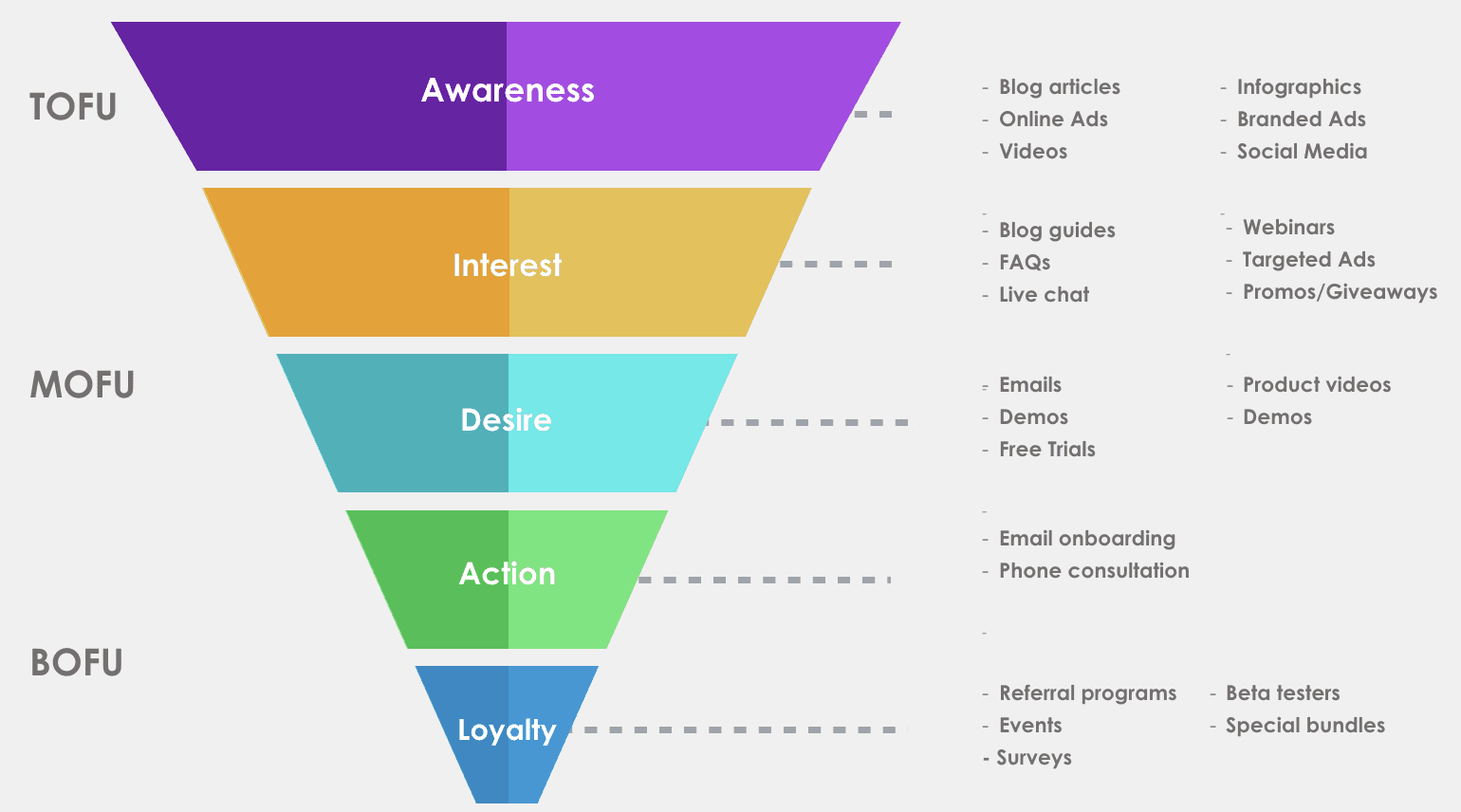
1. Top to Bottom of The Funnel (Potential Customers)
This is the first step of the marketing funnel. Prospects reach your site from a search engine, guest posts, or other inbound channels. This is where your prospective customers, potential buyers, or potential leads (call them what you like) start engaging with your content. Your goal here is to separate serious buyers from window shoppers.
Lead gen marketing gets expensive when you have a long buying cycle. Starting at the top of the funnel can feel counterintuitive when you have many touchpoints. It lets you use less expensive targeting techniques and get in front of leads early. That early position keeps you involved with the prospect through the entire buying cycle.
Prospecting on LinkedIn, YouTube, and Facebook opens a range of targeting options that help you zero in on the right people. This is trickier with search, where you target keywords, especially if you sell a product or service buyers actively seek. Broader targeting and a wider media investment open new ways to convert leads.
Lead generation forms on LinkedIn and Facebook often cost less than sending people to a landing page. Leads you capture at the top of the funnel need nurturing, and we cover that below.
At the top of the funnel, focus your blog posts as a core lead generation play. This is where you build trust. The main job of TOFU is awareness. Build social proof through your social channels, a white paper, or relevant content. Start capturing email lists here for future whitepapers, blogs, and news. The next step in the funnel covers how to run email marketing as part of your interest-generation campaigns.
On the sales side, do not sell anything here. Build trust instead. Teach your sales teams that the focus at this stage is value, not the pitch.
RELATED:Comparing B2B and B2C Lead Generation Techniques
2. Show Off Your Content
Content is a strong way to capture top-of-funnel and middle-of-funnel leads. It lets you offer something of value in exchange for a prospect's details. It also lets you start collecting information.
You learn about leads based on the content they read. SMB or enterprise, C-Class or S-Class, beach getaway or backpacking Europe. You see where this goes. By engaging with your content, prospects self-select into market segments, and that shapes your marketing approach.
Content also gives you a clean way to re-engage prospects while you keep delivering value.
3. The Middle of The Funnel Matters as Much as The Bottom
We have touched on the middle of the funnel a few times, but it deserves a direct call-out. The middle is the spot I see treated as a weak point by companies that lean heavily on PPC for lead gen. As marketers move up the funnel, we often run all the way to the top, which is great.
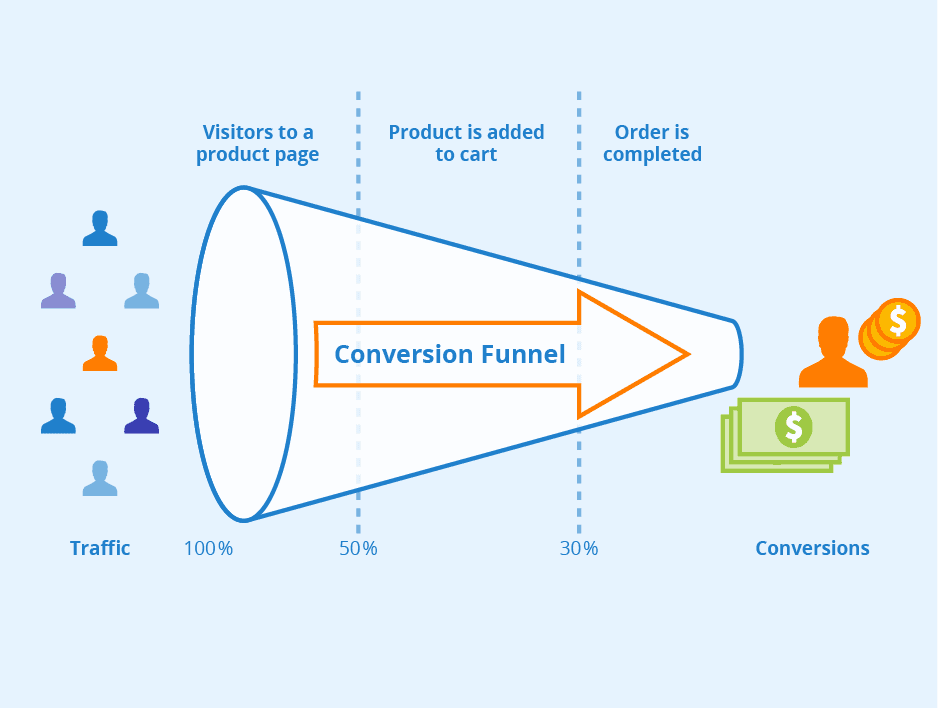
The disconnect comes when we generate top-of-funnel leads, treat them like bottom-of-funnel leads, and then get frustrated when they do not convert the same way. Leads from the top of the funnel cost less than lower-funnel leads, but they are also colder. A re-engagement plan is what earns a solid return on those efforts.
When people hear "middle funnel," they think of email. Email is a great way to re-engage people throughout the funnel. On the PPC side, audiences keep people engaged too. This is where you send the email campaign built from the addresses you captured.
4. Get the Most From First- and Third-Party Audiences
Starting higher in the funnel lets you build strong audiences you can then use in lower-funnel campaigns, such as audiences around content topics. Your first-party audiences do not have to be pixel-based. Build them from your email lists too.
Plenty of third-party options exist for audience targeting. Layer first-party and third-party audiences on top of your search campaigns with the observation-only setting. That lets you collect data on how these audiences perform without changing or limiting your search targeting.
Look at the third-party audiences under "detailed demographics." Not all of them layer into search campaigns, but some do. B2B advertisers can pick audiences for company size and industry.
Depending on how those audiences perform, you might create RLSA campaigns that require searchers to fall into the audiences you choose. In the B2B case, this safeguards your targeting to the right company sizes. Audiences carry across channels, so you can take your learnings and apply them elsewhere.
Use your first-party audiences to re-engage people on display and YouTube and move them through the funnel. Apply those learnings at the top of the funnel by cycling third-party audiences up into your prospecting campaigns as new targeting options.
Watch your conversion rates. Audiences open up a lot once you move third-party targeting out of search and into display and YouTube, because keyword intent no longer filters the traffic. Check how those audiences perform in Google Analytics against all site traffic, not just paid search, to see how conversion rates hold up.
If conversion rates drop sharply, or the data skews because most of your traffic comes from search, use Combined Audiences to layer several audiences and tighten your targeting.
RELATED:What is Salesforce & What is it Used For?
5. Track All Data and Monitor Lead Quality
It is easy to launch campaigns based on what you can already track, even when that tracking is thin. If you do not track everything, you cannot gauge performance. With lead gen campaigns, volume is not the only concern. Quality matters just as much.
Tracking leads through to the sale is what gives you clean management over:
-
Which campaigns and sources drive good leads.
-
Which campaigns and sources drive junk leads.
RELATED:What is Blogging and How Does It Work?
The two most commonly missed metrics are calls and micro-conversions. Let us cover each.
Micro-Conversions
Micro-conversions are useful because they let you check engagement. As you move up the funnel, it helps to know whether and how people engage, rather than just driving traffic and hoping they return. Micro-conversions are also great for building audiences, which shapes your approach.
Tracking micro-conversions builds a feedback loop on your campaign so you confirm you are delivering value to prospects and getting value in exchange. A report that shows how many people watched a video, downloaded a guide, or grabbed a coupon beats a report that only shows impressions and clicks.
RELATED:30 Tips to Increase Customer Retention
Phone Calls
Without proper call tracking, it is hard to manage call volume.
Agencies have all heard anecdotal feedback from clients:
-
“Calls seem light today."
-
“We had a lot of calls the other day."
-
“We have had plenty of calls, but they do not all seem relevant."
-
"Calls jumped, but I think it is because we ran X offline."
RELATED:Ecommerce SEO: How Visibility Increases Sales
Without tracking in place, you never know what drives those calls or whether they even come from your media efforts. That makes it nearly impossible to improve call volume or quality, which is exactly what PPC does well.
A call tracking process gives you a clear read on call quality, value, volume, and trends. Done at a granular level, it lets you make optimizations that drive real change.
Outsourcing Your Marketing to Marketing Agencies
If you are too busy or lack the time and expertise to build a proper lead generation funnel with the right tools, consult a digital marketing agency. These agencies bring the expertise of a fully dedicated marketing team to help you reach your goals and the right customers.
The right agency helps you set up email marketing campaigns, run sound email strategies, and run video marketing, content marketing, B2C or B2B lead generation, and social media marketing. Based on their expertise, they understand the customer buying process and the decisions behind it.
Twelverays' demand generation services cover this funnel work end to end, from top-of-funnel content through the call tracking and lead-quality reporting above.