
Bitdefender vs CrowdStrike is a real decision with a real answer, and the answer is not the same for every company. Both are serious endpoint platforms. They are built around different assumptions about who operates them, and that is what should decide it, not a feature grid.
The short version: CrowdStrike is built for organizations with security operations capability, and priced accordingly. Bitdefender GravityZone is built to automate what a lean IT team cannot staff. Below is what each costs, where each genuinely wins, and how to tell which describes you.
All prices come from the vendors' own published pricing, captured August 2026. Both sell higher tiers by quote, so treat these as the transparent floor rather than your final number.
Bitdefender GravityZone vs CrowdStrike Falcon on price
| Rung | Bitdefender GravityZone | CrowdStrike Falcon |
|---|---|---|
| Entry | Small Business Security, $32.50 per device, per year | Falcon Go, $59.99 per device, per year |
| Core | Business Security, $38.50 per device, per year | Falcon Pro, $99.99 per device, per year |
| Upper | Business Security Premium, $88.00 per device, per year | Falcon Enterprise, $184.99 per device, per year |
| Self-serve limit | 100 devices, then partner-quoted | Falcon Go capped at 100 devices |
| Managed service | Bitdefender MDR, quoted | Falcon Complete MDR, quoted |
Bitdefender figures are list prices for ten devices on a one-year term from Bitdefender's comparison page; a 30% vendor promotion was running at the time of writing. CrowdStrike figures are annual per-device pricing from CrowdStrike's pricing page.
At comparable rungs CrowdStrike costs roughly 1.8 to 2.6 times as much per device. The rungs line up by position on each vendor's published ladder, not feature for feature. That gap is the whole conversation. It is not a rip-off and it is not a rounding error, and whether it is worth paying depends entirely on whether you can use what it buys.
Is CrowdStrike better than Bitdefender?
For threat hunting and incident investigation at depth, CrowdStrike's platform and its threat intelligence operation are genuinely excellent, and the market prices that reputation accurately.
That advantage converts into outcomes only when someone exploits it. A platform built for analysts to run investigations produces its value when analysts run investigations. Sold into a company with two IT generalists and no security staff, the depth mostly goes unused while the invoice does not.
So the question is not which product is better in the abstract. It is which product is better given who will operate it on Monday morning. That framing gives a clean answer far more often than a feature comparison does.
Bitdefender EDR vs CrowdStrike on how the work gets done
Both platforms detect, both correlate, both let you respond. The difference is how much of the middle they expect you to do.
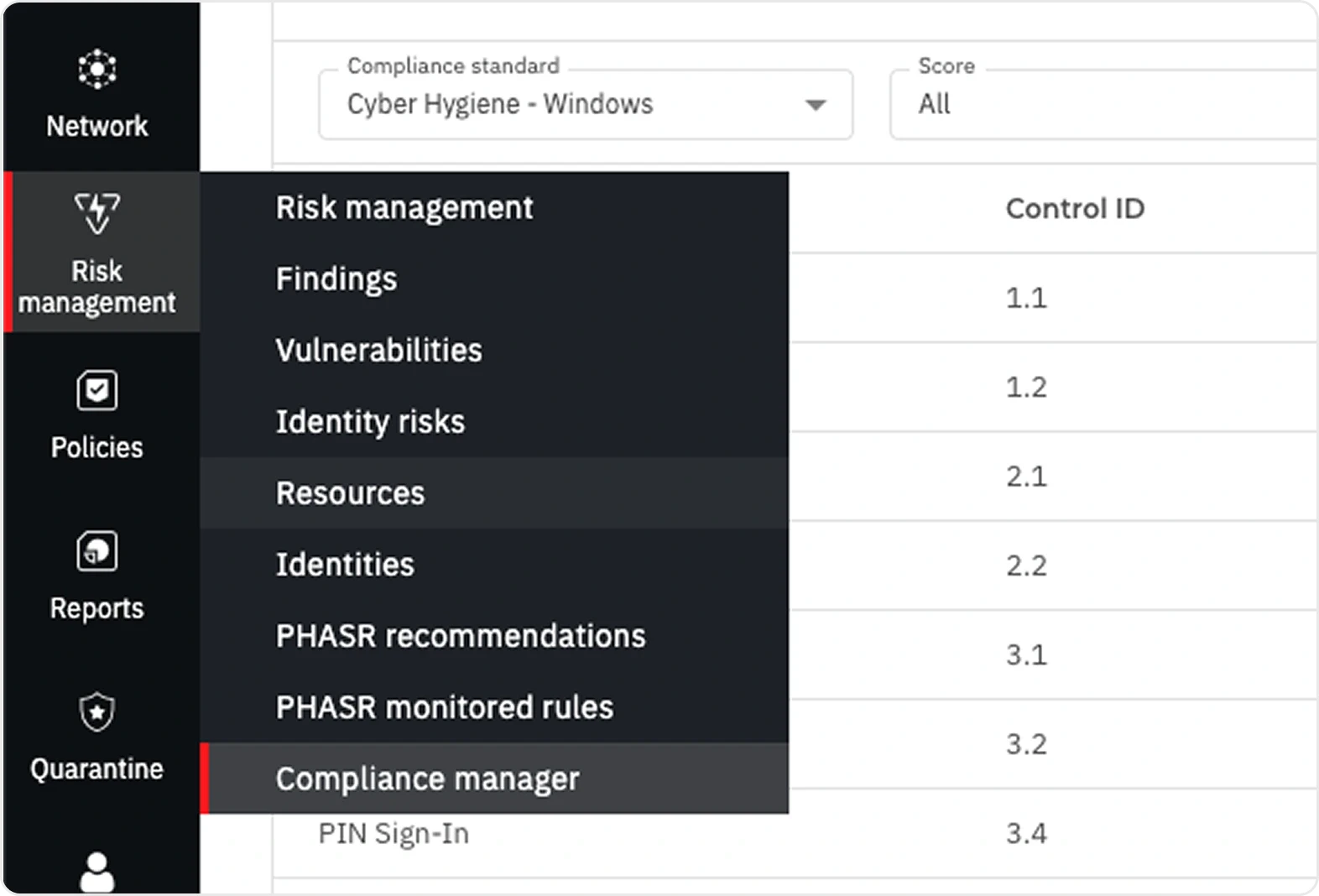
GravityZone leans on automation. Detections arrive grouped into incidents with the attack scope already assembled. The design goal is that a generalist can understand what happened without being a malware analyst, and much of the investigation is done before a human opens the console.
Falcon leans on capability. It exposes rich telemetry and query power, and it rewards people who know what to ask. In skilled hands that is a decisive advantage. In unskilled hands it is an expensive alert feed.
Neither approach is wrong. They are aimed at different buyers, and most comparisons fail because they score both against a single imagined customer.
CrowdStrike vs Bitdefender for small business
For most companies under a few hundred endpoints without dedicated security staff, GravityZone is the better fit, and the reasoning is not only price.
The entry rungs illustrate it. Falcon Go is capped at 100 devices, and so is Bitdefender's self-serve checkout, so on the entry rungs both vendors treat that as the line where buying becomes a conversation. At that scale the deciding factors are how much tuning the console needs, how much noise it produces, and whether anybody is watching after hours.
If nobody is watching after hours, buy a managed service before you buy a more sophisticated console. Both vendors offer one: Bitdefender MDR and Falcon Complete. Comparing an unmanaged premium platform against a managed mid-tier one is the comparison most buyers should actually be running.
Where CrowdStrike is the right buy
We license Bitdefender, and there are situations where we would tell you to look at CrowdStrike instead.
You have a security team, or you are building one. Analysts who can write queries and run hunts extract real value from Falcon's telemetry depth.
Threat hunting is a requirement, not an aspiration. If proactive hunting is written into your security program or a customer contract, that is Falcon's home ground.
Your board or your customers ask for it by name. Procurement reality is a legitimate input. Sometimes the brand is part of what is being bought.
You are already deep in the Falcon platform. If you run their identity or cloud modules, consolidation logic favors staying.
What practitioners actually argue about
Search for Bitdefender vs CrowdStrike on Reddit or in practitioner forums and you will find plenty of opinion. Read it for operational detail, not for detection rates.
The themes worth weighing are cost at scale, how much console tuning each demands, how noisy the alerting is before it is tuned, and how much of the platform a small team realistically uses. Migrations run in both directions, which is a reminder that this is a fit question rather than a quality question.
Treat individual anecdotes carefully. Someone's experience with an untuned deployment says more about the deployment than the product.
The honest decision framework
- Count your endpoints, servers and virtual machines included. That is the multiplier on every number above.
- Name who operates this. A person, not a team in the abstract. If you cannot name them, you are buying a managed service, not a console.
- Decide whether anyone covers nights and weekends. If not, price MDR from both vendors before comparing platform tiers.
- Check what you are already paying for. Overlapping tools are more common than underspend.
- Get both quotes at your real device count. Published pricing is the floor, and both vendors negotiate at real device counts.
If step two produces a confident name and that person is a security specialist, look hard at CrowdStrike. If step two produces an IT generalist who also owns the helpdesk and the printers, GravityZone plus MDR will serve you better for less.
Questions buyers ask us
Is CrowdStrike worth roughly twice the price? It is when you have people who use what it provides. The premium buys depth of telemetry and investigation, and that depth converts to outcomes through analysts. Without them you are paying for capability you will not exercise.
Can we run GravityZone and Falcon side by side? Two enforcing endpoint agents on one machine cause file contention and duplicated alerts. During a migration you run them in sequence with one in a non-enforcing mode, not indefinitely in parallel.
Which is easier to deploy? Both deploy quickly at small scale. The real work in either case is policy tuning and exclusions for line-of-business applications, which is where most of the effort goes and where most self-serve deployments stall.
Does Bitdefender have real EDR, or only antivirus? GravityZone has real EDR. It ships in GravityZone Business Security Enterprise, and XDR extends it with add-on sensors for identity, network, cloud, and productivity applications. The distinction versus Falcon is the operating model, not the presence of EDR.
We are already on CrowdStrike and the renewal is painful. Is switching worth it? Sometimes. Model the switch at your real device count, include the migration effort honestly, and be clear about which Falcon capabilities you actually use today. If the answer is antivirus and occasional alert triage, the economics usually favor moving. Our Bitdefender pricing guide has the licensing mechanics, and our tier comparison covers which GravityZone level replaces what you have.
Do you cover the US as well as Canada? Both. We are a Bitdefender Reseller Gold Partner working with businesses across the United States and Canada, and licensing, deployment, and renewals run the same way in either country. That Gold status is what makes the pricing work: it opens deeper partner discounts across the GravityZone catalog, and that room goes into your quote.
The short version
- On published list pricing CrowdStrike runs roughly 1.8x to 2.6x Bitdefender at comparable rungs: Falcon Go $59.99 versus Small Business Security $32.50, Falcon Pro $99.99 versus Business Security $38.50, Falcon Enterprise $184.99 versus Business Security Premium $88.00, all per device per year.
- CrowdStrike rewards organizations with security operations capability. Bitdefender automates for teams that do not have it.
- Bitdefender's self-serve checkout and CrowdStrike's Falcon Go both stop at 100 devices.
- If nobody watches alerts after hours, compare managed services before comparing consoles.
- Running both platforms in parallel is a migration state, not a strategy.
Send us a device count split by workstations, servers, and mobiles, plus what you run today and your renewal date. We will come back with a right-sized GravityZone quote at partner-tier pricing, and if your environment genuinely calls for CrowdStrike we will say so. We are a Bitdefender Reseller Gold Partner, which makes us useful for the licensing and the deployment, not a neutral party, and you should weigh this the way you would weigh any vendor's guide. The verifiable parts are the prices, and both vendors publish theirs. Our workflow automation practice covers the consolidation thinking that sits behind decisions like this one. We are a Bitdefender Reseller Gold Partner serving businesses across the United States and Canada, and Gold is a discount tier rather than a badge: it opens deeper partner discounts across the GravityZone catalog, and that room goes into your quote.


