
Bitdefender vs Microsoft Defender for Business is the endpoint protection comparison most small and mid-sized companies actually face, and the usual framing of it is wrong. This is not a cheap-versus-expensive decision. At list price the two products cost almost the same per unit, so the question is which licensing model fits the environment you already run.
Both figures below come from the vendors' own published pricing, captured in August 2026. Promotions rotate, so treat them as a baseline rather than a quote.
Microsoft Defender for Business pricing vs GravityZone pricing
Microsoft prices Defender for Business at $3.00 per user per month on an annual subscription, which is $36.00 per user per year. It is also bundled into Microsoft 365 Business Premium at $22.00 per user per month, so companies on that plan already own it.
Bitdefender prices GravityZone Business Security at $384.99 per year for ten devices, which is $38.50 per device per year, or $3.21 per device per month. A 30% promotion from Bitdefender was running at the time of writing, taking that to $269.49.
| Microsoft Defender for Business | GravityZone Business Security | |
|---|---|---|
| Headline price | $3.00 per user, per month | $38.50 per device, per year |
| Annualized | $36.00 per user | $38.50 per device |
| Billing unit | User, covering up to 5 devices | Endpoint |
| Ceiling | 300 users | 100 devices self-serve, then partner-quoted |
| Servers | Paid add-on | Counted as endpoints, up to 30% of devices |
$2.50 a year separates the headline numbers. Anyone telling you this decision is about price has not looked at the price.
The licensing unit is the real decision
Microsoft counts users. One license covers a person and up to five of their devices. Bitdefender counts endpoints, where every machine the agent runs on is one unit.
That single difference moves the total in either direction depending on your estate.
If your people carry multiple devices, Microsoft's model is cheaper. A 40-person company where everyone has a laptop and a desktop is 80 endpoints under Bitdefender and 40 users under Microsoft. The per-unit prices are similar, so the bill is roughly double.
If you run servers, the licensing gets more complicated on both sides. Server protection in Defender for Business is a separate paid add-on, not part of the per-user license, and Microsoft caps that add-on at 60 server licenses per subscription. Under GravityZone a server is simply another endpoint at the same rate, provided file servers stay within 30% of your licensed devices. A 25-person company running eight servers sits inside that allowance, while the Microsoft route means buying, tracking, and renewing a second SKU for the same machines.
Count both numbers before you compare anything else. Users and endpoints are rarely the same figure, and the gap between them decides this.
Where Microsoft Defender for Business is the right answer
We license Bitdefender, and we still tell companies to stay on Microsoft when the facts point that way. Defender for Business is a capable product, and it wins clearly in four situations.
You already pay for Microsoft 365 Business Premium. Defender for Business is included. Buying a second endpoint product means paying twice for overlapping protection, which is exactly the consolidation mistake we tell people to avoid.
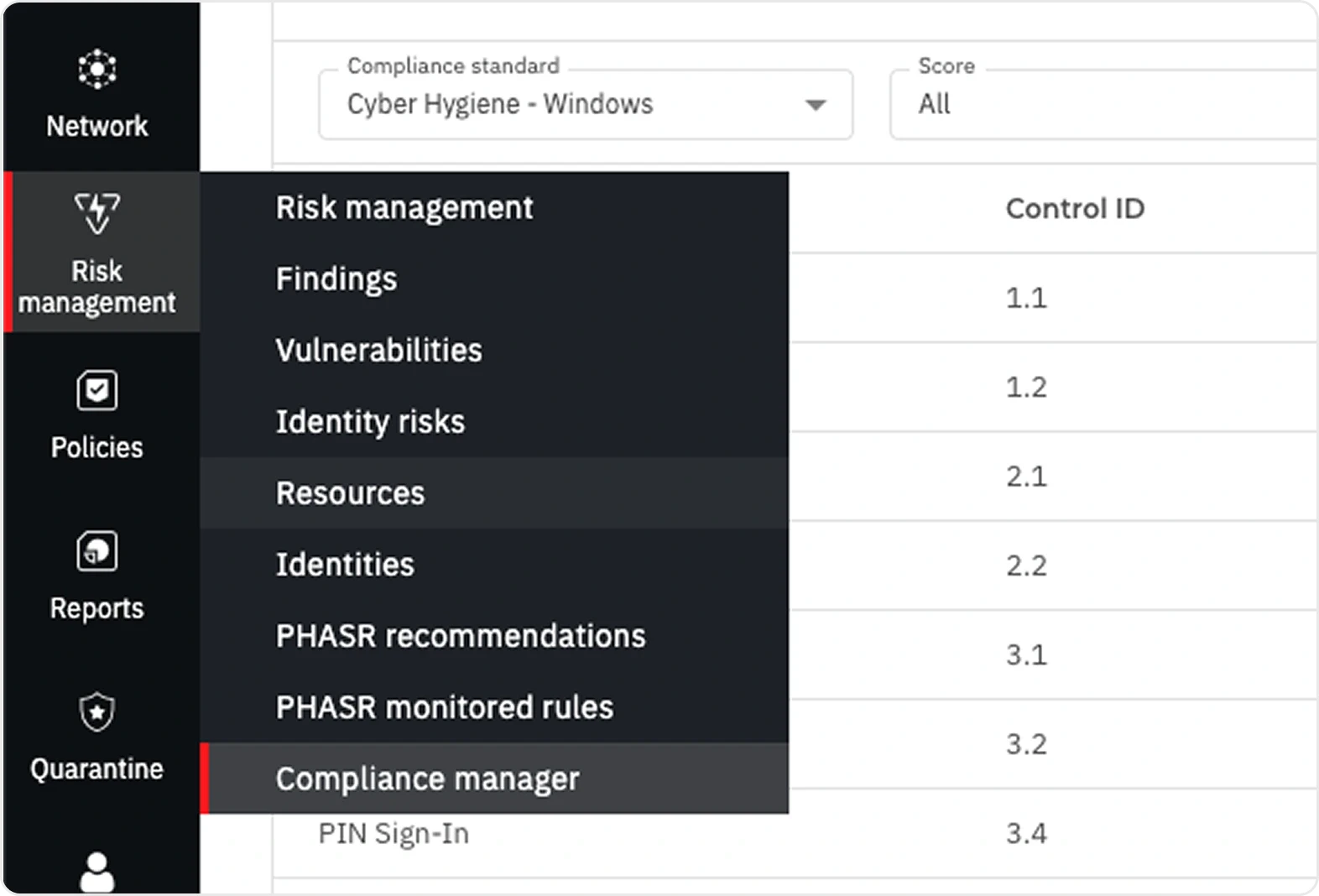
The Microsoft Defender for Business features you already own fit your risk. Next-generation antivirus, endpoint detection and response, automated investigation, and core vulnerability management all sit inside that $3.00 per user. For a low-complexity Windows estate, that feature set is genuinely sufficient.
Your estate is Microsoft end to end. Windows laptops, Entra ID, Intune, one admin center. Defender inherits that identity and device management rather than sitting beside it, and the operational savings are real.
You are comfortably under 300 users with few servers. The ceiling is not a problem until it is, and the server add-on does not matter much when there are two servers rather than twenty.
If all four describe you, buy Microsoft. A guide that never reaches that conclusion is a sales page.
There is no single best endpoint security for small business teams. There is the product that matches your licensing shape, your server count, and whether anyone is watching alerts at 2am. We work through exactly that in our Bitdefender pricing guide and in our Bitdefender Gold Partner practice in Canada.
Where GravityZone pulls ahead
Mixed and non-Microsoft estates. GravityZone covers Windows, macOS, and Linux under one license, while Defender for Business covers Windows, macOS, Android, and iOS and needs an extra license for Linux. Bitdefender sells mobile protection as a separate add-on, so Microsoft has the stronger mobile story. Companies running Google Workspace, significant Linux, or a genuinely mixed fleet get a more consistent console from GravityZone.
Servers inside one license. Servers are ordinary endpoints under GravityZone with no add-on SKU, provided file servers stay within 30% of your licensed devices. Bitdefender counts Linux machines as servers too, so a Linux-heavy estate reaches that share sooner and moves to a partner quote rather than self-serve checkout.
Above the 300-user ceiling. Past 300 users Microsoft moves you to a different product tier with different pricing. GravityZone scales through the same product line, moving from self-serve to partner-quoted at 100 devices.
When you want the platform operated, not just licensed. Bitdefender MDR puts a security operations center on your environment around the clock. Microsoft's equivalent depth sits in higher tiers aimed at organizations with security staff to run them.
When you want one accountable partner. Buying through a reseller means the team that quotes your licenses also runs deployment, migration, and renewals. We are a Bitdefender Reseller Gold Partner, and that is the practical argument: one number to call when something needs fixing.
Detection quality is not the differentiator people think
Most of what passes for a Bitdefender GravityZone review online stops at detection rates, and that is the least useful place to look. Both products score well in independent testing. Bitdefender has a long record with AV-Comparatives and the MITRE evaluations, and Microsoft's detection has improved sharply over the last several years. Anyone claiming a decisive gap in raw detection is usually selling one of them.
The differences that show up in daily operation are quieter: how much tuning the console needs, how alerts get grouped into incidents, how much of the investigation is automated, and whether anyone is watching outside business hours. Those are operational questions, not benchmark questions, and they depend more on who runs the tool than which tool it is.
Running two products is the expensive mistake
The failure mode we see most often is not choosing wrong. It is choosing both.
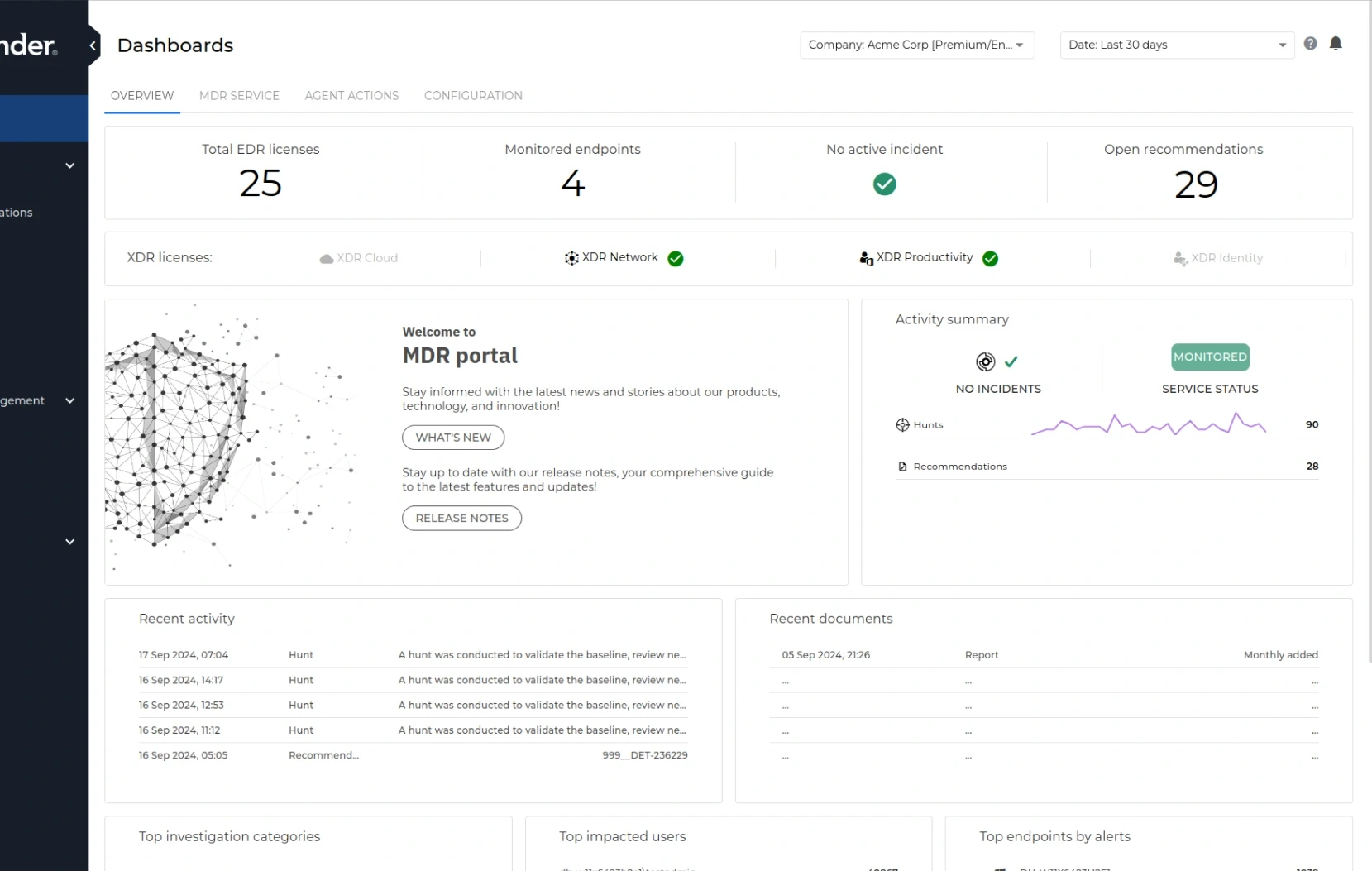
A company buys GravityZone, leaves Defender enabled on every Windows machine because nobody wants to turn off security software, and ends up with two agents contending over the same files. The result is duplicated spend, degraded performance, and alert noise from two consoles that nobody fully owns.
Pick one as the enforcing product and configure the other accordingly. Handling that cleanly is part of a migration, and it is the step most self-serve buyers skip. The same consolidation logic applies across the rest of your operational tooling, which is the thinking behind our workflow automation practice.
A short decision path
- Count users and endpoints separately. Include servers and virtual machines. If endpoints greatly exceed users, Microsoft's model is likely cheaper. If users exceed endpoints because people share machines, Bitdefender's is.
- Check whether you already own Business Premium. If you do, Defender for Business is sunk cost and the bar for switching is higher.
- Count your servers. Several servers make the Microsoft add-on a real line item rather than a footnote.
- Decide who operates it. No security staff and no after-hours coverage points toward MDR, which is where Bitdefender's managed tier is strongest.
- Get both quotes at your real numbers. Ten-device list pricing is a baseline, not your price.
Questions buyers ask us
Is Bitdefender better than Windows Defender? For an unmanaged home PC, the built-in Microsoft Defender that ships with Windows is adequate and free. That is a different product from Defender for Business, which adds central management, EDR, and policy control. Compared against the business product, Bitdefender's advantages are the licensing model, server handling, and managed service depth rather than a large raw detection gap.
Can we run Defender for Business and Bitdefender together? You can, and you should not. Two enforcing agents on one machine cause file contention and duplicated alerts. Choose one and configure the other to stand down.
What happens when we pass 300 users? Defender for Business stops being the right SKU and Microsoft moves you to its enterprise endpoint tier. GravityZone continues through the same product line; above 100 devices Bitdefender routes buyers to a partner for a quote instead of self-serve checkout.
Does the comparison change if we need compliance evidence? Somewhat. Both produce reporting, but the practical question is which console your auditors can be walked through and who generates the evidence. That usually favors whichever platform someone is actually accountable for operating.
How do we migrate without a coverage gap? Staged rollout, policy mapping, then removal of the outgoing agent per group rather than all at once. Protection stays continuous when the sequence is right, which is the part worth handing to someone who has done it before. Our cybersecurity best practices guide covers the habits that sit around whichever product you land on.
Do you cover the US as well as Canada? Both. We are a Bitdefender Reseller Gold Partner working with businesses across the United States and Canada, and licensing, deployment, and renewals run the same way in either country. That Gold status is what makes the pricing work: it opens deeper partner discounts across the GravityZone catalog, and that room goes into your quote.
The short version
- The headline prices are effectively identical: $36.00 per user per year for Defender for Business, $38.50 per device per year for GravityZone Business Security at the ten-device baseline.
- The licensing unit decides the bill. Microsoft counts users with up to five devices each; Bitdefender counts endpoints.
- Servers are a paid add-on under Defender for Business and ordinary endpoints under GravityZone, up to 30% of licensed devices.
- Defender for Business caps at 300 users. Bitdefender's self-serve checkout stops at 100 devices and moves to a partner quote.
- If you already own Microsoft 365 Business Premium and run an all-Microsoft estate under 300 users, Defender for Business is usually the right call.
- Running both products at once is the genuinely expensive outcome.
Send us a device count split by workstations, servers, and mobiles, plus your current protection and renewal date, and we will come back with a right-sized GravityZone quote at partner-tier pricing. If the honest answer is that Microsoft already covers you, we will tell you that instead. We are a Bitdefender Reseller Gold Partner serving businesses across the United States and Canada, and Gold is a discount tier rather than a badge: it opens deeper partner discounts across the GravityZone catalog, and that room goes into your quote.


