

Into The Future
Web 3.0 promises an internet you own. Instead of handing your data to a handful of platforms, you control it, and in some models you get paid for it. This guide explains what Web3 actually is, how it differs from the web we use today, and what it means for marketers in 2026, with the hype stripped out.
What Is Web 3.0
Web 3.0, also called Web3 or the Semantic Web, is a vision for a more open, user-controlled internet built on blockchain technology. The core idea is decentralization: instead of a few companies holding your data and profiting from it, you own your data, your identity, and your digital assets, and you decide who gets access. This shapes both content creation and the social media sites people use every day.
That is the proposition. Today the major platforms profit from the information their users hand over. Web3 aims to give that control back, with concepts like decentralized identity, token incentives, and user-owned content. These are goals the technology is working toward, not settled outcomes. Some are live in narrow forms. Many are still experiments.
The building blocks are real: blockchains like Ethereum, smart contracts that move assets without an intermediary, token-gated communities, and digital assets recorded on-chain. Decentralization and openness are core traits of the model, and a first-party data foundation lines up with where it points. Where Web3 has traction, it looks less like a new internet and more like a new layer for ownership, payments, and membership.
What Is Different Compared to Previous Web 2.0 & Web 1.0
To see what Web3 changes, it helps to see what came before. Two iterations preceded it. Web 1.0 was the read-only web of the early World Wide Web. Web 2.0 was the further iteration that arrived with interactivity, social networks, and smartphones.
Web 1.0
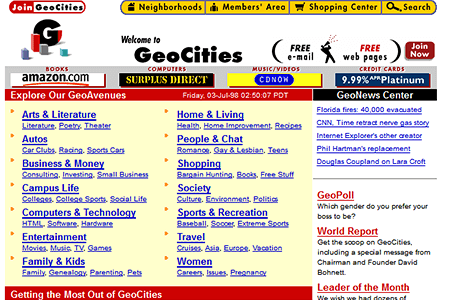
Web 1.0 was the read-only web. Its roots trace to ARPANET in 1969, built under the Defense Advanced Research Projects Agency, and to the World Wide Web that Tim Berners-Lee created around 1989 to 1991. Early sites were static HTML pages you could read but not interact with, with no comments, no accounts, and no feeds. The bulletin board system (BBS) was one of the few places people gathered to share news and info. Sites like GeoCities popularized personal pages on the early web. As dynamic pages and interactivity arrived, read-only websites became obsolete, and Web 1.0 gave way to Web 2.0 through the 2000s.
Web 2.0
Web 2.0 is the read-write web we use now. It succeeded Web 1.0 by adding interactivity and immersion across social networks. Web 1.0 was the 'Read Only' stage of the internet. Web 2.0 moved into the 'Read/Write' stage.
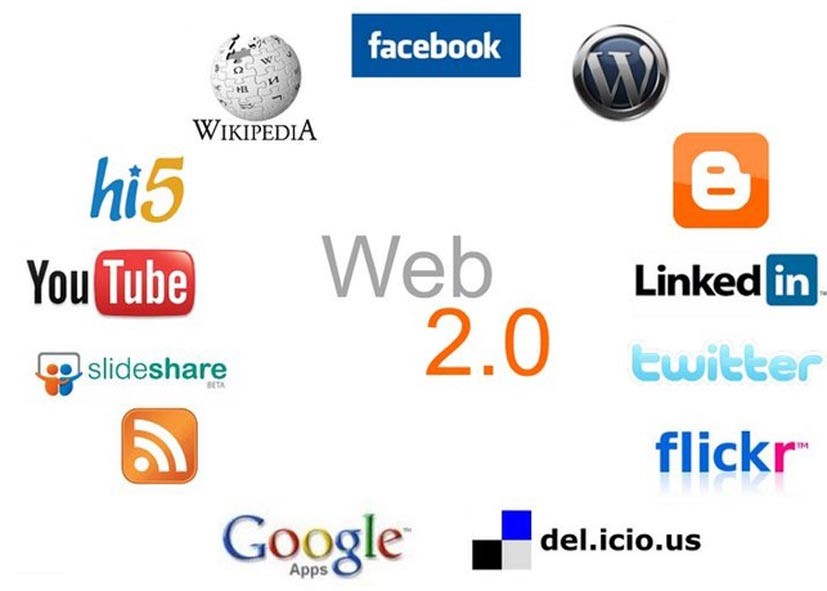
This generation brought us eBay, accounts on social platforms like Facebook, Instagram, YouTube, TikTok, and X, and online banking you controlled. This is the era that let anyone publish, comment, and connect. It also let companies gather valuable user information and resell audience data to third-party advertisers.
Web 2.0 is the current evolution of the internet we use today. The ability to comment, post, engage, and communicate with others defines it. Technology-focused companies and the entertainment industry have grown exponentially because of Web 2.0.
Web 3.0
Web 3.0 proposes the read-write-own web. It keeps the interactivity of Web 2.0 and adds ownership: your data, your identity, and your assets recorded on a decentralized network rather than locked inside one company's database. That ownership layer is the real distinction, not any single app. It is the setting for blockchain solutions built on networks like Ethereum, where smart contracts give greater asset ownership and move value without an intermediary.

What’s Next/The Future
Web 3.0 is not the internet we use today. That title still belongs to Web 2.0. The question is what survives the hype and how it changes advertising and the marketing industry.
Ignore the early-2020s claim that the metaverse would become the default place to shop and socialize. That thesis cooled sharply. Reality Labs has lost more than 83 billion dollars since 2021, and in 2026 Meta pivoted its Horizon Worlds platform toward mobile and away from a VR-first future. Augmented and virtual reality remain emerging channels worth testing, but they are not the inevitable future the hype promised.
The play-to-earn gaming boom is the cautionary tale. The model relies on blockchain to let players earn cryptocurrency or NFTs by playing. The most prominent example, Axie Infinity, generated more than a billion dollars in 2021 at the peak of the craze. Then its daily player base collapsed from roughly 2.7 million to below 100,000 after the 2022 crypto downturn. Hype is not adoption.
Marketers can use the semantic web and data-driven marketing to bridge the gap between humans and computers. The shift favors user-focused messaging and products the customer actually owns. Parts of this are live today in narrow forms. Most are still early.
Conclusion
Web 3.0 is still early, and parts of it may never reach the mainstream in the form enthusiasts predicted. What survives is narrower and more useful: user-owned data and identity, on-chain loyalty and membership, and creative use of digital assets.
The Web3 proposition is an open model where users control and own their data with more privacy and security. The aim is to move past an era where a few large platforms own user data and resell it. On-chain loyalty programs and digital collectibles are where that idea is finding real traction today.
For marketers, the move is not to bet the budget on a decentralized future. It is to watch the patterns working now, run small experiments where they fit your audience, and keep building the first-party, consent-based foundation that pays off regardless of which version of the web wins.


