What Is Salesforce Lightning?
Salesforce Lightning is the modern user interface and component framework for the Salesforce platform, and the default experience for new orgs. It is faster and more intuitive than the older Classic interface, and it keeps the platform's full power.
This introduction to Salesforce Lightning covers what Lightning is, who it serves, its release date, key features, and how it compares with Salesforce Classic.
Lightning rests on three principles: design, simplicity, and innovation.
Lightning works for every user type. Beginners get cleaner access to their data. Developers get tools like programmatic event handling in Apex. One interface scales across roles, so your team works in the same place no matter their skill level.
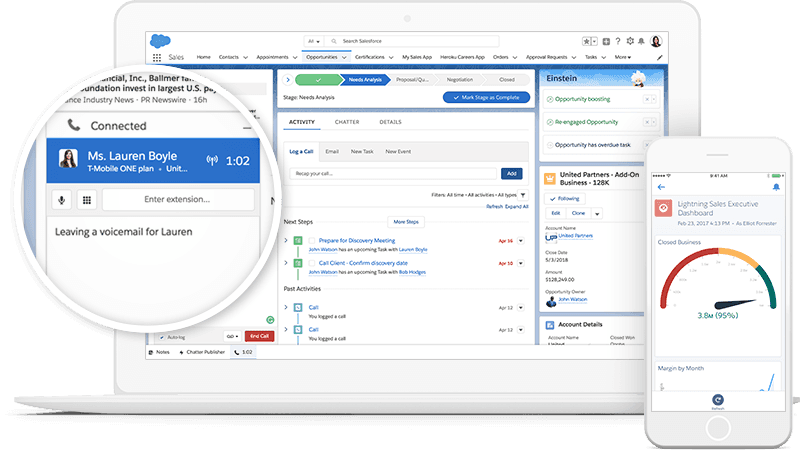
Lightning also speeds up everyday selling. A clearer layout means less time hunting for records. Reps create and send proposals from a single screen. The result is more time on real work and less on navigation.

RELATED: Which Salesforce Certification Is Best?
Key takeaways
- Salesforce Lightning is the default user interface and component framework for Salesforce, replacing Salesforce Classic.
- The Salesforce Lightning release date was October 2015, when it became generally available with the Winter '16 release.
- Lightning in Salesforce includes the App Builder, reusable components, built-in search, and one consistent mobile experience.
- Classic has received no new features since 2020, so the roadmap runs through Lightning.
Who Is Salesforce Lightning Designed For?
Lightning is built for every role on a Salesforce team. Because it is a single interface that scales, each user gets a layout that fits their job:
- Administrators onboard new reps faster by assigning apps through the App Launcher
- Designers build custom layouts without code using Lightning App Builder and components
- Developers get clearer visibility into deployment settings and configuration changes
- Support staff resolve cases faster with built-in search and filtering
Developers should know how the framework itself is structured. Salesforce recommends Lightning Web Components (LWC) as the default way to build custom UI. LWC uses modern web standards and performs better than the older Aura framework. Reach for Aura only when you need a feature LWC does not yet support.
RELATED: 5 Best CRM Tools for Business Development
Why Use Lightning in Salesforce?
Lightning gives every role faster, cleaner workflows. Administrators, designers, developers, and support staff all work in one interface. You move from customer service cases to sales reports without switching tools or learning a second layout.
The payoff is speed and consistency. Fewer clicks, one navigation model, and a layout tuned to each role.
Salesforce Classic vs Salesforce Lightning: What are the benefits of migrating?
Lightning is where Salesforce invests. Classic has received no new features since 2020, and Lightning is enabled by default for new orgs. By early 2025, Lightning adoption reached roughly 98% of orgs. Salesforce retired its Lightning transition apps in January 2025, a clear signal that the migration window is closing.
Migrating brings concrete gains:
- A faster, more modern UI optimized for current browsers and mobile
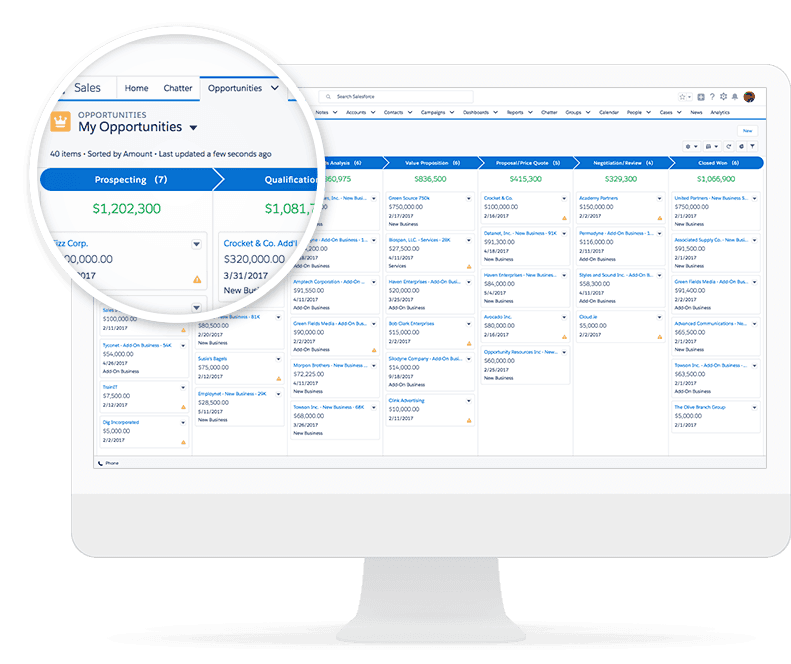
- Related lists, records, and actions together on one screen
- Access to features Classic never received, including newer components and AI tooling
Here is how the two interfaces compare today:
| Area | Salesforce Classic | Salesforce Lightning |
|---|---|---|
| New features | None since 2020 | Three releases per year, including AI tooling |
| Interface | Legacy layout with full page reloads | Modern UI with records, related lists, and actions on one screen |
| Customization | Code heavy, built on Visualforce | Low code Lightning App Builder plus Lightning Web Components |
| Mobile | Separate, limited experience | Same interface on desktop, phone, and tablet |
| Direction | Maintenance only | All new Salesforce investment |
Salesforce has not announced a hard end-of-life date for Classic. Its retirement policy gives at least 12 months of notice. The practical advice is the same: plan the move now rather than waiting for the cutoff.
RELATED: 10 CRM Implementation Steps for Company Success
Is Lightning Different than Classic?
Yes. Lightning is a new interface, not a reskin of Classic. It makes data easier to reach and easier to act on.
The core record and content tools carry over, but Lightning optimizes them for modern browsers, adds a more intuitive layout, and improves the mobile experience.
In Lightning you access data, collaborate, run process automation, change configuration, and build reports on any device, including mobile, in one consistent interface.
What Is So New About the Salesforce Lightning UI?
Lightning brings a redesigned UI, the Lightning App Builder for low-code page assembly, reusable components, and a development model built on Lightning Web Components. New features land in Lightning first, including the AI and automation tools Salesforce ships each release.
How Long Does Migration Take?
It depends on org complexity and customization. A simple org can move in days. A heavily customized org with legacy Visualforce, custom buttons, and JavaScript needs an audit and remediation plan first. A scoped assessment sets a realistic timeline.
RELATED: Choosing the Right Salesforce Consulting Firm RELATED: What is Salesforce Used For?
When Was Salesforce Lightning Released?
Salesforce announced Lightning on August 25, 2015. The Salesforce Lightning Experience release date was October 2015, when the new interface reached general availability with the Winter '16 release.
The milestones since then tell the adoption story:
- 2015: Lightning Experience launches with the Lightning Design System and component framework
- 2019: Salesforce begins turning Lightning on by default for all orgs
- 2020: Classic stops receiving new features
- 2025: Salesforce retires its Lightning transition apps as adoption reaches roughly 98% of orgs
More than a decade after the release date, Lightning is simply the Salesforce user interface, and every new capability ships there first.
Why Salesforce Built Lightning Experience
Salesforce built Lightning to make customers more productive. The design streamlines navigation, speeds data entry with fewer clicks than Classic, and shows records alongside their related lists on one screen. It also standardizes the experience across desktop and mobile.
A Brief History of Salesforce.com
Salesforce.com was founded in March 1999 by Marc Benioff and Parker Harris, who set out to deliver enterprise software as an online service instead of packaged installs. The company pioneered cloud-based CRM and now spans CRM, marketing automation, analytics, and AI.
Today Salesforce serves more than 150,000 customers, from small businesses to most of the Fortune 500, and reported $41.5 billion in revenue for its fiscal year 2026, up ten percent year over year. Lightning is the interface most of those customers use every day.

RELATED: Salesforce Marketing Cloud: Features & Pricing
For the marketing side of the platform, see our overview of Salesforce Marketing Cloud. Salesforce's B2B marketing automation product is Marketing Cloud Account Engagement, formerly Pardot.
Salesforce Lightning features for business users
- Lightning Web Components and App Builder: Build custom pages and apps with reusable, low-code components. Admins and designers assemble interfaces without deep coding, and developers extend them with LWC.
- Customizable home pages and tabs: Tailor the home page and navigation per app and per role, so each team sees the records and actions it needs first.
- Built-in search and filtering: Find records faster across objects, which shortens case handling and reporting.
- Consistent mobile experience: The same Lightning interface follows users to phone and tablet, so work continues away from the desk.
In short, Salesforce Lightning is the current, default Salesforce experience: one interface, faster workflows, and the platform where every new feature ships first.