

EDR vs XDR vs MDR is usually explained as a ladder you climb. That framing is wrong and it costs money, because two of the three are products and one is a service, and the question "which is more advanced" has no useful answer.
The real question is which one your company should buy next. This guide answers that, with the published prices where they exist and a clear statement of where they do not.
EPP vs EDR vs XDR vs MDR, one paragraph each
EPP, endpoint protection platform. Prevention. It blocks known and novel threats before they execute, using machine-learning models, behavioral analysis, and exploit defence. Every company needs this and most already have it.
EDR, endpoint detection and response. Recording and investigation. It captures what happened on the endpoint so somebody can reconstruct an incident against a framework like MITRE ATT&CK and respond. It assumes a person will look.
XDR, extended detection and response. Correlation. It joins endpoint signals to identity, network, cloud workload, and productivity-application telemetry so one incident is visible across the environment instead of as five unrelated alerts.
MDR, managed detection and response. People. Somebody else's security operations center watches, investigates, and acts within limits you agree in advance.
Three of those are things you install. The fourth is a team you hire by the month. That difference matters more than any capability comparison.
Endpoint detection and response: what you get and what it costs you
EDR earns its keep when an incident needs reconstructing. Which process spawned what, what the malware touched, whether it moved laterally, what to clean.
The cost people miss is not the license, it is the attention. EDR produces detections that expect an analyst. Buy it without one and you have bought a very good flight recorder for a plane nobody is watching.
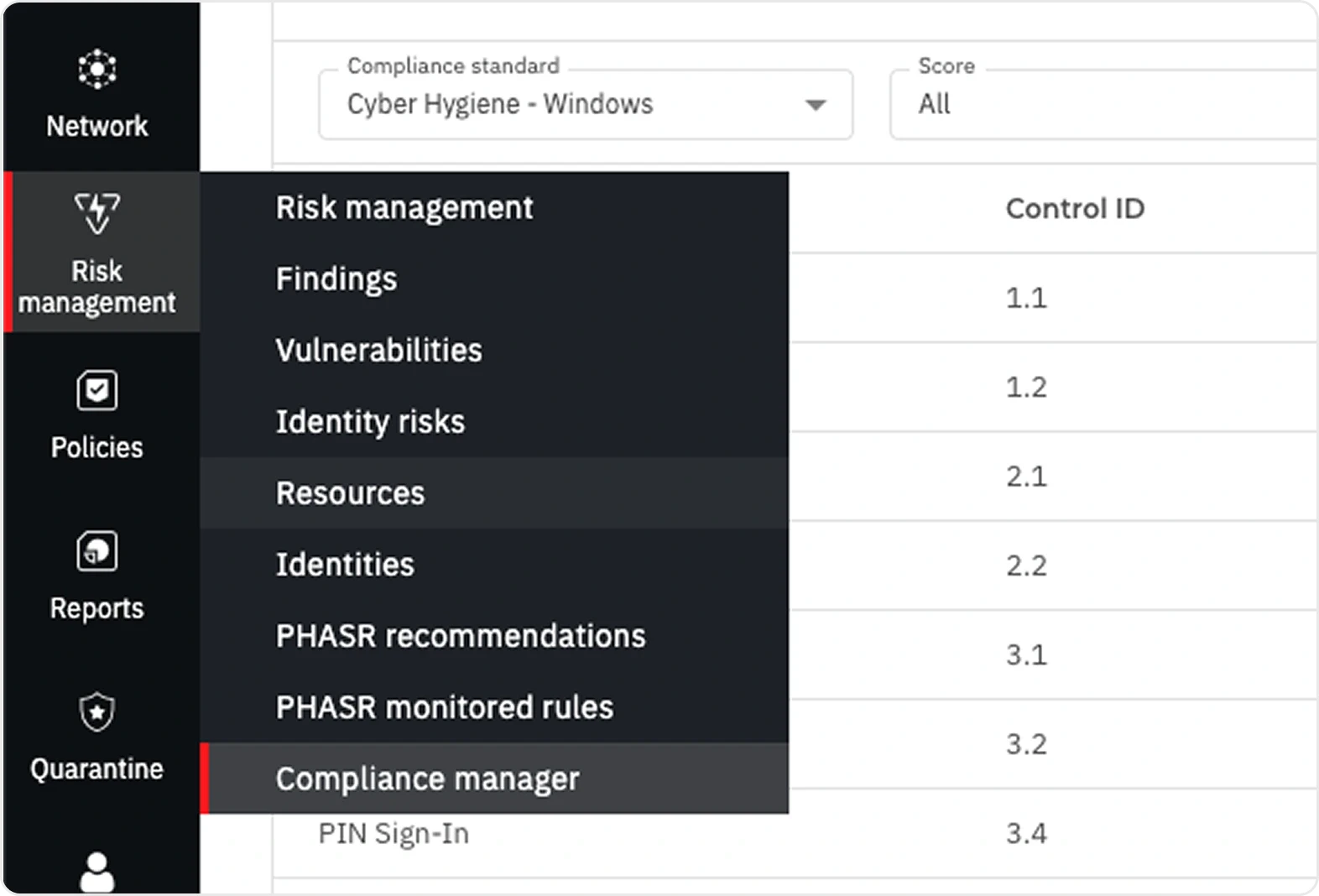
Where it lives in Bitdefender's line matters commercially: EDR arrives in GravityZone Business Security Enterprise, not in Business Security Premium. Bitdefender describes Premium as advanced attack prevention without additional detection and response capabilities. Enterprise is quote-only, so EDR is always a conversation rather than a checkout. Our tier comparison covers the full ladder.
XDR security: when correlation is the missing piece
XDR is the right buy when your problem is that incidents are invisible until somebody joins the dots by hand.
The signal you need it: an incident where the endpoint alert, the impossible-travel login, and the mailbox rule change were all separately noticed, and nobody connected them for three days. That is the specific failure XDR fixes, and it is common in companies running Microsoft 365 alongside cloud workloads and a mixed device fleet.
The signal you do not need it yet: you have one environment, one identity provider, and no cloud workloads to speak of. Correlation across three things you do not have is not worth paying for.
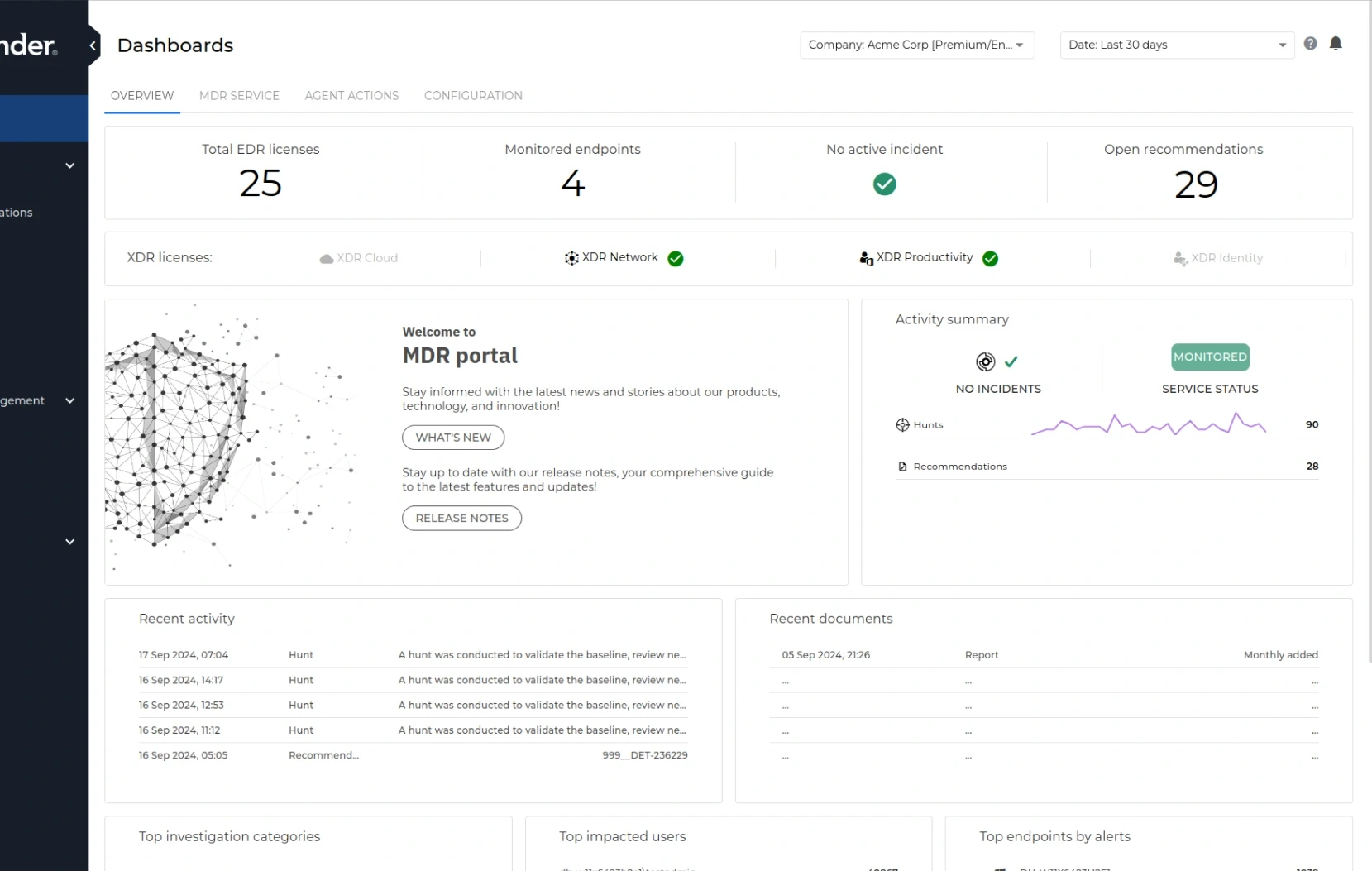
GravityZone XDR extends the endpoint layer with sensors for identity, network, cloud, and productivity applications. It is quote-only, like EDR.
Managed detection and response: buying the people
MDR is not a more advanced product. It is a different purchase entirely: staffing.
Incident response frameworks assume a staffed function: NIST's computer security incident handling guide is built around a team with defined roles and availability, not a console. So the test is one question. Name the person who would act on an alert at 3am on a Sunday. If you have a name, you may not need MDR. If you have a job title, an on-call rota that does not exist, or a pause, you do, and no amount of extra console capability will change that.
Bitdefender MDR comes in two tiers. The base service commits to a security account manager calling your emergency contact within 30 minutes of an incident, with enhanced monitoring for 72 hours afterwards, and it uses Pre-Approved Actions so analysts can contain something without waiting for you to answer the phone. MDR PLUS adds a dedicated account manager, dark web monitoring, global intelligence analysis, brand and IP protection, and high priority target monitoring. Our MDR guide covers the detail.
EDR vs MDR: the decision most companies are actually making
Strip away the acronyms and most mid-sized companies are choosing between exactly two options, at roughly similar budget:
Option A: buy EDR. More capability, retained in-house. Right when you have or are building a security function.
Option B: buy MDR on a mid-tier platform. Less console capability, but somebody is actually watching. Right when your endpoint security is owned by an IT generalist.
Companies default to A because it feels like the more serious purchase, then discover eighteen months later that nobody opened the console. B is the less impressive-sounding option and the correct one far more often, particularly under a few hundred employees.
A useful way to break the tie: price MDR, then price two competent analysts covering nights and weekends. Genuine 24x7 coverage takes more than one person, and comparing against that number rather than against zero usually settles it quickly.
MDR cybersecurity is not a maturity level
A persistent myth is that MDR is for companies too immature to run their own security, and that the goal is to graduate off it.
Plenty of well-resourced organizations run MDR permanently, because a 24x7 rota is expensive, hard to staff, and hard to retain. Outsourcing the night shift while keeping engineering and policy in-house is a normal, durable design, not a stepping stone.
The inverse myth is worse: that buying MDR means you can stop caring. Pre-Approved Actions have to be agreed, escalation contacts have to be current, and somebody has to read the monthly report and act on it. MDR moves the work, it does not delete it.
Which one you need, in five questions
- Is every endpoint covered by prevention today, on a supported tier, with policy actually enforced? If no, fix that first. Everything below assumes it.
- Can you name the person who investigates an alert, and is that in their job description? No name means the answer is MDR, not EDR.
- Has an incident in the last year taken longer to understand than to fix? That is the EDR signal.
- Do your incidents span endpoints, identity, and cloud? That is the XDR signal. If everything lives on endpoints, skip it for now.
- Who covers nights, weekends, and holidays? If the answer is nobody, price MDR before any platform upgrade.
Most companies under a few hundred people who work through these honestly land on prevention plus MDR, not on a higher platform tier. That is the answer we give most often, and it is usually cheaper than the one people expect.
What each costs
Only some of this is published, and pretending otherwise is how comparisons go wrong.
| Layer | Bitdefender | Published? |
|---|---|---|
| EPP entry | Small Business Security, $32.50 per device, per year | Yes |
| EPP with policy control | Business Security, $38.50 per device, per year | Yes |
| Advanced prevention | Business Security Premium, $88.00 per device, per year | Yes |
| EDR | Business Security Enterprise | No, quoted |
| XDR | GravityZone XDR | No, quoted |
| MDR | Bitdefender MDR and MDR PLUS | No, quoted |
Published figures are list prices for ten devices on a one-year term from Bitdefender's comparison page, with a 30% vendor promotion running at the time of writing. Everything from EDR upward is scoped rather than looked up, which is normal across this category: CrowdStrike and SentinelOne also quote their managed tiers.
Questions we get asked
Does XDR replace EDR? No, it extends it. XDR correlates endpoint detection with other telemetry, so the endpoint layer is still doing the work underneath.
Does MDR replace EDR? No. MDR is delivered on a platform, so you still license the platform underneath. Budget both.
We have Microsoft 365. Do we already have some of this? Possibly. Defender for Business includes EDR, and higher Microsoft tiers add more. Whether that is enough depends on your licensing shape and your server count, which our comparison with Defender for Business works through.
Can we buy MDR without upgrading our platform tier? That is a scoping question, because MDR quality depends on the telemetry feeding it. Ask what tier the service assumes before assuming your current one qualifies.
Do you cover the US as well as Canada? Both. We are a Bitdefender Reseller Gold Partner working with businesses across the United States and Canada, and licensing, deployment, and renewals run the same way in either country. That Gold status is what makes the pricing work: it opens deeper partner discounts across the GravityZone catalog, and that room goes into your quote.
What is the most common mistake here? Buying a higher platform tier to solve a staffing problem. The console gets better and the 3am gap stays exactly where it was.
The short version
- EPP prevents, EDR records and investigates, XDR correlates across the environment, MDR supplies the people. Three products and one service, not four rungs.
- EDR without an analyst is a flight recorder nobody reads.
- In GravityZone, EDR is in Business Security Enterprise, not Premium, and Enterprise, XDR, and MDR are all quote-only.
- The real decision for most mid-sized companies is EDR in-house versus MDR on a mid-tier platform, and MDR wins more often than people expect.
- Price MDR against the loaded cost of real 24x7 staffing, not against zero.
- Fix prevention coverage before buying anything above it.
Send us your endpoint count split by workstations, servers, and mobiles, plus an honest answer to question five, and we will tell you which layer to buy next and quote it at partner-tier pricing. Sometimes that answer is that your current tier is fine and you need MDR instead. We are a GravityZone licensing partner serving Canadian businesses nationwide, with US coverage available, and Gold is a discount tier rather than a badge: it opens deeper partner pricing across the GravityZone catalog, and that room goes into your quote. Our guide to buying through a reseller explains what that changes, and our Bitdefender Gold Partner practice in Canada covers how we run deployments. The same operating-model thinking runs through our workflow automation practice.


