Key Takeaways
- What is CRM? CRM is customer relationship management: the strategy and software a business uses to track every interaction with the people who buy from it.
- What are CRM systems? CRM systems are the software platforms, such as Salesforce, HubSpot, Zoho, and Microsoft Dynamics 365, that run that strategy day to day.
- What is a CRM platform? A CRM platform is the unified hub where contact records, deal pipelines, and support tickets live side by side instead of scattered across spreadsheets and inboxes.
- Customer relationship management meaning is one shared source of truth every department, from sales to support, can trust. It goes well beyond the acronym.
- CRM implementation best practices are clean data migration, a phased rollout, and admin training before go-live, not after.
- Marketing automation CRM integration is what turns a marketing-qualified lead into a sales-ready opportunity without a manual handoff.
- CRM implementation services are, at their best, platform configuration paired with process design, so the tool matches how your team actually sells.
CRM systems turn scattered customer data, spreadsheets, sticky notes, sales email threads, into one operational record your whole team can act on. This guide covers what CRM systems are, how they work, and which platform fits your business size and budget.
RELATED: What Is a CRM Database?
What Is CRM? A Quick Definition
What is CRM? Break the acronym down and it stops being jargon. Customer is who you serve. Relationship is the sum of every call, email, and support ticket you have had with them. Management is the discipline of tracking that relationship on purpose instead of by memory.
The old way ran on spreadsheets, sticky notes, and a sales rep's personal inbox. Deals lived in one person's head, and the moment that person left, so did the relationship history.
The new way is a CRM platform: a single system where every team, from sales to marketing to service, reads from the same customer record. Gartner projects worldwide CRM end-user spending will grow at a 14.4% constant-currency CAGR through 2029, driven in part by generative and agentic AI (Gartner, published November 2025). That growth reflects how much operational weight a CRM platform now carries, well beyond its original job as a digital Rolodex.
What Are CRM Systems?
A CRM system is a customer relationship management platform that helps businesses manage their interactions with customers. It provides lead tracking, contact management, sales-opportunity forecasting, marketing-campaign management, and more.
Many CRM platforms now ship with AI features built in. These systems learn patterns in your data and predict future customer behavior.
CRM systems get customized to fit the needs of a specific business, which is what makes them worth the investment.
CRM data is not siloed either. It is shared across departments, so every team has access to the same real-time information.
CRM System Benefits
- CRMs help businesses keep up with their customer interactions and sales opportunities. They also make it easier to close deals, meaning more profit for your business. For example, you can use a CRM system to see which customers are at risk of cancelling service soon so that you can contact them before they do.
- CRMs allow businesses to customize their sales process and marketing campaigns. You can also track your progress with analytics that show you where you are getting the most leads, how much time is spent in each lead stage, what channels work best for generating new business, and more. This gives greater insight into where to focus future effort and resources.
- CRMs provide a central location for all of your data so that you can easily find the information you need to stay on top of customer interactions, opportunities, and other important tasks. You will also be able to access that data from anywhere, no matter what device or operating system your company uses.
- A CRM system is an integrated set of business applications designed with both customers and employees in mind. It serves many purposes, including managing marketing campaigns and lead management and enabling teams to execute projects efficiently on one platform. A good CRM ensures every person in the department has their own workflows mapped out, so decisions about accounts and contacts follow a consistent process. That structure gives you a clearer picture of how the business is actually functioning.
RELATED: Best CRM for Small Business
What Is a CRM Platform? How To Choose The Right One
A good CRM platform is the one that fits how your team actually sells, not the one with the longest feature list. There is no single best answer: every company has different needs, size, and budget. The sections below break down the leading platforms so you can match one to yours.
CRM Platforms
CRM platforms are not one-size-fits-all. The list below narrows the field by company size and use case.
Small to Medium Companies
Medium to Large Companies
Here is how the four platforms stack up side by side:
| Platform | Primary Strength | Ideal For |
|---|---|---|
| Zoho CRM | Affordable, all-in-one suite | Small and mid-sized teams on a tight budget |
| HubSpot CRM | Ease of use, inbound marketing integration | Marketing-led small to mid-market teams |
| Salesforce CRM | Deep customization, AppExchange ecosystem | Enterprises that need complex configuration |
| Microsoft Dynamics 365 | Native Microsoft 365 and Outlook integration | Organizations standardized on the Microsoft stack |
CRMs by Company Size
Smaller companies should consider programs like Zoho and HubSpot. These simple solutions offer plenty of features without the cost or complexity a small team does not need.
On the other end of the spectrum, larger companies get more value from Salesforce CRM or Microsoft Dynamics 365. Both scale further as the business grows.
CRMs by Function
A CRM system built for one company's workflow will not always fit another's, and that is fine. A tool designed for small businesses can still handle a large sales team if the fit is right. If your priority is marketing tools like email campaigns and landing pages, HubSpot is built for that. If your priority is account and contact management, Zoho covers that ground well. The right CRM adapts to how your team already sells. Flexibility and use case decide the right pick, not the vendor's name.
CRMs by Type
CRM systems fall into a few working styles, and picking one starts with how your team wants to work day to day. Salesforce leans lightweight and highly configurable for sales-first teams. Microsoft Dynamics 365 pairs a full feature set with less complexity than an on-premise system like SugarCRM, which suits teams that want breadth without a steep learning curve. The right fit comes from testing a shortlist against your actual sales process, not from picking the platform with the most features on paper.
We have worked with CRMs long enough to know they are not for every company, but for a team ready to invest in structured growth, the payoff is real: more automation on repetitive work, faster turnarounds on sales inquiries and marketing campaigns, and an interface simple enough that new hires ramp up in days, not weeks. Whatever your industry, one of the platforms below is worth serious consideration.
RELATED:Zoho CRM Review - The Good and Bad
Zoho CRM
Zoho CRM is a customer relationship management platform built to help businesses develop relationships and manage sales cycles, marketing, support, and other customer-related activities. It tracks customer interactions and surfaces potential customers as qualified leads.

Zoho CRM offers email tracking for sending emails via Zoho Mail, lead generation with built-in forms, and social media monitoring so you can watch your brand mentions on Facebook or X (formerly Twitter).
The mobile app allows users to access files from anywhere at any time.
There is also an option for Google Drive integration that lets users collaborate with no extra effort. You will see updates as they happen without doing anything manually: it all happens automatically within your dashboard. And if you need more control over any of it, Zoho ships plenty of customizable features too, so you stay in control.
There is more to Zoho CRM than just that. It also has a suite of other features such as time tracking, reports, and dashboards for every department, giving you a full picture of your business at any given moment, inside or outside the office.
RELATED:CRM vs. ERP - What's The Difference?
Zoho CRM Modules
Zoho CRM packs a wide range of features. The five that matter most:
- Salesforce automation: this module helps you track all your sales, leads, and contacts. With sales forecasting, you can also gauge where your pipeline is headed.
- Service Desk: this is the customer service department's best friend. You can log chats, calls, or emails so that every customer need gets handled quickly and efficiently with minimal manual effort. You can measure customer satisfaction and relationship health from the data you gather.
- Marketing Automation: build custom email campaigns for each initiative with a drag-and-drop interface. Campaigns then trigger automatically on events such as a form submission or a promotion-tab click, so your team manages content without outside help.
- Analytics: this portion of the CRM gives you detail on how often customers visit, where they prefer to browse, and which links or videos perform best with them.
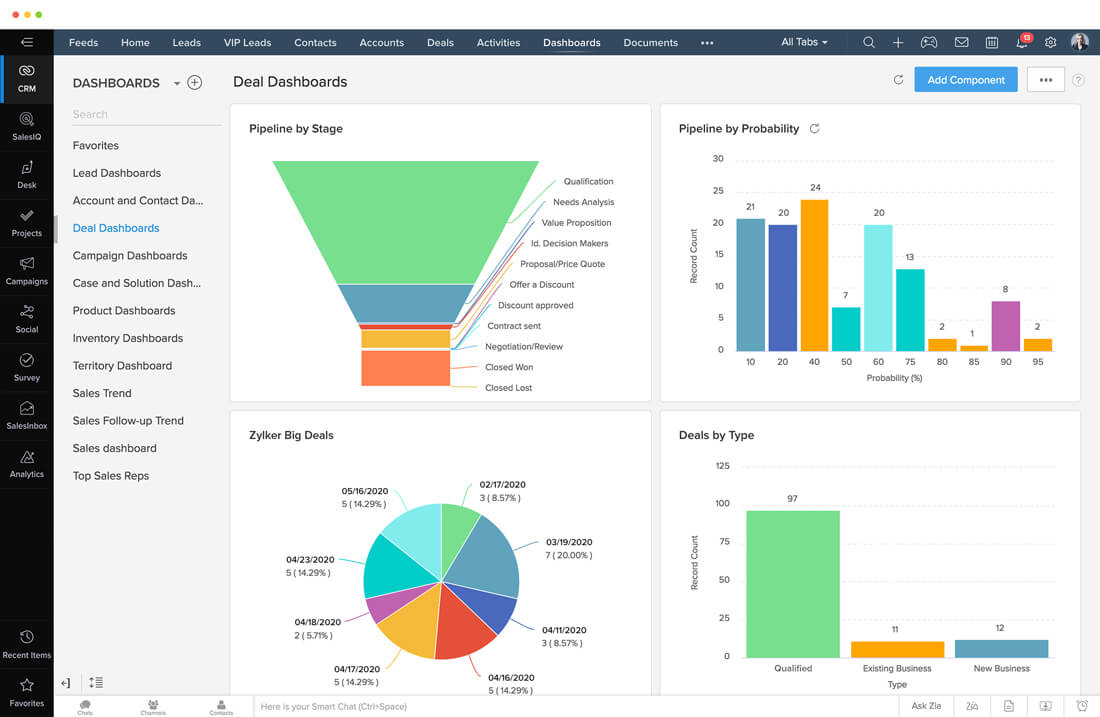
- Predictive Sales (AI): Zia is the virtual assistant built into Zoho CRM to help manage your data. Zia fetches information, takes notes, predicts the likelihood a deal closes, detects anomalies, automates tasks, and more, keeping you on top of every activity.
More info: https://www.zoho.com/crm/features.html
Zoho CRM Pricing
Zoho offers various pricing plans for various modules. The best course of action is to head over to: https://www.zoho.com/crm/zohocrm-pricing.html.
HubSpot CRM
HubSpot CRM is a customer relationship management system built to make sales, marketing, and service work simpler for growing teams.
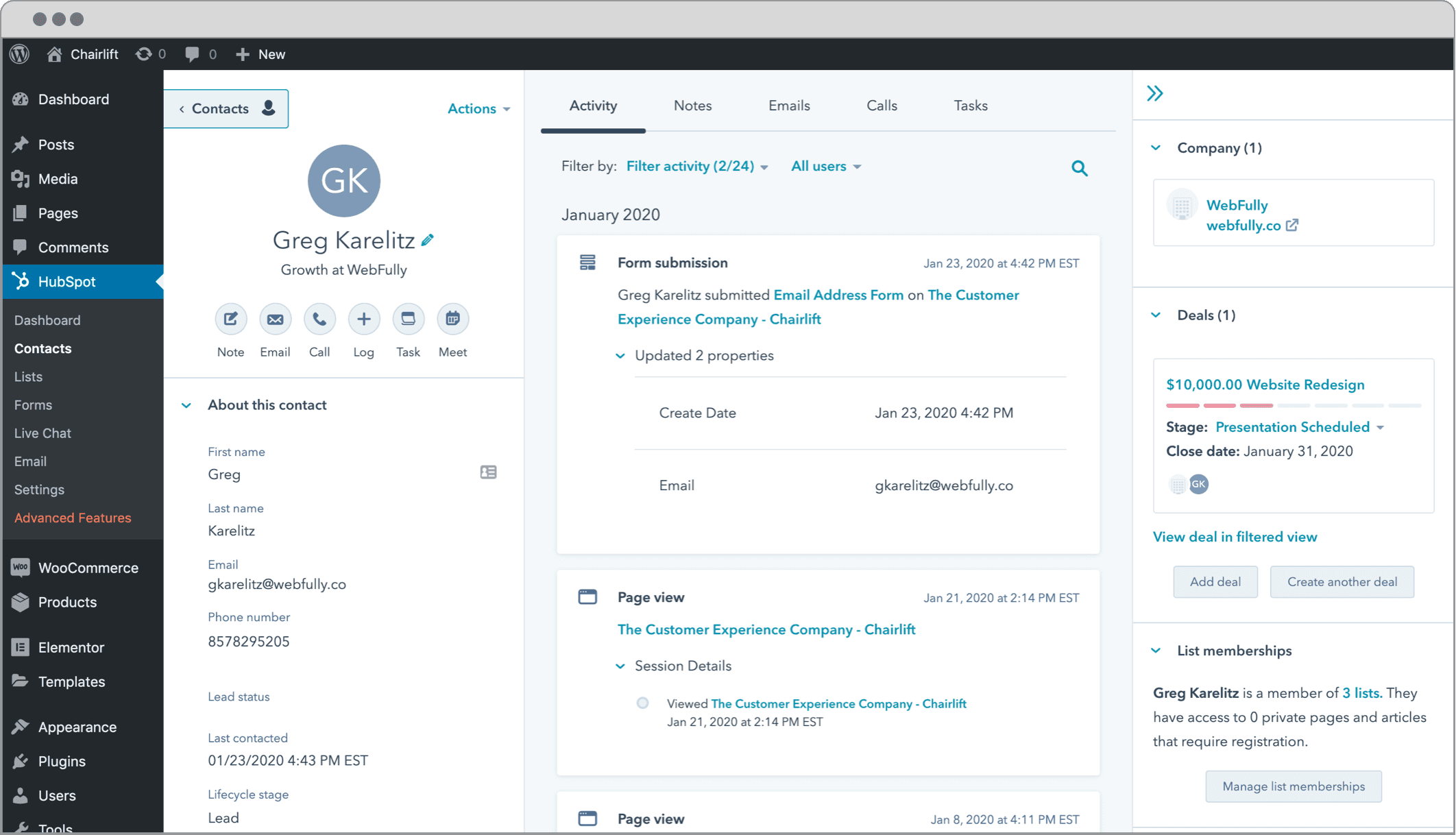
- CRM systems help determine when something goes wrong with a customer or lead and how it can be fixed quickly.
- HubSpot offers an automated solution, where all of the data is collected automatically by their software.
- HubSpot also includes collaboration tools such as online task lists, document sharing, and social media integration so your team never loses the thread on a conversation.
RELATED:HubSpot CRM Review - The Good and Bad
HubSpot CRM Modules
- Sales Hub: keep your sales team on the same page by using tracking, reporting, and lead management to increase productivity. It is a great way for your reps to track customer journeys and sales pipelines.
- Marketing Hub: use HubSpot's marketing automation tools such as website forms, landing pages, email campaigns, and social media integration. You can also measure conversions with lead scoring.
- Content Hub (formerly CMS Hub): easy management of your website content, with integration for nearly any CMS.
- Service Hub: customer service software for first-class support. You can capture customer experience data through case management and case surveys.
- Operations Hub: operational efficiencies that save time. With HubSpot's tools, your team completes tasks faster and more efficiently.
![Now Live] HubSpot Service Hub](https://framerusercontent.com/images/X9pHJzAawf0NaQfSuESxvFTjnk.png)
HubSpot Pricing
HubSpot offers various pricing plans for various modules. The best course of action is to head over to https://www.hubspot.com/pricing for the latest pricing info.
Salesforce CRM
Salesforce CRM is a customer relationship management system that has been around since 1999. It offers cloud solutions for sales, marketing, and service teams in small to medium-sized businesses across the globe.
Salesforce aims to help companies build better relationships with their customers by giving them more insight into what those customers need and want.
Salesforce handles every aspect of the relationship, from adding contacts manually to importing data automatically from social platforms like X (formerly Twitter) or Facebook.
The way a company manages its customers can be the difference between success and failure. The key to customer loyalty is going above and beyond, whether that means providing excellent service, keeping customers informed about an offer, or simply being there when someone needs help with something you sell. Doing that consistently requires a tracking system, which is exactly why CRMs matter: without one, a business has no reliable way to know which customers need special attention at any given moment.
CRMs like Salesforce keep detailed records of every client interaction and track up-sell opportunities. Salesforce breaks its platform into modules, starting with the Sales module for pipeline management.
That reliability shows up in the numbers. Salesforce's own FY26 Customer Success Metrics show customers reporting a 30% increase in sales revenue and a 29% increase in sales pipeline after adopting the platform (Salesforce).
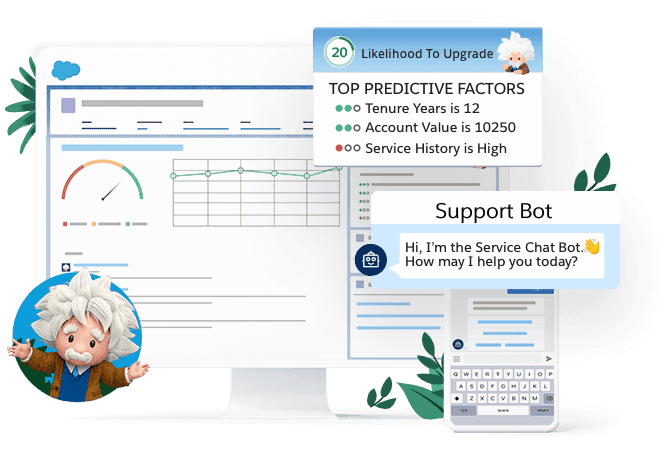
CRM systems are an integral part of online marketing strategy because they provide invaluable data on how your company performs against its competitors. They also help you quickly identify areas that need improvement before they cost you a deal.
RELATED:5 Best CRM for Law Firms
Salesforce Modules
Salesforce offers various modules for your needs.
- Sales: improve lead management and pipeline accuracy, automate mundane tasks, and close more deals using this widely trusted CRM software. Measure and track your sales calls, prospects, activities, and progress.
- Service: one of the leading customer service software products, Salesforce Service helps you be more responsive and effective in delivering quality support.
- Marketing: gauge your marketing campaigns more effectively with a module built specifically for marketers, covering channels like email.
- Data: connect all of your disparate data sets and turn them into one working view of the customer.
- Customer 360: a holistic approach to managing customer relationships, covering the needs of your customers across every touchpoint.
- And many more.
More info can be found here: https://www.salesforce.com/products/.
RELATED:Salesforce Costs & Pricing Plans
Salesforce Pricing
Salesforce has various pricing plans for various modules. It is best to visit https://www.salesforce.com/editions-pricing/overview/.
Dynamics 365
Dynamics 365 is a cloud-based CRM and part of Microsoft's Business Applications platform, a separate product line from the Microsoft 365 productivity suite. It has native integration with Outlook, SharePoint, and other Microsoft 365 apps to offer a single view into your customer interactions across every channel.
If you need software to manage the sales process and generate more revenue, Dynamics 365 fits that need. The product targets higher conversion rates, tracks deals through every stage of the pipeline, and surfaces insights from previous engagements so you never waste time following up on a lead another rep already contacted.
Dynamics 365 is the strongest fit when you need to manage sales, marketing, and customer service from one platform.
Dynamics 365 also integrates with other Microsoft products such as Teams, Outlook, and SharePoint to provide a unified interface across all of your services. One user ID gives you access to every aspect of your company's customer interactions, saving time by eliminating the need to log into multiple accounts.
For example, Dynamics 365 natively integrates with Outlook, so your emails sync automatically into the CRM system, giving you a history of every interaction with a client from directly inside your inbox.
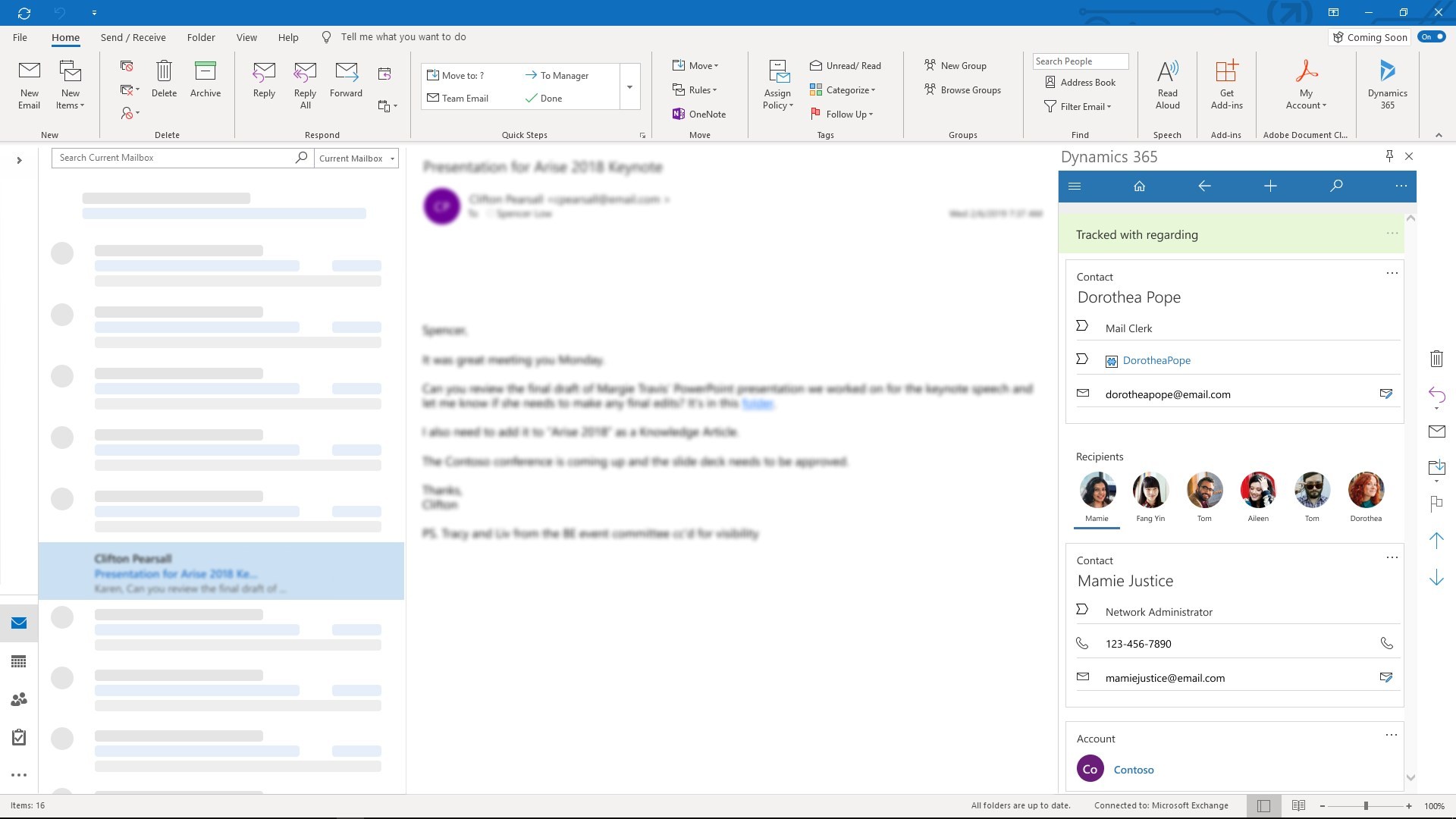
Dynamics 365 also carries a strong security suite: security roles, secure fields, role-based permissions, and business-unit-based permissions, plus reporting and analytics that track data across the entire company.
RELATED:What Is Dynamics 365?
Dynamics 365 Modules
Dynamics 365 offers various modules.
- Dynamics 365 Sales module: track every lead and opportunity in one place. It is a complete CRM for sales professionals, with lead management, forecasting tools, pipeline reporting, territory management, and more. Log customer-journey notes and every phone call, email, or other contact, and the out-of-the-box dashboard gives owners full visibility into the pipeline.
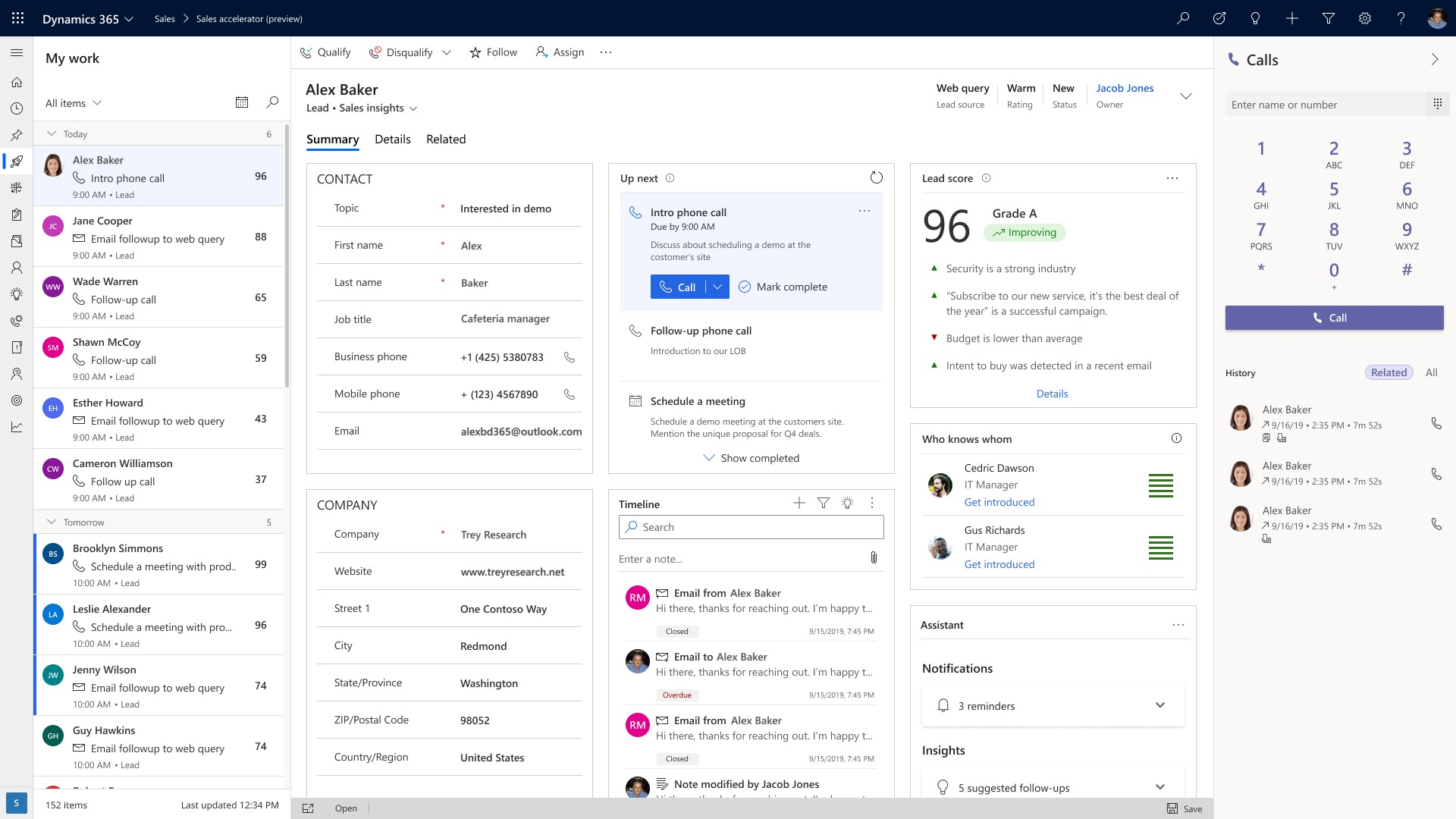
- Dynamics 365 Customer Service: features designed to make customer service agents' work easier, including a live-chat system, case management, live-agent tools, and a knowledge base. Track customer communication with case records, notes, emails, phone calls, and other means.
- Dynamics 365 Customer Insights - Journeys (formerly Dynamics 365 Marketing): built for marketing professionals, with features that make campaigns easier to manage. It handles marketing automation and customer journeys so you can orchestrate campaigns across channels, and it automates outreach by integrating with third-party apps.
- Dynamics 365 Field Service: scheduling, work-order management, and on-site service coordination for teams that deliver work in the field.
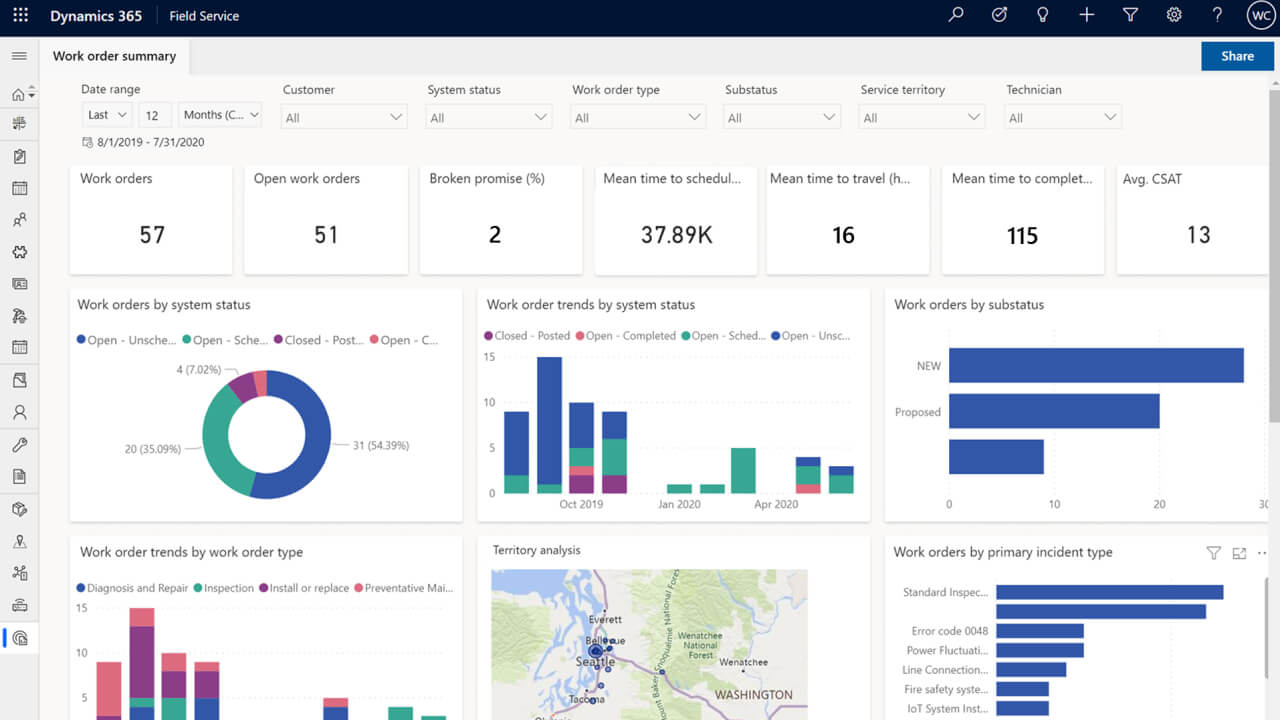
- Microsoft also offers ERP-side applications such as Business Central and Finance, but the customer-engagement modules above are what make Dynamics 365 a CRM.
Dynamics 365 pricings
Like every vendor here, Microsoft prices each module competitively. Since prices change over time, check current pricing directly before budgeting.
More info: Dynamics 365 pricing overview.
CRM Implementation Best Practices
Picking a platform is the easy part. CRM implementation is the harder work: migrating existing data, mapping your sales process into pipeline stages, and getting the whole team to actually log activity in the new system instead of falling back on old habits.
A few CRM implementation best practices hold across every platform in this guide:
- Audit and clean your existing contact and deal data before migration, not after. Duplicate and stale records follow you into the new system if you skip this step.
- Roll out in phases: sales first, then marketing, then service, so each team adopts the system without a company-wide disruption on day one.
- Train admins before end users. A CRM with no internal owner drifts back into spreadsheets within a quarter.
- Connect marketing and sales from day one. Marketing automation CRM integration is what turns a marketing-qualified lead into a sales-ready opportunity without a manual handoff between teams.
CRM implementation services are, at their best, platform configuration paired with process design, not just a checklist of settings toggled on. Twelverays runs Microsoft Dynamics 365, Salesforce, and HubSpot implementations built around how your team actually sells, not a generic template. For a deeper look at automating the repetitive parts of the job, see What Is CRM Automation?