What is Power Virtual Agents? Microsoft Power Virtual Agents (PVA) was Microsoft's no-code chatbot builder for AI agents that answer customer and employee questions. In November 2023 it became Microsoft Copilot Studio: same product, same graphical authoring, plus generative AI.
Editor's note (2026): Power Virtual Agents is now Microsoft Copilot Studio. On November 15, 2023, Microsoft folded Power Virtual Agents into Copilot Studio, its platform for building conversational AI agents and customizing Microsoft Copilot. The standalone Power Virtual Agents product and branding are retired. Everything Power Virtual Agents did, you now do in Copilot Studio, with generative AI added on top. Existing Power Virtual Agents licenses carried over with no action required. This guide explains what the product does and uses its current name, Copilot Studio.
Key Takeaways
- Power Virtual Agents is now Microsoft Copilot Studio; existing licenses carried over automatically.
- You build agents in a no-code canvas, then publish them to your website, Microsoft Teams, and other channels.
- Licensing runs on Copilot Credits: $200 per month for a 25,000-credit pack, or pay-as-you-go through Azure.
Copilot Studio lets you build agents that answer questions from your customers, your employees, or visitors to your website. One common business challenge is that staff spend hours on repetitive tasks, such as answering FAQs or emails asked for the thousandth time. Copilot Studio lets you stand up a self-service agent to absorb that load. You do not build custom apps or support legacy systems. It runs in the cloud, ready to author and publish. A built-in analytics dashboard tracks how the agent understands language and how satisfied users are.
These agents can be created without writing code, or with a low code method when you need it.
Copilot Studio is one authoring product, not two. Most teams build for one of two scenarios.
- External or customer-facing - an agent on your public website that engages customers and resolves their questions.
- Internal - an agent for your own organization, often surfaced inside Microsoft Teams for employees.
Building a Customer-Facing Agent
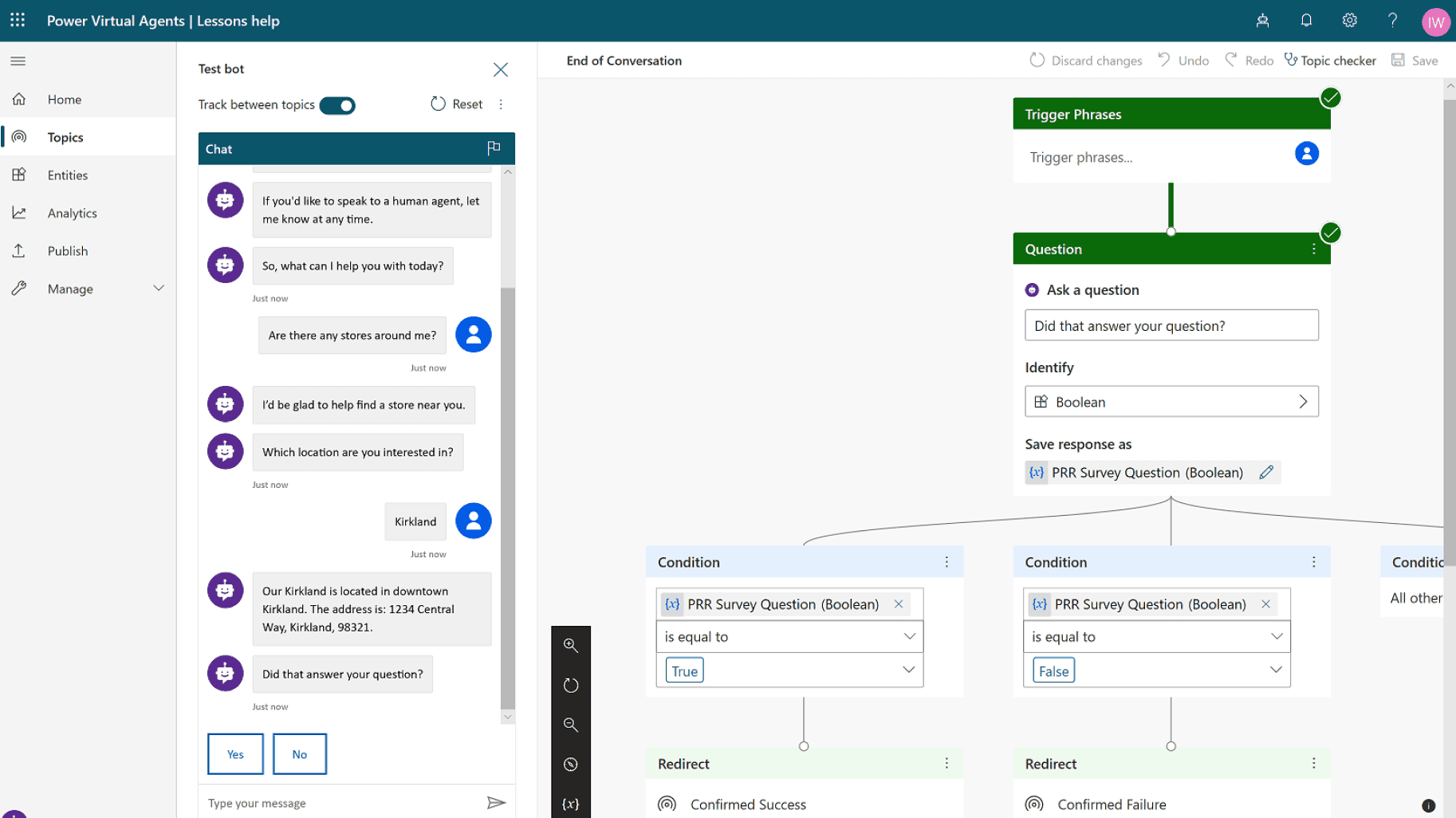
This is where you create an AI agent for your public website. Using the built-in authoring tools, you build guided, no-code conversations without developers or data scientists.
- Raise customer satisfaction by letting people self-serve in real time, around the clock, in rich guided conversations.
- Lower costs by automating common questions and freeing human agents to handle the complex ones.
- Empower your own teams to build agents themselves, with no middlemen, no coding, and no AI background required.
- Build out business processes and trigger phrases for the support scenarios you care about.
- Turn your agent into a front line for your subject-matter knowledge.
- Integrate with products like Dynamics 365. Power Virtual Agents connectors are now the shared Power Platform library: hundreds of prebuilt connectors plus custom connectors for your own APIs.
- Measure performance with built-in monitoring and analytics that surface actionable insights.
A major addition since the Copilot Studio rebrand is generative answers. Instead of hand-building a topic for every possible question, you point the agent at your sources, a website, internal documents, or a knowledge base, and it composes conversational replies on its own. You can also build autonomous agents that act on triggers, like an incoming email or a new record, rather than waiting to be asked.
RELATED: Where Is Dynamics 365 Admin Center?
Building an Internal Agent in Teams
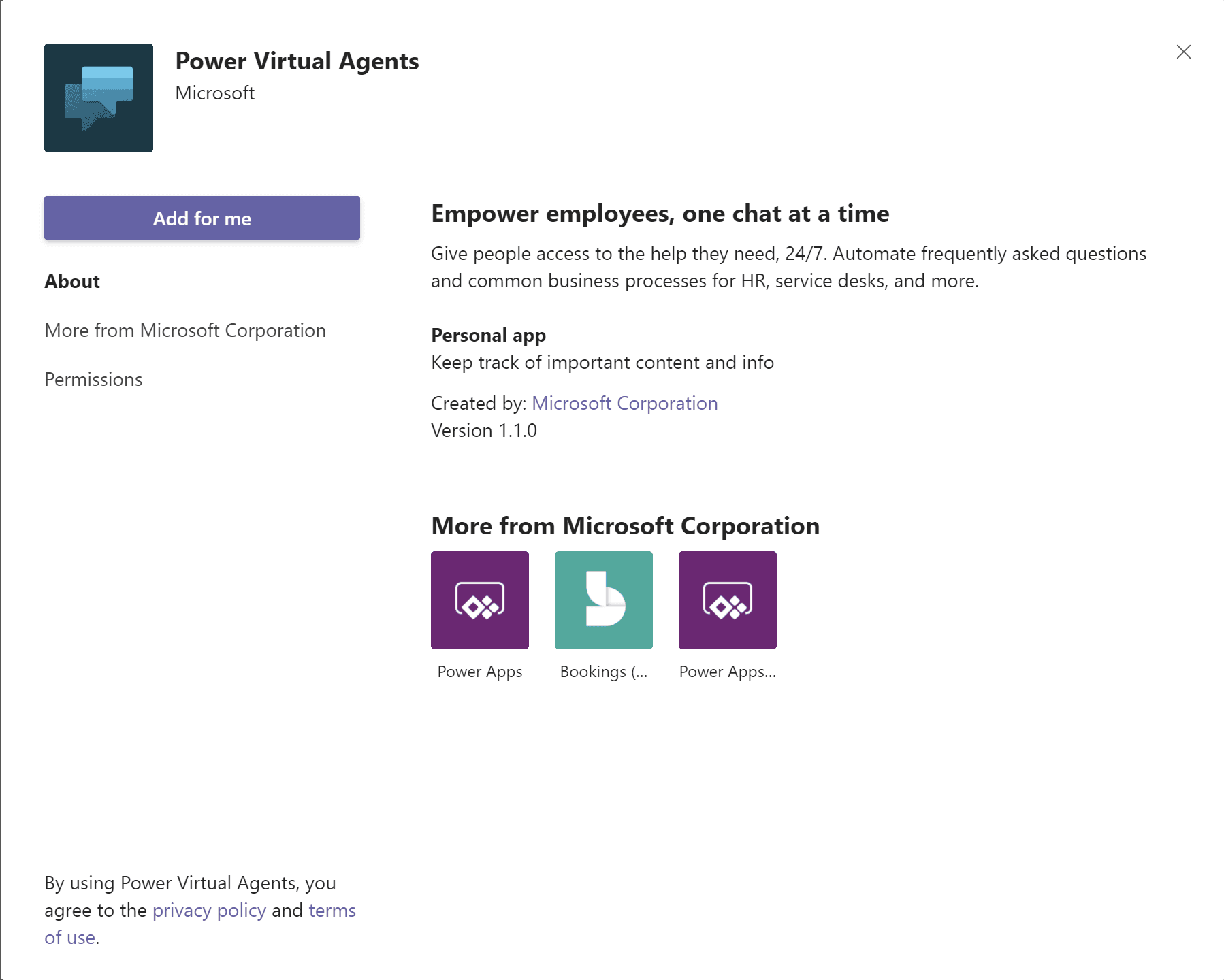
For internal needs, you can stand up a self-service agent that lives in Teams.
For example, build an agent that answers the top FAQs for new and existing employees, or one that handles common IT issues (like "How do I clear my cache?").
- Install Copilot Studio into your Teams environment and start authoring.
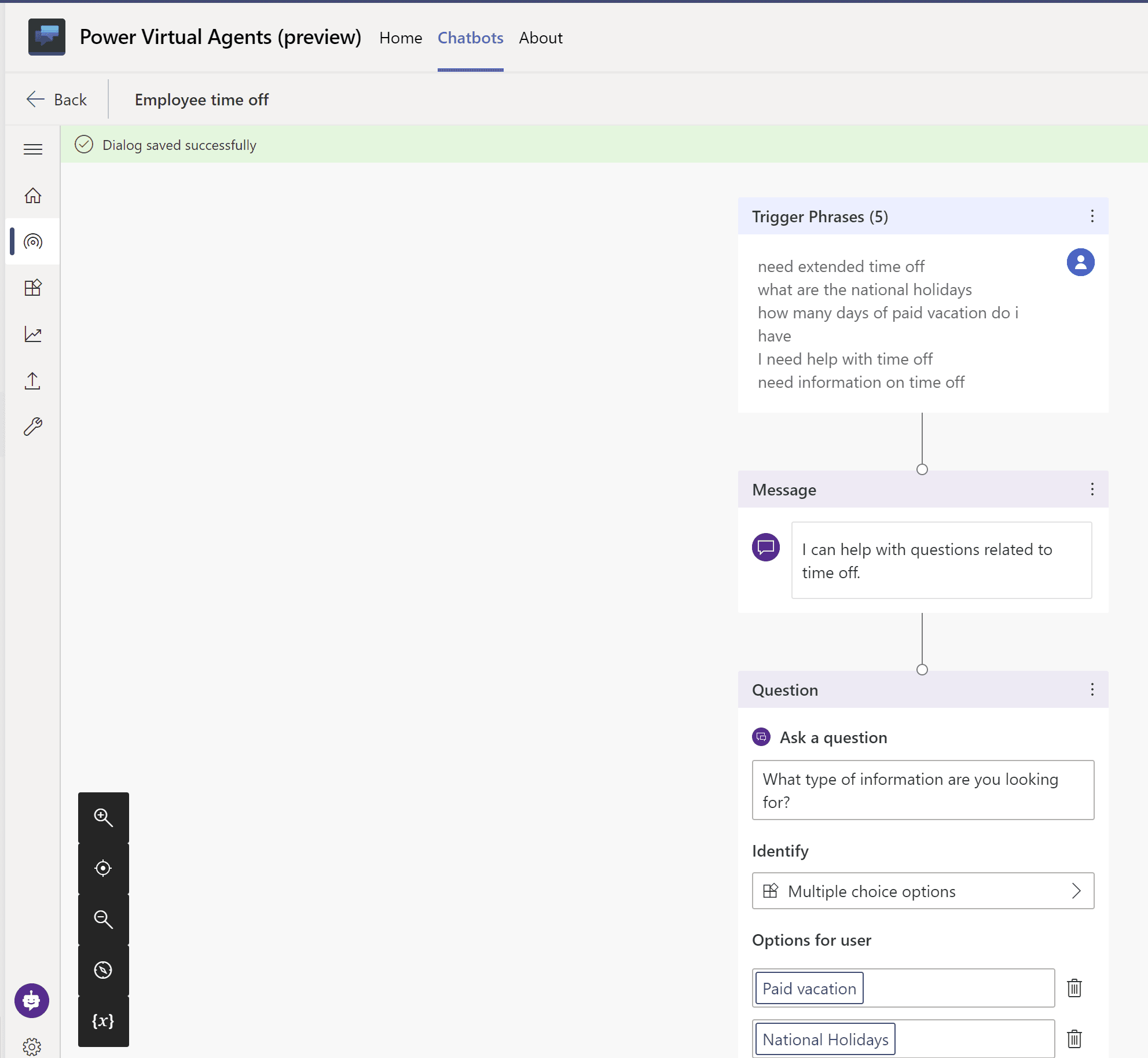
- Use the UI-based, no-code authoring canvas: question nodes, AI understanding, and trigger phrases.
- Run natively inside Teams.
- Stand up an agent quickly.
- Let agents take actions on someone's behalf
- Review and analyze performance, such as which questions come up most and how well the agent answers them
- Test your agent, and then publish it to your team or your whole organization
RELATED: Troubleshoot Dynamics 365 App For Outlook
Power Virtual Agents vs Azure Bot Service
Power Virtual Agents vs Azure Bot Service was a build-vs-buy question, and the 2026 version is Copilot Studio vs the Microsoft 365 Agents SDK. Copilot Studio is the no-code SaaS path: business teams author agents in a graphical canvas and pay in Copilot Credits. The SDK is the pro-code path: developers write agents in C#, JavaScript, or Python and run them on Azure. Microsoft ended long-term support for the classic Bot Framework SDK on December 31, 2025, and names the Microsoft 365 Agents SDK as its successor.
| Copilot Studio (was Power Virtual Agents) | Pro-code path (Agents SDK on Azure) | |
|---|---|---|
| Who builds | Business users, no code | Developers, full code |
| Hosting | Managed SaaS | Your Azure subscription |
| Cost model | Copilot Credits | Azure resource consumption |
| Best for | FAQ, support, and Teams agents | Custom conversational apps |
Why a No-Code Interface Matters
The benefits of a no-code platform add up fast: you cut the cost of custom programming and web development, and you get a single place for data, customer care, and conversation across your digital channels.
For many businesses, success depends on operating across multiple channels at once.
A no-code approach flattens the learning curve and lets you build a working proof of concept fast.
- Close the gap between the subject-matter expert and the team that builds the agent.
- Shorten the time from spotting a problem to shipping the fix.
- Remove the need to master complex conversational-AI systems.
- Cut the demand for custom code.
- Reduce the IT effort to deploy and maintain a custom conversational solution.
Copilot Studio Pricing and Licensing
Copilot Studio licensing changed with the move from Power Virtual Agents. Since September 2025, usage is metered in Copilot Credits rather than messages. You buy capacity in prepaid packs at $200 per month for 25,000 Copilot Credits, or run pay-as-you-go through an Azure subscription and pay only for the credits your agents consume. Some Microsoft 365 Copilot entitlements include Copilot Studio capabilities as well. Pricing and the exact credit-consumption rates change often, so confirm the current model on Microsoft's Copilot Studio licensing documentation before you budget.
The math is the same one it always was: weigh the licensing cost against the staff hours an agent gives back.
If the agent absorbs work that would otherwise eat a full-time person's day on repetitive questions, the return usually justifies the spend.
RELATED: What Is Dynamics 365 App For Outlook?
Is Power Virtual Agents Included in Office 365?
No. Standard Office 365 and Microsoft 365 plans do not include Copilot Studio; it is licensed separately through credit packs or pay-as-you-go. One exception: a Microsoft 365 Copilot license at $30 per user per month includes Copilot Chat and access to the Standard harness in Copilot Studio, and covers agents published into Microsoft 365 Copilot. For customer-facing website agents, budget credits separately.
Copilot Studio Use Cases and Examples
- Build an agent that answers employee FAQs about company policies (vacation, time off, timesheet tracking).
- Build an agent that handles customer questions, from simple to complex, and hands off to a human when it cannot resolve one.
- Build an agent that triages customer or employee questions to the right department using keywords and conversation logic.
How Have These Agents Been Used?
Teams have used Copilot Studio agents for internal service desks, sales and support deflection, store hours and location lookups, employee benefits and time-off questions, and the long tail of repeat employee questions. The platform works both as a standalone web agent and as an agent embedded in Microsoft Teams.
What Are the Benefits?
You can build these agents without data scientists or developers.
What Are Microsoft Virtual Agents?
Microsoft virtual agents are AI-powered agents built in Copilot Studio. They resolve common issues around the clock, understand natural language, and hand a conversation to a human when it needs one.
What Is the Best Way to Build an Agent?
Build with a guided graphical interface and no code. For advanced scenarios, extend with Microsoft Power Automate and the Microsoft 365 Agents SDK.
You can get started on the Copilot Studio product page.
Power Platform Agents: Where Copilot Studio Fits
The Power Platform brings together Power BI, Power Apps, Power Automate, and Copilot Studio (the product formerly known as Power Virtual Agents). We have written in depth on each.
- Learn more about the Power Platform.
- Learn more about Power Automate.
- Learn more about Power Apps.
- Learn more about Power BI.
Who Builds These Agents?
Copilot Studio is built for low-code accessibility. A business user, a business analyst, or a professional developer can all build an AI-driven agent that solves real problems for employees, customers, and partners in a natural, conversational way.
Copilot Studio handles the full lifecycle, from designing the conversation to publishing the agent into the channels people already use: Teams, your website, Slack, Facebook, and more.
What Does the AI Do?
Using Microsoft's AI, you do not have to define every possible question and answer by hand. The platform understands intent and triggers the right action, and with generative answers it can compose responses straight from your content.